

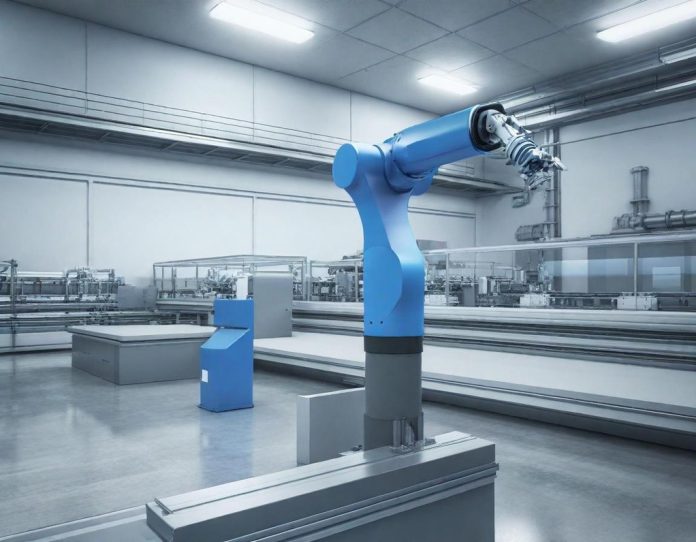

When Chinese companies dominated the humanoid robot exhibits at this year’s CES in Las Vegas, it wasn’t just a display of technological prowess – it was a strategic move in a high-stakes global competition. Behind the dancing robots and flashy demonstrations lies a more complex story of geopolitical constraints, financial pressures, and a race against time that’s reshaping the future of artificial intelligence and robotics.
The Manufacturing Advantage Meets Capital Crunch
China’s dense, highly coordinated supply chains and vertical integration have created what experts call “embodied AI” – robotics that can move quickly from concept to production. This manufacturing ecosystem, which previously propelled China’s electric vehicle sector to global dominance, now fuels its robotics ambitions. According to the International Federation of Robotics, China accounted for 54% of all new robots installed in 2024, with over 4.7 million industrial robots currently in operation globally.
Yet the mood behind closed doors tells a different story. Chinese robotics entrepreneurs face significant headwinds: US restrictions on hardware limit access to advanced materials, while engineering ingenuity can only stretch existing resources so far. Most robotic startups remain in cash-burning, pre-profit phases with little margin for error. This explains the accelerating rush toward public listings – dozens of Chinese robotics and AI companies have filed for IPOs in Hong Kong over the past year, many frantically oversubscribed by investors hungry for the next big thing.
The Regulatory Balancing Act
While China pushes forward with robotics development, other regions face their own challenges in managing AI’s rapid expansion. In the UK, an influential group of MPs recently warned that regulators’ “wait-and-see” approach to AI in financial services exposes consumers and the financial system to “potentially serious harm.” The House of Commons Treasury committee called for stress tests to assess how the financial system would cope with an “AI-driven market shock,” highlighting concerns about transparency in AI-driven loan decisions, discrimination risks, and new types of fraud.
This regulatory dilemma isn’t unique to finance. Across industries, companies struggle with what Nigel Vaz, CEO of Publicis Sapient, calls “technical debt” – the accumulation of outdated IT systems that hinder AI integration. “If you don’t modernize core systems,” Vaz warns, “you’re just using AI to put lipstick on a pig.” This challenge is particularly acute in banking, healthcare, and retail, where legacy systems written in languages like COBOL create millions of lines of code that new developers struggle to understand.
The Global Infrastructure Gap
Europe faces its own infrastructure challenges in the AI race. According to recent analysis, the continent needs �3 trillion in investment over the next five years for AI, data center, and energy infrastructure – a staggering sum that highlights the scale of the global competition. While the US has seen $63.6 billion in data center debt securitization since 2018, Europe managed only $0.8 billion, revealing significant gaps in financial plumbing and risk appetite.
This infrastructure gap matters because physical AI – the convergence of artificial intelligence and robotics – requires massive investment in hardware, chips, and computing power. Companies like ByteDance, which became Nvidia’s biggest customer in China in 2024, understand this reality. The TikTok owner is budgeting 85 billion yuan for AI processors this year as it expands its corporate cloud service to challenge Alibaba’s dominance in China’s AI cloud market.
The Innovation Paradox
China’s robotics sector faces what might be called an innovation paradox. While the country’s manufacturing system enables rapid scaling and cost reduction, weaknesses in frontier research and a research culture that prioritizes short-term goals create limitations. As one Chinese entrepreneur noted, “China once exchanged market access for technology; today, that logic is reversing.”
This reversal manifests in practical challenges. Despite wide variation in technical approaches, many Chinese robotics firms are converging on the same applications: industrial automation, logistics, hazardous environments, and household tasks. Large-scale deployment in the near term remains unrealistic, and the viral, dancing robots that capture headlines remain far from commercial reality.
The Path Forward
The real story emerging from China’s robotics IPO frenzy isn’t about who’s winning or losing in the AI race. It’s about how geopolitical constraints are rewriting incentives, business models, and the direction of innovation itself. For both the US and China, the greatest risk to progress doesn’t lie in technological advancement – both countries are formidable in this area. The real risk is that political narratives will strip innovation of the shared foundations needed to make it durable, intelligible, and safe.
As companies worldwide grapple with integrating AI into their operations, they face common challenges: outdated infrastructure, regulatory uncertainty, and the need for massive investment. The solution may lie in recognizing that while competition drives innovation, collaboration on standards, safety protocols, and research foundations could benefit everyone. After all, the robots dancing in Las Vegas today might be working alongside humans in factories, hospitals, and offices tomorrow – and how we navigate today’s challenges will determine whether that future is one of shared progress or fragmented competition.