


Imagine running a telecom company that designs sophisticated chips in India but must manufacture them overseas. Then a pandemic hits, supply chains collapse, and your business faces existential risk. This was the reality for Arnob Roy, co-founder of Tejas Networks, whose experience during COVID-19 exposed the fragility of India’s position in the global semiconductor industry. “The pandemic made it clear that semiconductor manufacturing is too concentrated globally, and that concentration carries serious risk,” Roy says, echoing concerns that have pushed India to develop its own semiconductor ecosystem.
The Strategic Shift from Design to Manufacturing
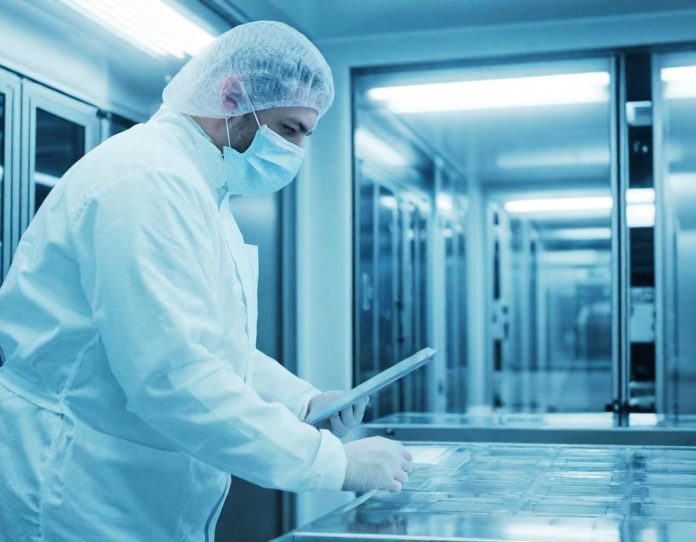
India has long been a powerhouse in chip design, with an estimated 20% of the world’s semiconductor engineers based there. “Almost every major global chip company has its largest or second-largest design centre in India, working on cutting-edge products,” notes Amitesh Kumar Sinha of India’s Ministry of Electronics and Information Technology. But the manufacturing gap has been glaring. Now, companies like Kaynes Semicon are changing that narrative with a $260 million factory in Gujarat that started production last November, focusing on the Outsourced Semiconductor Assembly and Test (OSAT) segment.
Raghu Panicker, CEO of Kaynes Semicon, explains their pragmatic approach: “India does not need the most complex datacentre or AI chips on day one. That is not where our demand is, and that is not where our strength lies today.” Instead, they’re producing chips for cars, telecoms, and defense – “not glamorous chips, but they are economically and strategically far more important for India.” This strategy reflects a broader truth: building an industry requires serving your own market first, with complexity following scale.
The Global Context: Why India’s Move Matters Now
India’s semiconductor push comes at a critical juncture in global technology politics. While the primary source focuses on India’s domestic strategy, companion sources reveal a broader context. Demis Hassabis, CEO of Google DeepMind, recently warned that parts of the AI industry show “bubble-like” investment patterns, particularly citing multibillion-dollar seed rounds in startups without products or technology. This context makes India’s measured, infrastructure-first approach particularly noteworthy.
Meanwhile, the global semiconductor landscape faces multiple pressures. The Financial Times analysis of Kioxia, a Japanese chipmaker whose stock has surged 800% in the past year, shows how even indirect beneficiaries of the AI boom face market risks. As training and operating large-scale AI models requires high volumes of storage chips, companies like Kioxia benefit – but their valuations remain lower than global AI infrastructure firms, highlighting the volatility in this space.
The Innovation Frontier: Beyond Traditional Silicon
While India focuses on building foundational manufacturing capacity, innovation continues at the cutting edge. Neurophos, an Austin-based photonics startup, recently raised $110 million to develop optical processors that promise significantly better performance than traditional silicon GPUs. Their “metasurface modulators” enable an optical processing unit claiming 235 POPS at 675 watts compared to Nvidia’s B200 delivering 9 POPS at 1,000 watts.
Patrick Bowen, CEO of Neurophos, explains the fundamental challenge: “If you want to go fast, you have to solve the energy efficiency problem first. Because if you’re going to take a chip and make it 100 times faster, it burns 100 times more power.” This innovation race underscores why India’s manufacturing focus, while less glamorous than AI chip development, addresses a critical bottleneck in the global supply chain.
The Economic Calculus: Building vs. Buying
India’s semiconductor strategy represents a calculated bet on economic sovereignty. The Financial Times notes that while India’s economy looks “reassuringly boring” with IMF growth projections of 7.3% for 2025 and 6.4% for 2026, weaknesses in private capital formation and foreign direct investment persist. Building semiconductor manufacturing addresses both economic and strategic concerns.
As Doug O’Laughlin, analyst at Fabricated Knowledge, observes about AI’s broader impact: “AI will not only collapse the unit cost of writing software but, as a result, large chunks of existing software will not get written at all: they will be generated contextually by AI as they are needed.” This transformation makes hardware sovereignty even more critical – if software becomes more ephemeral, the physical infrastructure supporting it gains strategic importance.
The Human Factor: Training and Cultural Shifts
Beyond capital and technology, India faces human capital challenges. Panicker of Kaynes Semicon notes: “Training takes time. You cannot shortcut five years of experience into six months. That is the single biggest bottleneck.” He adds that semiconductors “demand a level of discipline, documentation and process control that is very different from traditional manufacturing. That cultural shift is as important as the technical one.”
This human dimension connects to broader AI industry trends. As global AI leaders like OpenAI’s Sam Altman plan visits to India for the India AI Impact Summit 2026, the country positions itself not just as a manufacturing hub but as a talent and market destination. India is ChatGPT’s biggest market by downloads and second-largest by users, creating natural synergies between AI software development and hardware manufacturing.
The Long Game: Patience in a Fast-Moving Industry
Back in Bangalore, Roy of Tejas Networks maintains realistic expectations: “I do see Indian companies eventually designing and manufacturing complete telecom chipsets but it will take patient capital and time. Deep-tech products take longer to mature, and India is only now beginning to support that kind of investment.” This patient approach contrasts with the “bubble-like” investment patterns Hassabis warns about, suggesting India might be playing a different, potentially more sustainable game.
As the global semiconductor industry navigates geopolitical tensions, technological transitions, and economic uncertainties, India’s strategy offers a case study in building resilience through incremental progress. The question isn’t whether India can compete with Taiwan’s TSMC or challenge Nvidia’s dominance in AI chips today. Rather, it’s whether building foundational manufacturing capacity today will position India to capitalize on tomorrow’s technological shifts – whatever form they take.