

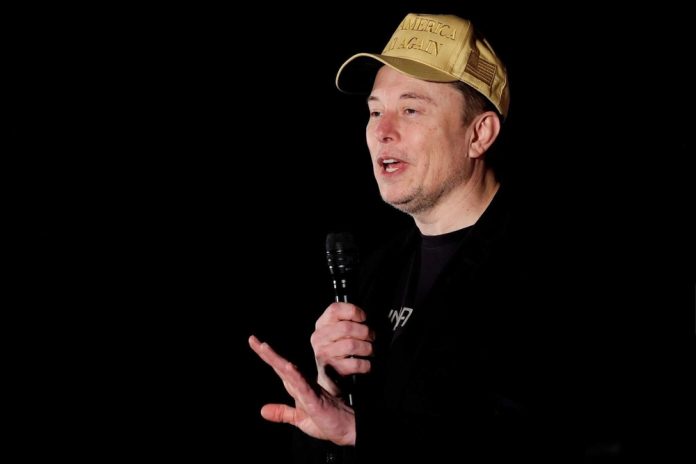

Elon Musk’s decision to merge SpaceX and xAI isn’t just another corporate restructuring – it’s creating what might become Silicon Valley’s new power blueprint. With his $800 billion net worth rivaling historic conglomerate GE’s peak market cap, Musk is building what TechCrunch’s Equity podcast calls an “everything” business, driven by his belief that “tech victory is decided by velocity of innovation.” But this move raises fundamental questions: Are we witnessing the birth of personal conglomerates that could dominate multiple industries simultaneously? And what does this mean for the competitive landscape of artificial intelligence?
The Velocity-Driven Conglomerate Model
Musk’s approach represents a radical departure from traditional corporate structures. By merging space exploration with artificial intelligence, he’s creating a feedback loop where advancements in one domain accelerate progress in the other. Imagine AI algorithms developed at xAI optimizing SpaceX rocket launches, while space-based data collection enhances AI training datasets. This isn’t just vertical integration – it’s diagonal integration across seemingly unrelated fields.
But Musk isn’t operating in a vacuum. The broader AI industry is undergoing its own transformation, with companies taking dramatically different approaches to monetization and growth. While Musk builds his personal conglomerate, other players are defining their paths through contrasting business models.
The Monetization Divide: Ads vs. Enterprise Focus
Consider the stark contrast between OpenAI and Anthropic. OpenAI, with its 800 million weekly ChatGPT users, began testing banner ads in its low-cost tier in January 2026 – a move that CEO Sam Altman himself called “uniquely unsettling.” Meanwhile, Anthropic announced on February 4, 2026 that its Claude chatbot will remain ad-free, arguing that “users shouldn’t have to second-guess whether an AI is genuinely helping them or subtly steering the conversation towards something monetizable.”
This divergence reflects deeper strategic differences. OpenAI expects to burn through roughly $9 billion in 2026 while generating $13 billion in revenue, having made over $1.4 trillion worth of infrastructure deals in 2025. Anthropic, in contrast, has found faster profitability through enterprise contracts and subscriptions, with its Claude Code reaching $1 billion in revenue just six months after its 2025 launch.
The Infrastructure Arms Race
Behind these business models lies an infrastructure war that’s reshaping corporate balance sheets. Google’s parent company Alphabet announced plans to increase capital expenditure by at least $55 billion more than Wall Street forecasts for 2026, with capex projected to reach $175-185 billion. CEO Sundar Pichai stated that “we’re seeing our AI investments and infrastructure drive revenue and growth across the board,” with cloud revenues surging 48% to $17.7 billion due to escalating demand for AI computing power.
This spending surge isn’t limited to tech giants. Venture capital firm Andreessen Horowitz (a16z) has raised $15 billion in new funding, with $1.7 billion allocated specifically to AI infrastructure investments. As Jennifer Li, general partner with a16z’s infrastructure team notes, the focus spans from chip design to software stacks, though she remains “skeptical about some of the industry’s biggest assumptions, including the idea that AI will replace human creativity anytime soon.”
Regulatory Scrutiny and Competitive Pressures
As these conglomerates grow, they’re attracting increased regulatory attention. UK regulators are raising “deeply troubling questions” about Musk’s AI chatbot Grok regarding data use and consent practices. This scrutiny comes amid broader concerns about how AI companies handle user data while pursuing aggressive growth strategies.
The competitive landscape is also shifting. Anthropic’s Claude Code and Cowork tools are disrupting traditional software development, with about 90% of the code behind Claude Code generated using the tool itself. As Aditya Agarwal, former chief technology officer at Dropbox, observed: “It was very clear that we will never ever write code by hand again. Something I was very good at is now free and abundant.”
The Future of Tech Power Structures
So what does Musk’s “everything” business blueprint mean for Silicon Valley’s future? First, it suggests that scale and integration across domains may become more important than specialization. Second, it highlights how personal vision and control can drive innovation velocity in ways traditional corporate governance might not. Third, it raises questions about whether other founders like Sam Altman might follow suit with their own conglomerate structures.
But this model isn’t without risks. The regulatory scrutiny facing Grok shows how data practices can become flashpoints. The infrastructure investments required – from Google’s $185 billion capex forecast to OpenAI’s trillion-dollar deals – create enormous financial pressures. And the competitive dynamics between ad-supported models, enterprise-focused approaches, and personal conglomerates create a complex ecosystem where no single strategy guarantees success.
As businesses and professionals navigate this landscape, they face critical questions: Should they build their own integrated AI capabilities, partner with emerging conglomerates, or focus on specialized niches? How do they balance innovation velocity with sustainable business models? And what role will regulation play in shaping which approaches succeed?
One thing is clear: The era of single-focus AI companies may be giving way to a new age of integrated power structures. Whether Musk’s blueprint becomes the template others follow – or a cautionary tale about overextension – will depend on how well these conglomerates navigate the complex interplay of innovation, monetization, infrastructure, and regulation that defines today’s AI landscape.