


Imagine walking through a book fair and seeing thousands of authors holding empty books with just their names on the cover. This chilling protest at the London Book Fair wasn’t fiction – it was a stark warning about how artificial intelligence’s hunger for training data is colliding with centuries-old copyright protections. As generative AI models require immense quantities of human-created content, tech companies and creatives are locked in a battle that could reshape entire industries.
The UK’s Copyright Crossroads
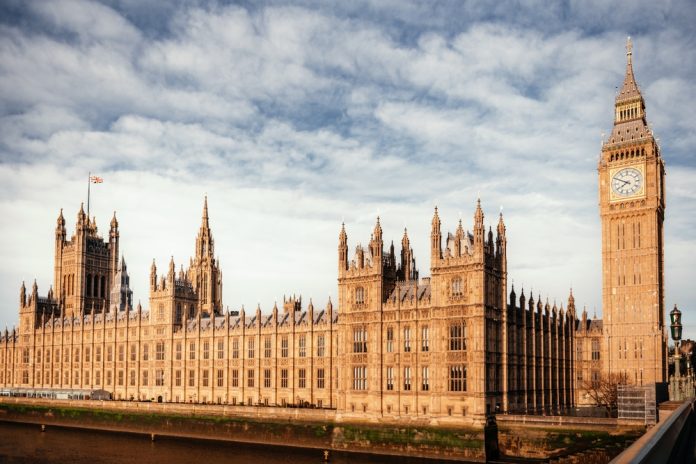
Britain faces a critical decision that could determine whether it becomes an AI powerhouse or protects its world-leading creative sector. The government is considering a text and data mining (TDM) exception that would let companies train AI models without always seeking copyright holders’ permission. Tech advocates argue this would help UK companies compete globally, but the House of Lords communications and digital committee warns against “sacrificing the UK’s outstanding creative capacity for speculative AI gains.”
This isn’t just theoretical. The New York Times is currently suing Microsoft and OpenAI for using its journalism to train ChatGPT. Scarlett Johansson’s voice was cloned without permission, and Robert Downey Junior has instructed lawyers to sue anyone creating AI-generated replicas of him. The problem isn’t that copyright law is outdated – it’s that it’s being ignored.
When AI Rewrites More Than Code
The copyright debate extends beyond books and journalism into software development. A recent controversy involving the chardet Python library reveals how AI is testing legal boundaries. Developer Dan Blanchard used Claude Code to create a ground-up rewrite of chardet, changing its license from LGPL to MIT – a move that sparked controversy with original creator Mark Pilgrim.
“Their claim that it is a ‘complete rewrite’ is irrelevant,” Pilgrim argued, “since they had ample exposure to the originally licensed code.” The new version showed only 1.29% structural similarity to previous versions, compared to up to 80% similarity between earlier human-written versions. This case highlights fundamental questions: When AI rewrites code, does it create derivative works? Can licensing terms be changed through AI-assisted development?
Open source evangelist Bruce Perens captured the industry’s anxiety: “I’m breaking the glass and pulling the fire alarm! The entire economics of software development are dead, gone, over, kaput!”
The Identity Theft Problem
Beyond copyright infringement, AI is raising new questions about identity and expertise. Journalist Julia Angwin recently filed a class action lawsuit against Grammarly’s parent company for using her identity without consent in an AI feature called ‘Expert Review.’ The feature simulated editorial feedback from personalities like Stephen King and Kara Swisher for subscribers paying $144 per year.
“I have worked for decades honing my skills as a writer and editor,” Angwin stated, “and I am distressed to discover that a tech company is selling an imposter version of my hard-earned expertise.” Tech journalist Kara Swisher responded more bluntly: “You rapacious information and identity thieves better get ready for me to go full McConaughey on you.”
The Transparency Imperative
The solution may lie in what’s been missing from the AI development process: transparency. In 2022, the founder of Midjourney admitted his AI image generator had scraped 100 million images without knowing their origins. While websites can use robot.txt commands to block scraping, some companies allegedly obscure their tracks by paying third-party scrapers.
Experts argue that transparency about training data isn’t just about paying artists – it’s also crucial for addressing concerns about biased or inequitable AI outputs. As models sometimes “memorize” and regurgitate copyrighted material word-for-word, the argument that they only learn patterns rather than store content becomes harder to defend.
A Historical Pattern Repeating
This isn’t the first time new technology has threatened copyright. In the 1770s, Scottish booksellers argued copyright law didn’t apply to them because their printing presses were outside English jurisdiction. The daguerreotype, phonograph, radio, cassettes, home video, and internet all brought predictions of copyright’s demise – all proved premature.
Today’s AI sector claims exceptional status, but as the House of Lords committee noted, “So has every new industry for the past three hundred years.” The difference now is scale and speed. AI models can ingest and process more creative work in days than humans could in lifetimes.
Finding the Balance
The path forward requires nuance. Ministers must balance protecting rights holders with not overburdening startups. Some progress is emerging: Anthropic paid $1.5 billion to settle a class-action lawsuit by book authors, a German court ruled against using copyrighted song lyrics without licenses, and Amazon won an injunction against Perplexity AI for allegedly illegal scraping.
YouTube is taking proactive steps with AI deepfake detection technology for politicians and journalists, similar to its Content ID system. “This expansion is really about the integrity of the public conversation,” explained YouTube’s Leslie Miller. “We know that the risks of AI impersonation are particularly high for those in the civic space.”
The question isn’t whether AI will transform creative industries – it already has. The real challenge is ensuring this transformation doesn’t come at the cost of the very creativity that fuels it. As Britain and other nations grapple with these issues, they’re not just writing new regulations – they’re determining what kind of creative future we’ll inhabit.