

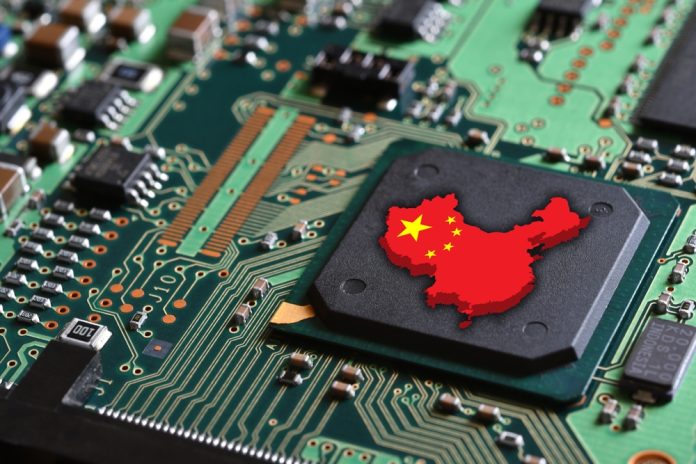

In a stunning reversal of technological dominance, China has surpassed the United States in the global market for open artificial intelligence models, capturing 17% of new model downloads compared to America’s 15?8%? This shift, documented by MIT and Hugging Face data, signals a fundamental realignment in how AI development and deployment will unfold globally? But what does this mean for businesses racing to implement AI solutions, and who stands to benefit from this new technological landscape?
The Open Model Revolution
Chinese companies like DeepSeek and Alibaba’s Qwen are releasing AI models with unprecedented frequency�sometimes weekly or biweekly�creating a torrent of innovation that’s rapidly being adopted worldwide? These open models, which developers can freely download, modify, and integrate, are becoming the foundation for countless new AI applications and services? Meanwhile, US giants like Google and OpenAI have focused increasingly on closed, proprietary systems, creating an opening that Chinese firms have aggressively exploited?
The implications extend far beyond academic interest? As Wendy Chang, senior analyst at Mercator Institute for China Studies, notes: “In China, open source has been sort of a more mainstream trend than in the US??? US companies have chosen not to play that way??? They don’t want to open source their secrets?” This strategic divergence means Chinese AI models could become the default choice for startups and researchers globally, potentially shaping AI development for years to come?
Foxconn’s Strategic Pivot
While the AI software battle intensifies, one of the world’s most important manufacturers is undergoing its own transformation? Foxconn, the Taiwanese electronics giant best known for assembling iPhones, has been quietly repositioning itself as a critical player in the AI hardware ecosystem? Under Chairman Young Liu’s leadership since 2019, the company has tripled its share price by aligning closely with Nvidia and shifting toward AI server production?
Liu’s approach represents a dramatic departure from his predecessor’s style? Industry analysts describe him as Foxconn’s “underground chief marketing officer,” a characterization that reflects his more open, media-friendly leadership? More importantly, he’s steering the manufacturing behemoth�China’s largest private employer with nearly one million staff�away from smartphone dependency and toward the high-growth AI infrastructure market?
The timing couldn’t be more critical? As Janet Egan, senior fellow at the Center for a New American Security, warns: “It should be of concern to the US that China is making great strides in the open model domain?” With Chinese AI models gaining global traction, the hardware that runs them becomes increasingly strategic?
American Manufacturing Challenges
The US faces significant headwinds in maintaining its technological edge? Evan Beard, CEO of Standard Bots, recently testified before Congress about the stark cost disparities facing American manufacturers? “Today U?S? quotes are ten times higher than Chinese suppliers,” he revealed, highlighting a fundamental competitiveness issue that extends to robotics and advanced manufacturing?
Beard’s testimony underscores a broader concern: “America does not have a specific, actionable and funded plan to lead in advanced manufacturing and robotics?” His proposed four-part plan includes increased federal funding, program redesigns, and potential tariffs on Chinese industrial robots due to national security risks? The Manufacturing Extension Partnership program, which has helped generate $60 billion in new sales and create or retain over 1?4 million jobs since 2000, represents the kind of initiative that could be scaled to address these challenges?
Security in the AI Stack
As AI infrastructure becomes more critical, security vulnerabilities are emerging as a major concern? Nvidia recently disclosed critical security flaws in its DGX Spark computers and NeMo Framework, including 14 vulnerabilities in DGX OS and two critical issues in the NeMo Framework affecting all platforms? While no active attacks have been reported, these vulnerabilities highlight the security risks inherent in complex AI systems?
The rapid pace of AI development often outpaces security considerations, creating potential weak points in the global AI infrastructure? As companies like Foxconn ramp up production of AI servers and Chinese open models proliferate, ensuring the security and reliability of these systems becomes paramount for businesses adopting AI technologies?
Global Implications
The convergence of these trends�China’s open AI ascendancy, Foxconn’s strategic pivot, American manufacturing challenges, and emerging security concerns�paints a complex picture of the global AI landscape? US export controls on advanced Nvidia chips have inadvertently pushed Chinese labs toward smaller, more efficient open models, while American companies face both competitive pressure and security challenges?
For businesses and professionals, the message is clear: the AI ecosystem is becoming more fragmented and geopolitically complex? Companies must navigate not only technical considerations but also supply chain dependencies, security risks, and the evolving competitive landscape between open and closed AI approaches? As the battle for AI supremacy intensifies, understanding these interconnected dynamics becomes essential for making informed strategic decisions?