

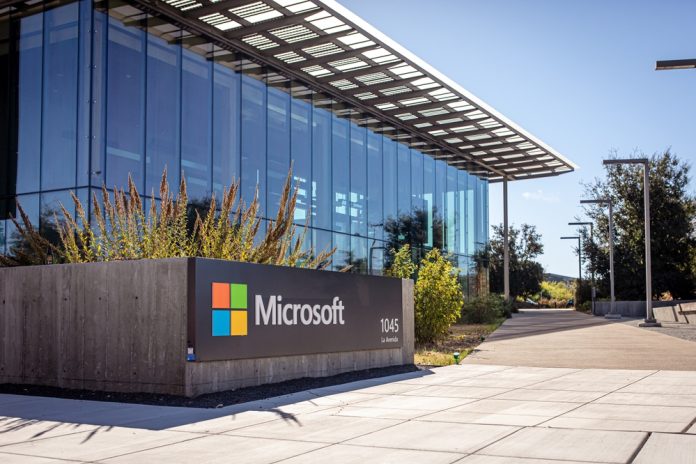

As Microsoft CEO Satya Nadella stood beside Indian Prime Minister Narendra Modi this week announcing a $17?5 billion investment in India’s AI infrastructure, the move felt less like a corporate expansion and more like a strategic gambit in a high-stakes global chess match? Microsoft’s commitment�its largest ever in Asia�will fund new data centers, AI infrastructure, and skilling programs from 2026 to 2029, building on the $3 billion the company committed earlier this year? But beneath this headline-grabbing announcement lies a complex web of infrastructure challenges, geopolitical tensions, and regulatory battles that will determine whether this investment pays off?
The Infrastructure Arms Race
Microsoft’s India push comes amid what the Financial Times describes as a “massive boom” in data center construction driven by AI development? Tech giants Google, Amazon, Microsoft, and Meta are projected to spend over $400 billion on data centers in 2026 alone, on top of $350 billion this year? JPMorgan predicts more than $5 trillion will be spent building AI infrastructure over the next five years, while McKinsey expects demand for data centers to increase by 22% annually?
But this building frenzy faces significant headwinds? As Robert James, partner at Pillsbury Winthrop Shaw Pittman, notes: “One raging issue in the US right now is the grid? As anyone visiting the US knows we have underinvested systematically in our infrastructure, and the electrical grid is no exception to that?” S&P Global predicts data centers in the US will require 22% more grid power by the end of 2025, and globally, data centers will require nearly three times as much power in 2030?
India presents its own unique challenges? While Microsoft plans to open its largest Indian data center region in Hyderabad by mid-2026�comprising three availability zones roughly the size of two Eden Gardens stadiums�the country faces patchy power availability, high energy costs, and water scarcity in several regions? These factors could slow AI infrastructure build-out and raise operating expenses for cloud providers?
The Geopolitical Context
Microsoft’s India investment arrives at a critical moment in US-China tech relations? Just days before Nadella’s announcement, reports emerged that the US Department of Commerce may allow Nvidia to export its H200 AI chips to China, though exports would be limited to chips roughly 18 months old? This potential decision conflicts with Congressional concerns about national security, with Senators Pete Ricketts and Chris Coons introducing the SAFE Chips Act on December 4, which would block advanced AI chip exports to China for 30 months?
Meanwhile, China is pursuing its own AI strategy? According to analysis in the Financial Times, Chinese companies like DeepSeek, Alibaba, Baidu, Zhipu, Moonshot AI, and Meituan are releasing high-performing open-source models that rival US counterparts while using less computing power? DeepSeek’s latest models reportedly match the reasoning performance of OpenAI’s GPT-5 and Google’s Gemini-3 Pro, and the top 10 open-source AI models are almost all Chinese?
The Regulatory Battleground
As Microsoft expands in India, it will encounter new regulatory frameworks? India’s Department for Promotion of Industry and Internal Trade has proposed a mandatory royalty system requiring AI companies like OpenAI and Google to pay for training models on copyrighted content? The framework would grant AI firms automatic access to all copyrighted works through a “mandatory blanket license” administered by a new collecting body that would distribute royalties to rights holders?
Back in the US, President Donald Trump announced plans to sign an executive order this week that would block states from enacting their own AI regulations, arguing that a single federal rulebook is necessary for the US to maintain its lead in AI development against China? The order would create an “AI Litigation Task Force” to challenge state laws in court, a move that has drawn bipartisan opposition from politicians who argue it undermines federalism and state rights?
The Human Element
Beyond infrastructure and geopolitics, Microsoft’s investment includes significant human capital components? The company will work with India’s Ministry of Labour and Employment to integrate advanced AI capabilities into two flagship digital public platforms�e-Shram and the National Career Service�to offer AI-driven services to more than 310 million informal workers? These platforms will use Microsoft’s Azure OpenAI Service to provide multilingual access, AI-assisted job matching, predictive analytics on skill and demand trends, automated r�sum� creation, and personalized pathways?
Microsoft’s skilling efforts are also accelerating? Through its “ADVANTA(I)GE India” initiative, the company has trained 5?6 million people since January�well ahead of its goal of training 10 million by 2030�with the programs enabling more than 125,000 individuals to secure jobs or start businesses? Microsoft is now doubling its earlier commitment and aims to equip 20 million Indians with basic AI skills by 2030?
The Bigger Picture
What does this all mean for businesses and professionals watching these developments? First, the AI infrastructure boom is creating unprecedented opportunities for specialized funds and law firms? As Erica Berthou, a Kirkland partner, notes: “The latest trend is really funds focused on data centres, digital infrastructure funds�it’s really becoming a very precise asset class?”
Second, the power constraints facing data centers are driving innovation in energy solutions? David Ridenour of King & Spalding observes: “At the end of the day there is going to have to be a nuclear play?” US government agencies have committed more than $6 billion to developers of small modular reactors since 2019, and ambitious projects are exploring everything from nuclear power to space-based data centers?
Finally, the regulatory landscape is becoming increasingly complex and fragmented? Companies operating in multiple jurisdictions will need to navigate conflicting requirements, from India’s proposed copyright licensing system to potential US federal preemption of state AI laws?
As Microsoft’s Puneet Chandok, president of Microsoft India and South Asia, stated: “As the nation moves confidently into its AI-first future, we are proud to stand as a trusted partner in advancing the infrastructure, innovation, and opportunity that can power a billion dreams?” But whether those dreams become reality will depend on how well companies, governments, and societies navigate the complex web of infrastructure challenges, geopolitical tensions, and regulatory battles that define today’s AI landscape?