

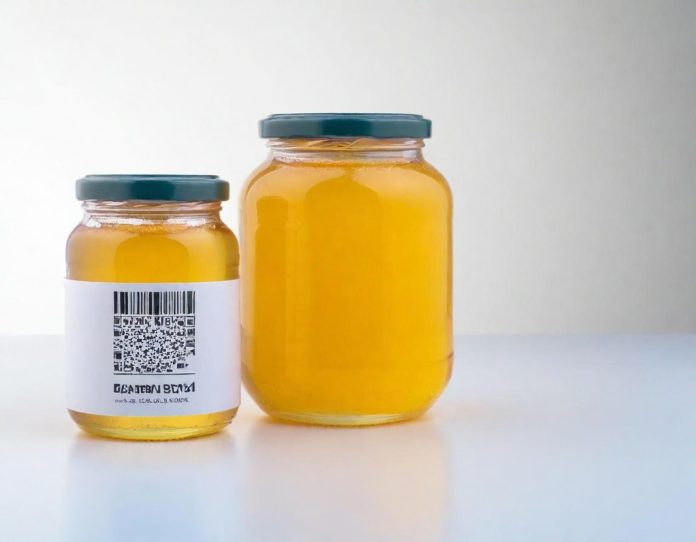

Imagine buying honey that’s actually corn syrup, or olive oil labeled “extra virgin” that’s anything but. While these might seem like minor deceptions, food fraud has grown into a $110 billion global industry that puts both consumer health and legitimate businesses at risk. What’s more surprising? The very technology that could solve this crisis is also creating new vulnerabilities – and artificial intelligence sits at the center of this complex battle.
The Scale of the Problem
Food crime isn’t just about counterfeit luxury goods – it affects everyday items consumed by millions. According to a 2025 estimate, food fraud costs the global economy approximately �81 billion ($110 billion) annually, with common targets including honey, olive oil, dairy, seafood, and spices. The problem persists despite improving detection methods because fraudsters constantly adapt their techniques.
Dr. Juraj Majt�n, who heads a lab studying bees and bee products at the Slovak Academy of Sciences, explains the challenge: “Currently there is no single method that can say that this honey is fake honey.” Sophisticated fakes can look, smell, and taste identical to genuine products, and they can even fool chemical analysis because sugar levels are so similar.
AI’s Promising Role in Detection
This is where artificial intelligence enters the picture. Machine learning algorithms are increasingly being deployed to sift through massive amounts of data to identify patterns that human analysts might miss. Thermal imaging, light analysis using lasers, and DNA profiling have all become more sophisticated in recent years, with AI helping to categorize and analyze results more efficiently.
Emerging portable testing methods include X-ray fluorescence analyzers for turmeric and handheld DNA kits to test olive oil. These AI-powered tools can create early warnings about risks of fraudulent or unsafe food, potentially stopping tainted products before they reach consumers. The technology shows particular promise for border control officers and fraud investigators who need rapid, accurate results in the field.
The Limitations of High-Tech Solutions
However, as Dr. Selvarani Elahi, the UK’s deputy government chemist at LGC, notes, technological solutions face practical limitations. “People thought blockchain applied to the food industry was going to solve all of our problems. It hasn’t,” she says. Blockchain-based tracking might work for simple products like South American bananas, but becomes impractical for complex items like lasagne containing 50 ingredients from around the world.
Dr. Karen Everstine, technical director of food safety solutions at FoodChain ID, adds another perspective: “One of the challenges is marrying that really high-technology, high-innovation space with the realities of food production.” Testing everything simply isn’t practical or affordable for most producers and regulators.
AI’s Unintended Consequences
While AI helps fight food fraud, it also creates new vulnerabilities. The rapid adoption of AI tools across industries – from OpenAI’s Codex reaching over a million developers to Waymo’s world models for self-driving cars – demonstrates how quickly these technologies spread. This acceleration creates opportunities for bad actors to exploit systems before proper safeguards are in place.
Consider the case of attorney Steven Feldman, who faced sanctions for using AI tools that generated fake citations in legal filings. If AI can create convincing but false legal documents, what’s to stop it from generating fraudulent food safety certificates or supply chain documentation? The technology that helps detect fraud could also be used to create more sophisticated forgeries.
The Human Element in a Tech-Driven World
Perhaps the most telling insight comes from looking beyond the food industry. As Stephen Bush argues in the Financial Times regarding AI’s impact on employment, there’s value in human involvement that technology can’t replace. In food safety, this translates to simple but effective practices: buying from local beekeepers, as Dr. Majt�n suggests, or following Everstine’s rule that “if the price seems too good to be true, that should be a red flag.”
These low-tech approaches work because they rely on human relationships and common sense – elements that AI struggles to replicate. A $3 bottle of olive oil in the US might be suspect not because an algorithm flagged it, but because consumers understand basic economics.
The Regulatory Challenge
The food fraud crisis highlights a broader issue in AI governance. Just as regulators struggle to keep up with food fraudsters, they face similar challenges with AI development. Spotty surveillance by under-resourced regulators, as Elahi notes regarding spice contamination, mirrors the regulatory gaps in AI oversight.
This creates a dangerous cycle: AI helps detect fraud, but also enables new forms of deception, while regulators race to catch up with both. The 2023 case of hundreds of US children poisoned by lead in imported cinnamon shows the real-world consequences when detection systems fail.
Looking Forward
The solution likely lies in balanced integration. AI can handle data analysis at scale, identifying patterns across global supply chains that humans would miss. But human expertise remains essential for interpreting results, understanding context, and making judgment calls about when something “feels” wrong.
As food companies and regulators navigate this landscape, they face the same question emerging across industries: How do we harness AI’s power without becoming dependent on it? The food fraud crisis suggests the answer involves technology as a tool rather than a solution – augmenting human judgment rather than replacing it.
For businesses, this means investing in both technological solutions and human expertise. For consumers, it means maintaining healthy skepticism even as technology promises greater transparency. And for everyone involved in the food supply chain, it means recognizing that in the battle against fraud, the most sophisticated technology still needs the most basic human wisdom to be truly effective.