


In a move that underscores the accelerating globalization of artificial intelligence, Palantir Technologies has secured a landmark deal with South Korean industrial giant HD Hyundai, valued at hundreds of millions of dollars. This partnership, announced exclusively to Reuters, represents more than just another corporate contract – it’s a bellwether for how AI is reshaping traditional industries worldwide. As Palantir CEO Alex Karp expressed bullish optimism about Korea’s technological potential, this deal reveals how data analytics platforms are becoming indispensable tools for industrial transformation.
The Industrial AI Revolution
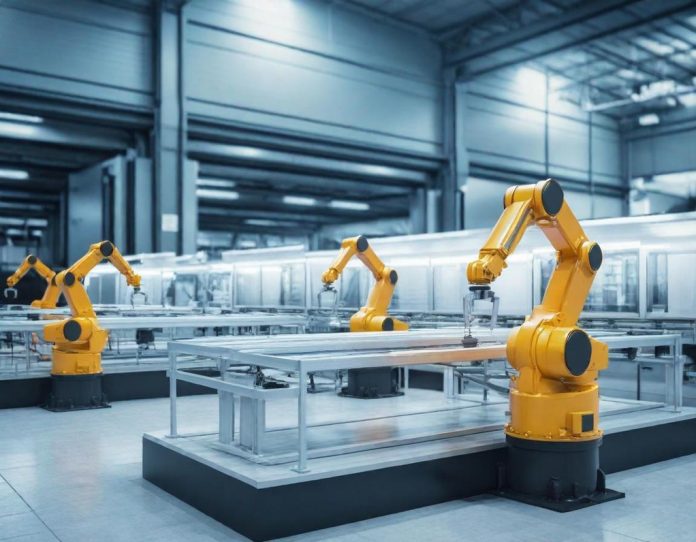
Palantir’s expansion into South Korea’s industrial sector comes at a time when AI is fundamentally changing how businesses operate. According to the International Federation of Robotics, over 4.7 million industrial robots were in operation globally in 2024, with annual installations growing at twice the rate of ten years ago. China alone accounted for 54% of all new robots installed last year, demonstrating the massive scale of industrial automation.
“AI-enabled robots that pick and place different parts and materials in our assembly lines reduce automation costs by 90 percent,” says Stephan Schlauss, global head of manufacturing at Siemens. “Manual workers are also empowered with AI-guided systems, enhancing productivity and quality.” This sentiment echoes across industries, from Amazon’s deployment of over 1 million robots in its fulfillment centers to healthcare installations nearly doubling in 2024 compared to the previous year.
Beyond Traditional Manufacturing
The Palantir-HD Hyundai partnership represents a broader trend: AI’s expansion beyond tech hubs into traditional industries. While the specific applications in HD Hyundai’s operations weren’t detailed, similar industrial AI implementations typically involve predictive maintenance, supply chain optimization, and quality control systems that can process vast amounts of operational data.
This trend isn’t limited to manufacturing. In China, ByteDance – owner of TikTok – has aggressively expanded its corporate cloud service, Volcano Engine, capturing nearly 13% of China’s AI cloud services revenue in the first half of 2025. “ByteDance’s growth trajectory and AI-led strategy suggest it could become one of the dominant players as demand for AI accelerates,” notes Charlie Dai, vice-president and principal analyst at Forrester.
The Competitive Landscape Heats Up
As AI becomes more integrated into business operations, the competitive dynamics are shifting dramatically. OpenAI’s annual revenue has more than tripled to over $20 billion in 2025, up from $6 billion in 2024, driven by a massive expansion in computing capacity from 0.2 GW in 2023 to 1.9 GW in 2025. “Computing power is the scarcest resource in AI,” emphasizes OpenAI CFO Sarah Friar. “Access to computing power determines who can scale.”
This resource competition extends to hardware, with ByteDance becoming Nvidia’s biggest customer in China in 2024 and budgeting 85 billion yuan for AI processors this year. Meanwhile, investment in robotics continues to surge, with 381 deals transacted in the robotics sector in Q1 2025 alone – a 20% increase from 2024.
Technical Challenges and Workforce Implications
Despite the rapid adoption, significant technical hurdles remain. “We need robots to be much quicker at learning [new tasks] because the rate at which they learn at the moment is very slow, which is expensive,” explains Edward Johns, associate professor at Imperial College London and founder of the Robot Learning Lab. Data quality presents another challenge, as Stephan Hotz, chief product officer of Wandelbots, notes: “If you have only one person cutting an onion and you take that as a basis to create a ton of synthetic data, the risk is higher [that you] go off in weird directions.”
The workforce implications are equally complex. While AI and robotics enhance productivity, they require significant adaptation from existing workers and create demand for new skill sets. The transition isn’t merely about replacing human labor but creating hybrid systems where AI augments human capabilities.
Global Strategic Implications
Palantir’s Korean deal reflects broader geopolitical and economic trends. As AI becomes central to industrial competitiveness, nations are racing to establish technological leadership. South Korea’s embrace of AI through partnerships with companies like Palantir positions it strategically in the global AI landscape, while China’s dominance in robotics installations and ByteDance’s cloud expansion demonstrate alternative paths to AI leadership.
The business implications are profound: companies that effectively integrate AI into their operations gain significant competitive advantages in efficiency, innovation, and adaptability. However, this requires substantial investment not just in technology but in organizational change and workforce development.
As AI continues its march into traditional industries, partnerships like Palantir’s with HD Hyundai will become increasingly common – and increasingly essential for businesses seeking to remain competitive in a rapidly evolving technological landscape.