

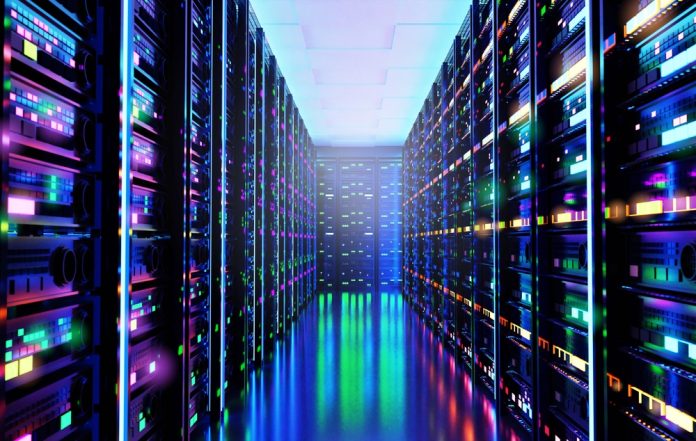

Imagine a world where AI computations happen not in massive terrestrial data centers, but in orbit around Earth, powered by unlimited solar energy. This isn’t science fiction – it’s the next frontier in artificial intelligence infrastructure, and it’s attracting hundreds of millions in venture capital. As AI systems become increasingly sophisticated, the race to build the physical infrastructure supporting them is creating new battlegrounds from European boardrooms to the vacuum of space.
The European AI Sovereignty Push
French AI startup Mistral’s recent $830 million debt financing round signals a significant shift in Europe’s approach to artificial intelligence. The company plans to build Nvidia-powered data centers across Europe, aiming for 200MW of AI computing capacity by 2027. “Scaling our infrastructure in Europe is critical to empower our customers and to ensure AI innovation and autonomy remain at the heart of Europe,” says Arthur Mensch, Mistral’s CEO.
This move comes amid growing European concerns about dependence on U.S. tech giants for AI infrastructure. With plans to spend �4 billion on AI infrastructure and targeting �1 billion in annual recurring revenue by year-end, Mistral represents Europe’s most ambitious attempt yet to create sovereign AI alternatives. The company’s first facility in Bruy�res-le-Ch�tel will house 13,800 Nvidia GB300 AI chips, with additional facilities planned in Sweden.
The Orbital Frontier
While Europe builds terrestrial infrastructure, another group of visionaries is looking skyward. Venture capitalists are pouring hundreds of millions into AI satellite startups like Starcloud and Aetherflux, which plan to launch AI data centers into space. Starcloud recently raised $170 million at a $1.1 billion valuation, while Aetherflux is in talks to raise $300 million at a $2 billion valuation.
“By moving AI compute to space, we unlock access to unlimited solar power and completely remove the energy bottleneck,” explains Philip Johnston, Starcloud’s co-founder and CEO. The potential advantages are compelling: orbital systems could handle AI app requests from Earth while operating more cheaply than terrestrial systems due to unlimited solar power.
SpaceX and Blue Origin have already applied to launch thousands of AI satellites, with SpaceX targeting a constellation of up to 1 million AI satellites. Nvidia has even introduced AI chips specifically designed for space use, though CEO Jensen Huang acknowledges technical challenges: “The challenge of course is cooling – you can’t take advantage of conduction or convection. You can only use radiation.”
The Human Factor in AI’s Future
Amid this infrastructure boom, a crucial question emerges: What happens to the people who work with AI? According to Stanford University professor Erik Brynjolfsson, the job apocalypse predictions are overblown. “The real value is defining the right questions,” he argues. “Understanding the problems that need to be solved, defining them in a way that really are useful to people. So those who can identify those opportunities are going to be more valuable than ever before.”
Brynjolfsson suggests that rather than eliminating jobs, AI will transform roles and create new positions. “A tiny fraction of people do coding and software development. Going forward, I wouldn’t be surprised if 10 times as many people do it,” he predicts, noting that natural language interfaces will enable more people to create applications without traditional coding skills.
Regulatory Accountability
As AI infrastructure expands, regulatory bodies are establishing frameworks for accountability. The UK’s Financial Reporting Council recently issued the world’s first guidance on AI use in auditing, emphasizing that auditors cannot blame AI for audit failures. “You can’t blame it on the box,” says Mark Babington, executive director of regulatory standards at the FRC. “If you use this technology, you are still accountable for it.”
This guidance addresses risks like AI misuse, hallucinations, and data distortions while acknowledging AI’s potential to revolutionize audits through efficiency gains. Major audit firms like KPMG, PwC, Deloitte, and EY are investing billions in AI, but concerns persist about job losses and widening quality gaps.
The Infrastructure Imperative
The parallel development of terrestrial and orbital AI infrastructure reflects a fundamental truth about artificial intelligence: its potential is limited by the physical systems that support it. Whether in European data centers or orbiting satellites, the hardware matters as much as the software.
As Chetan Puttagunta, partner at Benchmark, observes about the orbital AI trend: “If you project out the future, this feels pretty on trend on where the world is going.” The question for businesses and professionals isn’t whether to engage with AI, but where that engagement will physically occur – and who will control the infrastructure that makes it possible.