

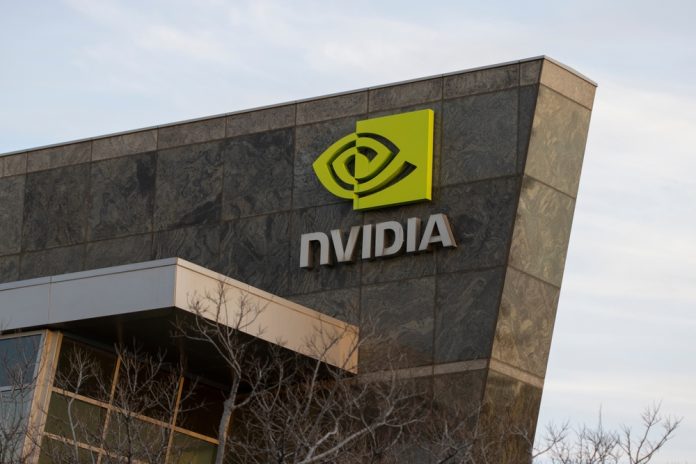

Remember when Nvidia’s earnings reports moved markets like economic data? Those days appear to be over. Last week, despite posting another quarter of spectacular results, the chipmaker’s stock barely budged, signaling a profound shift in investor sentiment toward artificial intelligence. The market is no longer asking whether AI is transformative enough – it’s grappling with whether it might be too transformative, potentially disrupting entire industries and employment landscapes.
The Great AI Reckoning
Financial markets are experiencing what Morgan Stanley analysts describe as “typical of a major investment cycle.” Volatility has returned with a vengeance, with US tech stocks heading for their worst month in almost a year. The Nasdaq Composite fell 1.1% on Friday, bringing February losses to around 3.5%, while the S&P 500 dropped 0.8%. This turbulence comes despite Nvidia’s expectation for $78 billion in earnings this quarter – numbers that would have sent markets soaring just months ago.
What changed? Investors are confronting two competing narratives about AI’s future. On one side, companies like Block are demonstrating AI’s disruptive potential by cutting 40% of their workforce while seeing their stock price surge over 25%. CEO Jack Dorsey’s declaration that “intelligence tools have changed what it means to build and run a company” reflects a growing corporate consensus that AI enables smaller teams to achieve more. But this efficiency comes at a human cost that’s beginning to weigh on market psychology.
The Citrini Effect and Market Psychology
The catalyst for recent volatility appears to be an obscure blog post from Citrini Research that sketched a dystopian vision of AI leading to mass unemployment and market collapse. While many financial professionals dismiss the report as alarmist – Citadel Securities’ Frank Flight noted that “successive waves of technological change have not produced runaway exponential growth, nor have they rendered labor obsolete” – the market’s reaction reveals deeper anxieties.
“A market that moves 3% on a blog is a market that does not know,” observed Helen Jewell, international chief investment officer for fundamental equities at BlackRock. This uncertainty is prompting investors to rethink their exposure to what has become a narrow, US-focused AI trade. The result? While the market-cap weighted S&P 500 remains stuck, an equally-weighted version of the same index continues to climb, suggesting money is flowing away from AI heavyweights toward more diversified opportunities.
Beyond Nvidia: The Hardware Diversification Play
Even within the AI infrastructure sector, diversification is becoming the watchword. Google’s reported multi-billion dollar deal with Meta to supply Tensor Processing Units (TPUs) represents a significant challenge to Nvidia’s dominance. The agreement, which involves Meta purchasing TPUs for data center use, highlights how major tech companies are seeking alternatives to avoid over-reliance on a single supplier.
This hardware competition reveals important trade-offs in the AI acceleration market. Google’s TPU v7 offers 4.6 FP8-Petaflops compared to Nvidia’s Blackwell Ultra at 5 Petaflops, but consumes an estimated 1000W versus 1400W for Nvidia’s chip. Such differences in performance and efficiency are driving what industry analysts see as a necessary diversification in AI hardware suppliers, particularly as energy constraints become more pressing.
The Professional’s Dilemma: Opportunity vs. Obsolescence
For business leaders and investors, the current moment presents a complex calculus. On one hand, Morgan Stanley’s analysis of more than 10,000 earnings and conference transcripts shows that nearly a third of companies adopting AI have seen at least one quantifiable benefit, up from 24% in the third quarter of last year. The bank used AI to conduct this analysis – proving the technology’s utility even as it studies its impact.
Yet the fear of disruption is real and spreading. Bank of America analysts noted that the recent sell-off was “driven by a bearish narrative that AI would eliminate most white-collar jobs and eventually lead the economy into collapse.” Portfolio managers like Nicolas Trindade at BNP Paribas Asset Management point to “AI job displacement fears across many industries” as a key driver of risk-off sentiment.
Navigating the AI Investment Landscape
The wisest approach, according to market veterans, involves screening out overconfidence and embracing uncertainty. As Jewell advises, investors should ask: “How do I make sure my portfolio is not too exposed to any factor, geography or risk?” The answer, while perhaps boring, is diversification – both across sectors and geographies.
This explains why European and Asian stocks are outperforming their US peers this year, and why Treasury yields have fallen as investors seek safe assets. The yield on the 10-year Treasury dropped below 4% for the first time since November, reflecting what Columbia Threadneedle portfolio manager Edward Al-Hussainy describes as investors needing “liquidity and safety against risk.”
What’s clear is that we’ve entered a new phase of the AI investment cycle – one less about technological promise and more about practical implementation and consequences. As companies like Block demonstrate AI’s transformative potential through workforce restructuring, and hardware competition intensifies with Google challenging Nvidia’s dominance, investors must navigate a landscape where AI represents both unprecedented opportunity and significant disruption. The companies that succeed will be those that balance innovation with thoughtful implementation, recognizing that the most valuable AI applications may be those that augment rather than replace human capabilities.