


Artificial intelligence is facing a public relations crisis that goes far deeper than most tech leaders seem to realize. While industry executives focus on breakthrough capabilities and market valuations, a groundswell of public anxiety is brewing – and it’s about to become a political problem that could reshape the entire AI landscape.
The Tangible Symbols of AI Anxiety
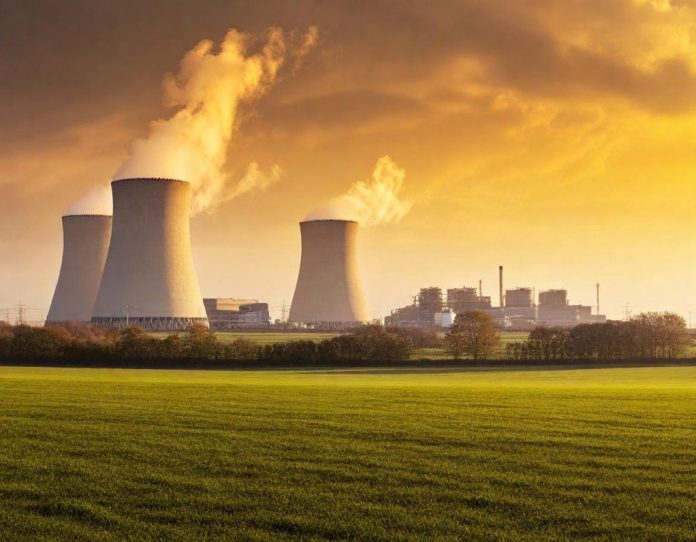
For many Americans, the AI boom isn’t measured in chatbot capabilities or stock prices, but in the giant data centers sprouting across the landscape. These “giant eyesores,” as described in a recent Financial Times analysis, create minimal local employment beyond construction and threaten to consume scarce power and water resources. They’ve become the highly visible – and far from welcome – symbol of an industry that seems disconnected from everyday concerns.
This isn’t just about aesthetics. According to Pew Research, around half of Americans worry that AI will worsen people’s ability to think creatively or form meaningful relationships. Almost none believe it will make these things better. The anxiety extends to children’s safety, job security, and the very fabric of human interaction.
The Military AI Divide
While public concern focuses on local impacts, a different battle is unfolding in Washington that reveals deeper industry fractures. Anthropic, the AI company behind Claude, recently saw its $200 million defense department contract collapse over ethical disagreements. The company refused to allow its AI to be used for mass domestic surveillance or lethal autonomous weapons, leading to tense negotiations with Pentagon officials.
“Near the end of the negotiation, the [department] offered to accept our current terms if we deleted a specific phrase about ‘analysis of bulk acquired data’ which was the single line in the contract that exactly matched this scenario we were most worried about,” Anthropic CEO Dario Amodei told staff. “We found that very suspicious.”
Meanwhile, OpenAI struck a deal with the Pentagon for military applications, creating a stark contrast in corporate approaches. The tension escalated publicly, with Under-Secretary of Defense Emil Michael calling Amodei a “liar” with a “God complex,” while Amodei accused OpenAI of engaging in “safety theater.”
The Global Ripple Effects
The military AI debate isn’t just theoretical. The U.S. government reportedly used Claude in air assaults on Iran, leading to retaliatory drone strikes that damaged Amazon data centers in the Middle East and caused Claude outages. Meanwhile, the Pentagon is developing AI-powered cyber tools to target Chinese infrastructure, with contracts worth about $200 million awarded to OpenAI, Anthropic, Google, and xAI.
This military focus comes as Asia’s chip companies commit to spending more than $136 billion for 2026 – up more than 25% from a year ago – to meet robust AI demand. The global AI race is accelerating, but the ethical and political questions are becoming increasingly urgent.
Industry Consequences and Corporate Retreat
The political and ethical tensions are starting to affect industry dynamics. Nvidia CEO Jensen Huang recently announced that his company is likely making its last investments in OpenAI and Anthropic. While Huang cited typical investment cycles, the timing suggests other factors may be at play.
MIT Sloan professor Michael Cusumano noted the complexity: “Nvidia is investing $100 billion in OpenAI stock and OpenAI is saying they are going to buy $100 billion or more of Nvidia chips.” The relationship between AI companies and their hardware providers is becoming increasingly entangled with political considerations.
The Economic Impact Beyond Silicon Valley
The AI revolution isn’t just transforming tech companies – it’s threatening entire industries. India’s $300 billion IT outsourcing sector, which employs over 6 million people, faces existential questions. Since the launch of Anthropic’s professional AI tools, shares in Indian IT firms have plunged, and at least 20,000 jobs have been lost in the past six months.
“IT is a massive sector in India: it’s about $300 billion worth of revenues, it employs over 6 million people, it’s the largest white-collar sector in the country,” explained FT’s Mumbai correspondent Krishn Kaushik. “So it’s extremely imperative for India that the sector does well.”
A Looming Political Storm
President Trump’s recent observation that “AI has a PR problem” barely scratches the surface. The midterm elections this year will provide an early test of whether AI regulation becomes a political priority. If candidates pressing for tech regulation gain traction, it could signal that the issue will dominate the next presidential election cycle.
AI companies have been slow to recognize this brewing storm. After initially touring the world to urge regulation following ChatGPT’s launch, OpenAI’s Sam Altman and other leaders have grown relatively silent. They may believe the risks are minimal – the “techlash” that began a decade ago brought almost no effective action from Washington to limit the tech industry’s power.
But this time might be different. The concerns are more tangible, the impacts more visible, and the stakes higher. From data centers consuming local resources to military applications raising ethical questions, AI is no longer an abstract concept but a force with immediate consequences.
The Path Forward
AI leaders need to articulate clear, deliverable benefits that resonate with ordinary people. The vague promises of curing cancer or reversing climate change aren’t enough to counter the very real anxieties about job losses, privacy invasions, and community impacts.
As the industry faces what could become a “botlash” similar to the “techlash” that followed Facebook’s 2016 election controversies, the question isn’t whether AI will transform society, but whether the industry can transform itself to address the legitimate concerns of the society it’s reshaping. The answer will determine not just AI’s technological future, but its political and social acceptance.