

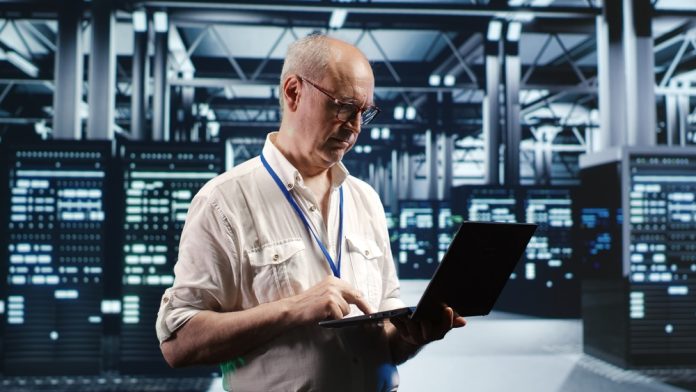

In a move that could reshape America’s energy landscape, major tech companies including Amazon, Google, Meta, Microsoft, xAI, Oracle, and OpenAI are set to sign a White House pledge to build their own power plants for data centers, promising to shield consumers from rising electricity costs driven by artificial intelligence expansion. But as these trillion-dollar corporations navigate supply chain bottlenecks and geopolitical instability, experts warn the commitment may be more aspirational than achievable.
The Power Pledge: Promise vs. Reality
President Donald Trump championed the initiative during his State of the Union speech, assuring Americans that “no one’s prices will go up” despite surging energy demand from AI infrastructure. The pledge responds to consumer backlash over electricity bills that rose 6% nationwide in February, with data center-heavy states like New Jersey and Pennsylvania experiencing 16-19% increases.
Yet industry insiders remain skeptical. “Regardless of how these data centers connect, behind the meter or as part of the network, you’re going to increase demand,” warns Ari Peskoe, director at Harvard Law School’s Electricity Law Initiative. The numbers support his concern: US data center power demand will more than triple by 2035, rising from 35 gigawatts in 2024 to 106 GW according to BloombergNEF data.
Supply Chain Bottlenecks and Alternative Solutions
The tech industry faces daunting logistical challenges in delivering on its promise. Competition for natural gas turbines – the primary power source for most independent data center projects – is fierce, with waits as long as seven years for new orders. Despite GE Vernova expanding production by 25% and Mitsubishi Power planning to double output, manufacturers remain cautious about capacity expansion.
This has forced companies to explore innovative alternatives. Google is partnering with Xcel Energy to build renewable energy infrastructure in Minnesota, including a 30 GWh iron-air battery – the world’s largest by capacity – plus 1.4 GW of wind and 200 MW of solar power. “Our commitment to Minnesota goes beyond building infrastructure,” says Amanda Peterson Corio, Google’s Head of Data Center Energy. “It’s about being a responsible partner, neighbor, and good citizen of the power grid.”
Meanwhile, startups like Aikido are testing submerged data centers in floating offshore wind turbine pods off Norway’s coast, with larger versions planned for the UK by 2028. This approach leverages proximity to renewable power sources and natural seawater cooling, though it introduces new challenges including corrosion risks and equipment stability in harsh ocean environments.
Geopolitical Risks and Security Vulnerabilities
The energy crisis intersects with escalating geopolitical tensions that threaten data center operations. Recent drone attacks on Amazon Web Services facilities in the United Arab Emirates and Bahrain caused structural damage, power disruptions, and water damage from firefighting efforts, interrupting 25 services and impacting 34 others. AWS warns full recovery will take longer due to physical damage.
These attacks coincide with Trump’s announcement that the US Navy will protect ships in the Middle East “if necessary” to address energy supply disruptions caused by conflict with Iran. With approximately 20% of the world’s oil and gas flowing through the Strait of Hormuz and roughly 200 crude oil tankers stranded in the Gulf region, the global energy market faces unprecedented volatility.
The AI Development Paradox
Ironically, as data centers struggle with power constraints, AI development tools are becoming more accessible and sophisticated. Google’s Android Studio Panda 2 now features an AI agent that can create complete new Android app prototypes with a single prompt, while Microsoft is reportedly planning a new M365 subscription tier specifically for AI agents that could cost $99 per month per user.
Security concerns persist even in development tools. Open-source alternatives like NanoClaw – with over 18,000 stars on GitHub – offer containerized AI agents that limit access to deliberately mounted resources, addressing vulnerabilities that plagued earlier systems. “Every agent has to be in its own isolated container environment,” explains developer Gavriel Cohen, highlighting the industry’s growing focus on security.
Balancing Innovation with Infrastructure Realities
The fundamental question remains: Can tech companies truly insulate consumers from the energy demands of their AI ambitions? Josh Price, director of energy and utilities at strategy firm Capstone, suggests Big Tech is “trying to push back against the narrative that they’re the bad guy.”
Yet the challenges are systemic. Nearly three-quarters of planned generation equipment for data centers relies on natural gas, according to Cleanview research tracking 56 GW of projects across the US. Two-thirds of these gas projects haven’t even announced turbine manufacturers, creating uncertainty about their viability.
As Jigar Shah, an energy investor and former Department of Energy official, bluntly observes: “The level of ineptitude by which the data center companies are sleepwalking into major problems just seems shocking for trillion-dollar companies.”
The coming years will test whether technological innovation can outpace infrastructure limitations, or whether AI’s promise will be constrained by the very energy systems it seeks to transform.