

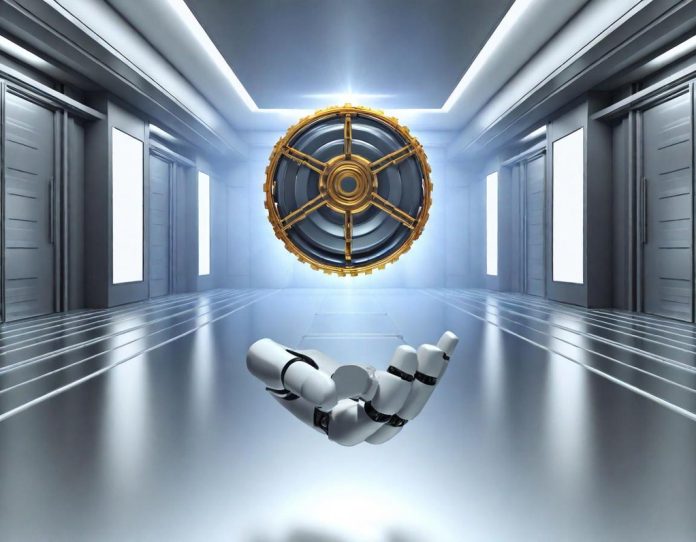

Imagine a robotic hand that can detach from its host arm, crawl through tight spaces, and grasp objects with six fingers working in multiple directions. This isn’t science fiction – it’s the latest breakthrough from Swiss researchers that could revolutionize how businesses handle everything from industrial maintenance to retail logistics. As artificial intelligence continues its relentless march into every sector, the real story isn’t just about automation replacing jobs, but about how AI is creating entirely new capabilities and business models that were previously unimaginable.
The Crawling Hand That Could Change Everything
Scientists at the Swiss Federal Institute of Technology (EPFL) have developed a detachable robotic hand that can operate independently after undocking from its host arm. With six fingers capable of gripping objects by opposing another finger – even on both front and back sides – this innovation represents a significant leap in robotic dexterity. “While popular culture often associates crawling robots with surveillance imagery, our system is designed for practical manipulation tasks, such as inspection and object retrieval in pipes or machinery,” explains Xiao Gao, first author of the paper published in Nature Communications. “The goal is to design a dual-mode robot that can go beyond human hand dexterity and improve capabilities, not stealth or monitoring.”
What makes this particularly relevant for businesses? Consider the implications for retail warehouses, manufacturing facilities, or even maintenance operations. A robot that can crawl into confined spaces to retrieve items or perform inspections could dramatically reduce downtime and improve efficiency. Digby Chappell, associate professor at the Oxford Robotics Institute, notes: “While it isn’t breaking any crawling speed records any time soon and this isn’t the first robot that can both crawl and grasp, it’s definitely pushing the boundary of what we think that robot hands should be able to do. There’s a lot of utility in robots that are versatile enough to move around, grasp and interact with the environment.”
The Human-Centric AI Revolution
While robotics advances capture headlines, another significant trend is emerging: human-centric AI. Humans&, a startup founded by former employees of Anthropic, xAI, and Google, just raised $480 million in seed funding at a $4.48 billion valuation – and the company is only three months old. Their philosophy? AI should empower rather than replace people. With 20-odd employees from major AI labs and backing from investors including Nvidia and Jeff Bezos, this startup represents a growing recognition that the most valuable AI applications might be those that enhance human collaboration rather than eliminate it.
This human-centric approach comes at a critical time. As businesses grapple with how to integrate AI into their operations, the choice isn’t simply between automation and human labor. The real opportunity lies in creating systems where AI handles repetitive tasks while humans focus on creative problem-solving, relationship-building, and strategic thinking. The massive funding for Humans& suggests that investors see significant potential in this approach, particularly for enterprise applications where collaboration and communication are key.
The Hardware Wars Heating Up
Behind these software and robotics innovations lies a fierce competition for hardware supremacy. Elon Musk recently announced that Tesla will restart work on its Dojo3 AI chip project, shifting focus to “space-based AI compute.” This comes as Nvidia unveiled the Alpamayo AI model at CES 2026, challenging Tesla’s Full Self-Driving software. Meanwhile, Anthropic CEO Dario Amodei made waves at Davos by criticizing the U.S. administration’s decision to approve the sale of Nvidia’s H200 chips to approved Chinese customers, arguing that “it’s a bit like selling nuclear weapons to North Korea.”
These developments highlight a crucial reality: AI advancement depends on both software innovation and hardware capability. As businesses consider AI adoption, they must think not just about algorithms and data, but about the underlying infrastructure that makes everything possible. The race for more powerful, efficient, and specialized AI chips will determine which companies can deploy the most sophisticated AI systems – and at what cost.
Practical Implications for Businesses
So what does all this mean for companies looking to stay competitive? First, the distinction between physical robotics and digital AI is blurring. The crawling robotic hand demonstrates how AI can enable physical systems to perform tasks that were previously impossible or prohibitively expensive. Second, the human-centric AI movement suggests that the most successful implementations will be those that augment rather than replace human workers. Third, hardware matters – companies need to consider not just what AI can do, but what infrastructure they need to support it.
As these technologies mature, businesses face both opportunities and challenges. The crawling robot hand could transform maintenance and logistics. Human-centric AI could revolutionize collaboration and productivity. But these advances also require significant investment, both in technology and in training employees to work effectively with new systems. The companies that succeed will be those that can navigate this complex landscape, balancing innovation with practical implementation.
The future of AI in business isn’t about choosing between humans and machines – it’s about creating systems where each can do what they do best. Whether it’s a robotic hand crawling through machinery or AI software enhancing team collaboration, the most exciting developments are those that expand what’s possible rather than simply automating what already exists. As these technologies continue to evolve, they’ll create new opportunities for businesses that are willing to think creatively about how to integrate them into their operations.