

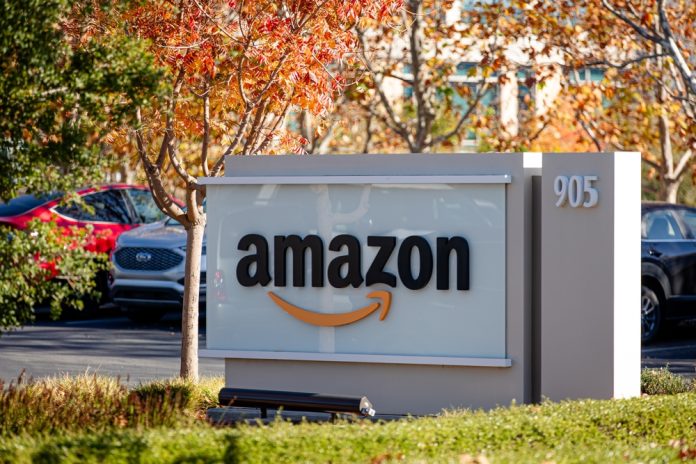

Amazon is eliminating approximately 14,000 administrative positions in a major workforce restructuring that the company directly attributes to the advancement of artificial intelligence? This move by the world’s largest online retailer signals a fundamental shift in how corporations are leveraging AI to streamline operations, even as questions emerge about the technology’s reliability and security?
The AI-Driven Corporate Restructuring
Amazon confirmed the job cuts in an official statement, citing organizational changes driven by rapid technological evolution? According to reports from the Wall Street Journal, the total impact could reach up to 30,000 positions across multiple waves? The company emphasized that while administrative roles are being reduced, new positions are being created in other areas, and affected employees will have 90 days to seek alternative roles within the organization?
What makes this announcement particularly significant is Amazon’s explicit acknowledgment that AI advancements are driving these changes? “The world is changing rapidly,” the company stated, pointing to AI applications that enable faster innovation and require leaner organizational structures? This represents one of the largest corporate workforce adjustments directly tied to AI implementation? Reuters further confirms that these 14,000 corporate job cuts are part of Amazon’s strategic push to integrate artificial intelligence more deeply into its operations, reflecting broader industry trends where AI advancements are reshaping workforce structures?
The Reliability Question: AI’s Accuracy Problem
While companies rush to adopt AI for efficiency gains, new research raises serious questions about the technology’s reliability? A comprehensive study by the European Broadcasting Union and BBC reveals that leading AI chatbots, including ChatGPT, Copilot, Gemini, and Perplexity, frequently distort and misrepresent information?
The research, conducted across 18 countries and 14 languages, found that 45% of AI responses had significant issues, with 20% containing major accuracy problems like hallucination or outdated information? Google’s Gemini performed worst, with 76% of responses having issues? Jean Philip De Tender, EBU Media Director and Deputy Director General, warned: “These failings are not isolated incidents? They are systemic, cross-border, and multilingual, and we believe this endangers public trust?”
The study also highlights growing public reliance on AI for news consumption, with 7% of global users and 15% of those under 25 turning to AI chatbots for information? This trend, combined with the rise of video-generating AI tools like OpenAI’s Sora, creates a perfect storm for misinformation that could threaten democratic stability if left unaddressed?
Security Vulnerabilities in AI Systems
The rush toward AI automation brings another critical concern: security risks? Recent analysis of AI browser agents like OpenAI’s ChatGPT Atlas and Perplexity’s Comet reveals significant vulnerabilities to prompt injection attacks? These systems, designed to automate web tasks like email management and form filling, can be manipulated by attackers to expose user data or perform unauthorized actions?
Shivan Sahib, Senior Research & Privacy Engineer at Brave, explains: “There’s a huge opportunity here in terms of making life easier for users, but the browser is now doing things on your behalf? That is just fundamentally dangerous?” Dane Stuckey, Chief Information Security Officer at OpenAI, acknowledges that “prompt injection remains a frontier, unsolved security problem” that requires ongoing attention?
Both companies have implemented safeguards�OpenAI with logged-out mode and Perplexity with real-time detection�but cybersecurity experts from McAfee and SocialProof Security emphasize that the problem remains unsolved and requires industry-wide collaboration? The ongoing cat-and-mouse game with evolving attack techniques means businesses must approach AI browser agents with caution, especially for sensitive corporate tasks?
Future-Proofing Careers in the AI Era
For professionals navigating this changing landscape, business leaders emphasize the need for strategic career development? Orla Daly, CIO at Skillsoft, notes: “In the past, as you progressed in your career in IT, you were less involved in the technology, and your role became more about leadership and management? And while those leadership and management pieces continue to be super-relevant and important, you will also need to stay closer to technology, maybe more than previously?”
Experts recommend five key strategies for career resilience:
- Staying current with technology developments
- Getting hands-on with digital tools like AI
- Developing a can-do attitude and adaptability
- Building interdisciplinary skills
- Strengthening professional networks
The challenge of hitting a glass ceiling in mid-tier management roles is exacerbated by AI’s increasing role in business? Successful digital leaders must focus on technology and business simultaneously, as CIOs of the future will demonstrate how AI can fulfill some executive responsibilities? Technology never exists in isolation�it’s always entangled with psychology, economics, ethics, and culture, requiring professionals to develop broader perspectives beyond pure technical skills?
The Broader Implications
Amazon’s workforce reduction represents a tipping point in corporate AI adoption? As companies seek efficiency through automation, they must balance potential cost savings against the technology’s current limitations? The simultaneous push toward AI-driven productivity and the documented reliability and security concerns creates a complex landscape for businesses and employees alike?
For organizations considering similar moves, the key lies in understanding both the capabilities and limitations of current AI systems? While automation can streamline administrative tasks, the technology’s accuracy issues and security vulnerabilities require careful implementation strategies and ongoing human oversight? Amazon’s strategic AI push positions the company to compete more effectively in the rapidly evolving AI landscape, but the broader industry must confront whether current AI technology is truly ready to handle such significant workforce responsibilities?
Imagine being a mid-level manager watching AI take over administrative tasks while knowing that same technology makes major errors nearly half the time? How do companies balance the efficiency gains against the potential for catastrophic mistakes? The answer lies not in avoiding AI, but in developing smarter implementation strategies that leverage human oversight where AI falls short?
Updated 2025-10-30 09:35 EDT: Added Reuters confirmation of Amazon’s strategic AI push driving the job cuts, reinforcing the broader industry trend of AI reshaping workforce structures and enhancing the article’s credibility with additional authoritative sourcing?
Updated 2025-10-30 09:41 EDT: Enhanced the article by adding specific details about public reliance on AI for news consumption (7% globally, 15% among under-25s) and the threat to democratic stability from misinformation? Expanded security section with expert warnings about ongoing cat-and-mouse security challenges and company safeguards? Added career advice about interdisciplinary skills and the entanglement of technology with broader societal factors? Included rhetorical questions and storytelling elements to improve engagement?