


For the first time since 2022, American drivers are paying over $4 per gallon at the pump, a stark reminder that geopolitical conflicts in distant regions have immediate, tangible impacts on everyday life. The national average for regular gasoline has reached $4.02, with diesel hitting $5.45, according to AAA data. But this isn’t just another fuel price spike – it’s a symptom of a deeper disruption that’s rippling through global supply chains, corporate boardrooms, and household budgets worldwide.
The Strait of Hormuz: A Global Chokepoint
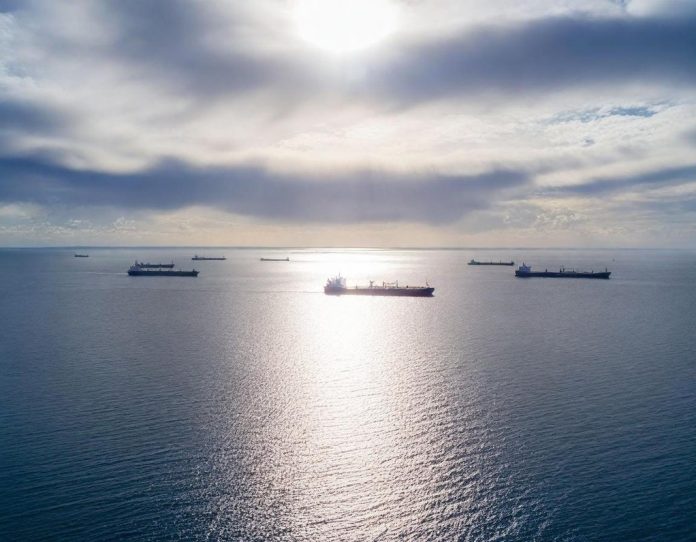
The effective closure of the Strait of Hormuz – a narrow waterway through which about 20% of global oil exports flow – has created what International Energy Agency director Fatih Birol calls “the greatest global energy security threat in history.” For a month, this critical passage has been largely blocked, slowing or stopping energy shipments from Gulf states and sending crude oil prices soaring. Brent crude has jumped from around $72 per barrel in late February to over $115, with some peaks reaching nearly $120.
Historical Context: Worse Than the 1970s?
Some experts warn this crisis could surpass the economic chaos of the 1970s oil shocks. “The impact of the US-Israeli war on Iran could be ‘substantially larger’ than the economic chaos seen in the 1970s,” says shipping expert Lars Jensen, former director at Maersk. The 1970s crisis involved Arab embargoes and production cuts that quadrupled oil prices within months, triggering global recessions from 1973 to 1975.
Yet there’s a counterbalance to this dire prediction. “The market is far more resilient than in the 1970s,” argues Dr. Carol Nakhle, chief executive of Crystol Energy. “It is more diversified, less oil-intensive, and better equipped with buffers and emergency response mechanisms.” Today’s energy landscape includes renewables, natural gas alternatives, and strategic petroleum reserves that didn’t exist fifty years ago.
Corporate Responses: From Airlines to Agriculture
The business impact extends far beyond gas stations. Korean Air has implemented emergency management measures starting in April, with Vice Chairman Woo Ki-hong announcing company-wide cost efficiency initiatives to address jet fuel prices that have more than doubled to nearly $200 per barrel. Asiana Airlines and Busan Air have followed suit, all three owned by Hanjin Group and particularly vulnerable due to South Korea’s heavy reliance on Gulf energy.
Meanwhile, Western farmers are facing their own crisis. In Wiltshire, England, farm diesel prices have doubled from about 65p to �1.20-�1.30 per liter in just seven days, while fertilizer prices have jumped from �350 to �600 per tonne. “It’s crippling,” says dairy farmer Mike Catley. “If I don’t fill the tractor, I can’t feed the cows.” For a 100-hectare farm, extra fertilizer costs alone could reach �14,000.
The Ripple Effect on Households and Governments
British Gas CEO Chris O’Shea warns that UK household energy bills could rise by an average of �332 from July if oil prices remain high. “If the situation remained the same in that time, ‘then I think that’s inescapable,'” he states. While gas supply has been less affected than oil (only 3-4% of global gas supply lost versus 20% of oil), the impact will still filter through to consumers.
Governments are scrambling to respond. The UK has announced a �53m package to help homes with heating oil costs, while Housing Secretary Steve Reed says officials are “monitoring this, believe me, hour-by-hour.” Some countries, including Slovenia, have introduced fuel rationing, and developing nations face particular vulnerability. “The current crisis primarily affects developing countries, ‘who lack the institutions and monetary and fiscal robustness to manage the crisis well,'” notes Joel Hancock, director of commodities research at Natixis CIB.
Long-Term Implications and Strategic Questions
Even if the Strait of Hormuz reopens immediately, experts warn oil shortages could persist for 6-12 months due to supply chain disruptions and inventory depletion. This raises fundamental questions about energy security and diversification strategies for businesses and nations alike.
Are companies adequately stress-testing their supply chains against geopolitical risks? How quickly can industries transition to alternative energy sources? What role should governments play in stabilizing markets versus allowing price signals to drive efficiency? These aren’t abstract questions – they’re being answered in real time as fuel prices reshape business operations from Korean boardrooms to English farms.
The $4 gas price in America serves as a visible marker of a much deeper transformation. It’s not just about paying more at the pump; it’s about recalculating risk, rethinking dependencies, and recognizing that in an interconnected global economy, a conflict halfway around the world can fundamentally alter business realities everywhere.