

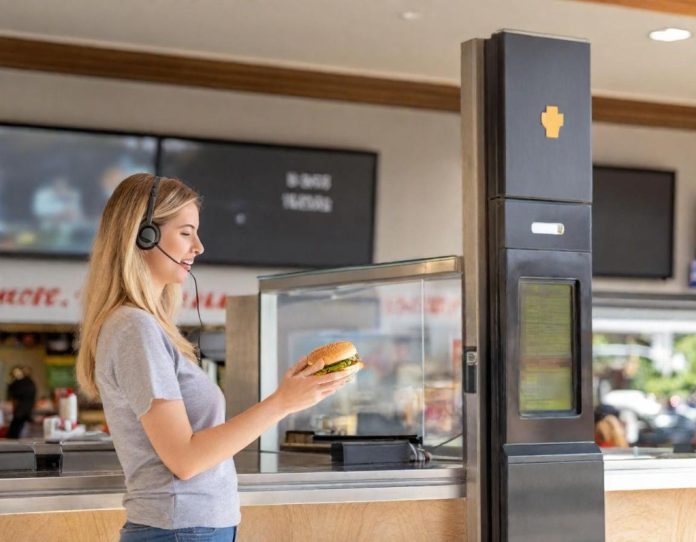

Imagine a fast-food drive-thru where every “please” and “thank you” gets logged, analyzed, and turned into a performance metric. That’s exactly what Burger King is testing in 500 U.S. restaurants with its new AI assistant named “Patty.” The system, powered by OpenAI technology, listens to employee-customer interactions through headsets and compiles “friendliness scores” based on specific phrases. While Burger King’s digital chief Thibault Roux insists the data is anonymized and used only for aggregate coaching – not individual evaluation – the rollout raises fundamental questions about how far AI should go in monitoring human behavior at work.
The Promise of AI-Driven Efficiency
Burger King positions Patty as a comprehensive operational tool. Beyond friendliness tracking, it provides real-time recipe guidance, alerts managers about equipment failures, and updates digital menus automatically. Roux told The Verge that the system is designed to “streamline restaurant operations” so staff can focus more on guest service. The company plans full U.S. implementation by late 2026, with potential integration of other AI providers like Anthropic or Google.
The Enterprise AI Context Gap
Burger King’s experiment highlights a broader challenge in enterprise AI adoption: context. London startup Trace recently raised $3 million to address what CEO Tim Cherkasov calls “the AI agent adoption problem.” While companies like Anthropic build sophisticated AI “interns,” Trace focuses on creating the “manager” that knows where to deploy them by building knowledge graphs from existing corporate tools. “We’ve moved from prompt engineering to context engineering,” says Trace CTO Arthur Romanov. “Whoever provides the best context at the right time is going to be the infrastructure on top of which AI-first companies will be built.”
When AI Becomes Part of the Team
This contextual challenge is being addressed across industries. Atlassian recently launched AI agents in Jira that function as “full team members” with assignable work items and collaborative capabilities. Based on Atlassian’s Rovo AI assistant and integrated via the Model Context Protocol (MCP), these agents can handle direct task assignments, iterative collaboration through @mentions, and automated workflow actions. “Work is changing rapidly,” says Atlassian’s Chief Product and AI Officer Tamar Yehoshua. “People today coordinate across agents, tools, and cross-functional teams. Without clear coordination, this can easily end in chaos.”
The Surveillance Dilemma
Burger King’s approach has sparked immediate backlash online, with critics calling it “dystopian” surveillance. The system’s expansion to potentially analyze tone of voice – not just specific words – intensifies privacy concerns. In Germany, similar technology would face significant hurdles under co-determination laws and GDPR requirements, needing works council approval and expert consultation. This contrast highlights how cultural and regulatory differences shape AI implementation globally.
Security Risks in AI Integration
The rush to integrate AI creates new vulnerabilities. Security firm Socket recently discovered supply-chain malware in the npm ecosystem that spreads via GitHub, stealing credentials from LLM providers like Anthropic, Google, and OpenAI. The malware, dubbed SANDWORM_MODE, includes an MCP server that uses prompt injection to trick AI coding assistants into collecting secrets silently. Although compromised packages have been removed, the incident shows how AI infrastructure can become an attack vector.
Intellectual Property in the AI Age
As companies race to develop AI capabilities, intellectual property disputes are escalating. Anthropic recently accused three Chinese AI companies – DeepSeek, MiniMax, and Moonshot – of conducting “industrial-scale” distillation attacks on its Claude model, extracting capabilities through fraudulent accounts. The practice of training smaller models on outputs of advanced ones exists in a legal gray area, with no specific laws governing AI distillation. Elon Musk noted the irony, tweeting that “Anthropic is guilty of stealing training data at massive scale and has had to pay multibillion-dollar settlements for their theft.”
Finding the Balance
Burger King’s experiment represents a microcosm of larger trends in workplace AI. The tension between operational efficiency and employee privacy, between automation and human judgment, plays out in drive-thrus and corporate offices alike. As AI systems become more integrated into daily operations – whether scoring friendliness in fast food or managing projects in software development – companies must navigate complex questions about transparency, consent, and appropriate use. The technology promises unprecedented productivity gains, but its implementation requires careful consideration of both human factors and security implications. The real test won’t be whether AI can measure friendliness, but whether companies can implement it wisely.