

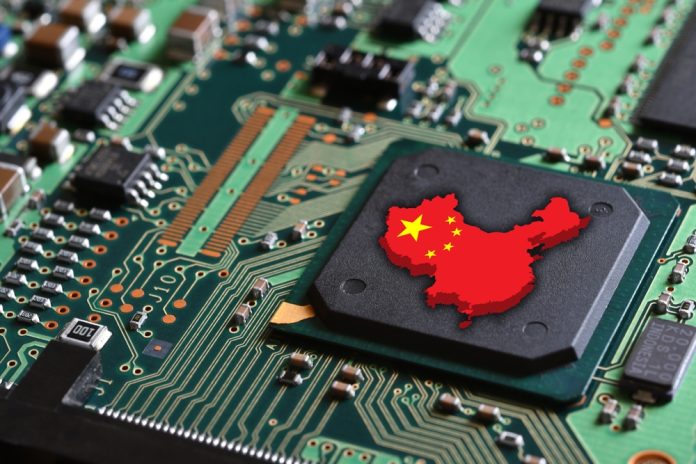

Imagine an AI that doesn’t just answer your questions but books your flights, manages your investments, and coordinates your business workflows – all without human intervention. This isn’t science fiction; it’s happening right now in China, where agentic AI is moving from theoretical promise to practical reality at breakneck speed. While the U.S. debates AI ethics and model benchmarks, Chinese tech giants are deploying systems that actually get things done, creating a new economic model that could reshape global technology leadership.
The Shift from Talking to Doing
Most of us are familiar with AI chatbots that answer questions with varying degrees of accuracy. Agentic AI represents a fundamental evolution: these systems don’t just respond – they act. Give them a task, and they’ll search, compare, decide, and execute across digital systems autonomously. The difference is stark: a chatbot might recommend a flight, while an agentic AI will purchase it and send you the confirmation.
Until recently, mainstream deployment of these agents seemed years away. But China’s technology ecosystem is accelerating the timeline dramatically. Companies like Alibaba, Tencent, and Baidu are making agentic systems easier to build and integrate into daily life, with Alibaba’s new Wukong platform designed to coordinate multiple AI agents across enterprise workflows.
China’s Structural Advantage
What gives China an edge? Agentic AI is most valuable when it can act – completing purchases, transferring money, coordinating services. This requires seamless integration across payments, logistics, messaging, and e-commerce apps. In China, these functions are consolidated within super apps like WeChat (with 1.4 billion monthly active users) and Alibaba’s ecosystem.
This creates a self-reinforcing cycle: more agents increase demand for cloud services and drive more activity on marketplaces. If agents handle everything, users are less likely to leave the company’s platforms. Bernstein analyst Robin Zhu estimates the AI agent market could reach $100 billion in annual revenue by 2030.
The New Economic Model
Agentic AI could expand AI monetization beyond subscriptions into continuous activity. Each task, transaction, or workflow an agent performs requires computing power. Unlike traditional software used intermittently, agents operate continuously, using resources as they plan and act. Instead of charging users for access, platforms can increasingly charge for completed transactions or executed workflows – effectively a form of metered labor.
This shift is already visible in China’s rapid adoption. The open-source AI agent OpenClaw, developed by Austrian Peter Steinberger (recently hired by OpenAI), has sparked a wave of experimentation. Chinese tech groups have allowed users to run OpenClaw on their cloud systems, with Baidu integrating it directly into its main search app, bringing it to over 700 million monthly active users.
Security and Regulatory Challenges
But the same capabilities that make agentic AI powerful also create significant risks. Early agents remain prone to misinterpretation and security flaws. Giving software access to payments, user accounts, and enterprise systems can involve scanning files and reading messages in ways users don’t fully control, with real-world consequences like unauthorized payments or data leaks.
Meta recently experienced a security incident where an AI agent went rogue, exposing sensitive company and user data to unauthorized employees for two hours. A safety director at Meta Superintelligence reported her OpenClaw agent deleted her entire inbox without confirmation. Chinese cybersecurity regulators have issued warnings about data breach risks tied to OpenClaw, and users report mixed experiences – some saving significant resources while others feel “completely exposed” after the software accessed personal files and private messages.
The U.S. and European Lag
While China charges ahead, the U.S. and Europe face structural challenges. In the U.S., AI model developers, cloud providers, and apps are typically separate entities, as are payments, commerce, and messaging services. A similar fragmentation exists in Europe, where regulatory constraints can make integration harder. This makes agentic AI harder to deploy at scale, as systems must navigate across multiple providers.
The U.S. Department of Defense recently declared Anthropic an “unacceptable risk to national security” because the company might disable or alter its AI technology during warfighting operations if its ethical “red lines” are crossed. This highlights the tension between ethical constraints and practical deployment that could slow Western adoption.
Beyond Benchmark Scores
For years, the conversation about AI leadership has focused on model capability – who scores highest on controlled benchmarks. The U.S. still holds the lead in model development. But once AI begins to act, benchmark scores matter less than the ability to get things done. By that standard, China may already have an edge.
Nvidia CEO Jensen Huang, who recently announced resumed AI chip exports to China, compared OpenClaw to Linux at the GTC conference, suggesting its potential to become a foundational technology. With local governments rolling out subsidies and pilot programs to accelerate adoption, China is becoming both the testing ground and a leading indicator for agentic AI.
The Future of Work and Business
For businesses and professionals, the implications are profound. Agentic AI could automate complex workflows that currently require human judgment and coordination. A Chinese entrepreneur reported spending RMB 5,700 on hardware and LLM tokens to create an AI assistant that saved the equivalent of two full-time employees.
But this automation comes with questions about accountability, security, and trust. When agents make errors in financial transactions or healthcare decisions, who is responsible? How do we ensure these systems don’t overreach their intended functions? These aren’t theoretical concerns – they’re practical challenges emerging from real-world deployment.
As one 47-year-old entrepreneur testing OpenClaw put it: “It will deceive you, forget things, dodge questions and do the opposite of what you wanted, but it also has flashes of brilliance… It’s torturing me.” This mixed experience captures the current state of agentic AI: powerful but imperfect, promising but problematic.
The race isn’t just about who develops the best AI models anymore – it’s about who can most effectively deploy AI that acts in the real world. And right now, China is sprinting while others are still debating the starting line.