

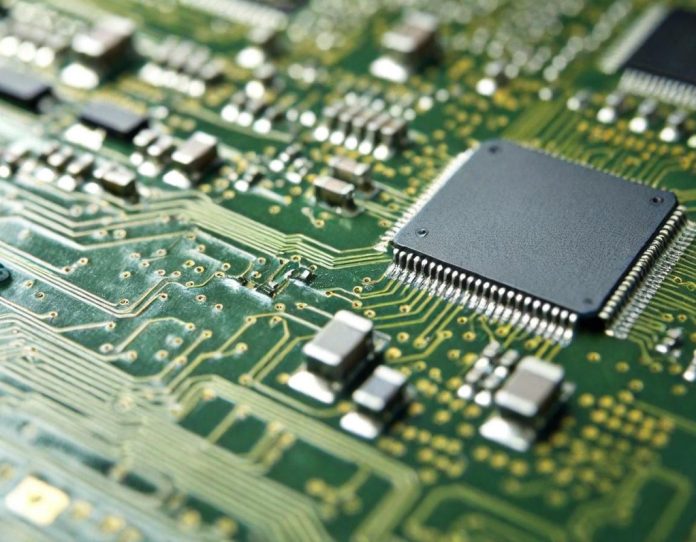

In a move that caught even industry giant Nvidia by surprise, Chinese customs officials this week blocked shipments of the company’s H200 AI processors, forcing suppliers to halt production and sending shockwaves through the global semiconductor supply chain. The regulatory blockade, which occurred as early shipments arrived in Hong Kong, has left Nvidia scrambling to understand whether this represents a temporary measure or a more permanent shift in China’s technology import policies.
According to sources familiar with the matter, Chinese customs officials summoned logistics companies in Shenzhen to inform them they could not submit clearance applications for H200 chips. This sudden action led Nvidia’s parts suppliers to pause production immediately to avoid costly inventory write-offs. The printed circuit boards designed specifically for H200 chips, as analyst Chu Wei-Chia of SemiAnalysis noted, cannot be repurposed for other products, making the production halt particularly painful.
Geopolitical Chess Game in Silicon
This development comes at a critical juncture in US-China technology relations. Just last month, the Trump administration indicated it would permit sales of Nvidia’s older-generation H200 chips to China, prompting the company to ramp up production in anticipation of more than one million orders from Chinese clients. Suppliers had been working around the clock to prepare for deliveries initially planned for as early as March.
The timing is particularly significant given recent developments in US-Taiwan semiconductor relations. In a parallel move that reshapes global chip manufacturing dynamics, Taiwan has committed to investing $250 billion in US semiconductor manufacturing, with an additional $250 billion in credit guarantees for further investments. This massive investment comes as part of a trade deal where the US has agreed to reduce tariffs on Taiwanese goods from 20% to 15% in exchange for the investment commitment.
Commerce Secretary Howard Lutnick stated the agreement would help the US become “self-sufficient” in semiconductors, addressing supply chain risks exposed during the COVID-19 pandemic. The deal includes carve-outs from tariffs for Taiwanese semiconductor companies investing in the US, creating a powerful incentive for technology transfer and manufacturing capacity building.
Conflicting Regulatory Winds
The situation in China reveals deep internal conflicts within the country’s regulatory apparatus. As George Chen, partner and co-chair of digital practice at The Asia Group, explained: “The question of which government agency is regulating AI and the semiconductor industry in China is really complicated right now. There are competing views between the National Development and Reform Commission, the Ministry of Industry and Information Technology and the Cyberspace Administration of China about what role Nvidia should play, which is leading to a confusing mixture of policies.”
This regulatory uncertainty has prompted many Chinese customers to reassess their options. One Chinese seller of Nvidia AI servers reported that many local customers have canceled H200 orders and switched to more advanced B200 and B300 chips, which are banned for export into China by Washington but available through an active black market.
Beijing has been pushing tech companies to use domestic chips in a bid to achieve self-sufficiency in semiconductor production. Potential restrictions being discussed include a licensing regime where only companies with advanced AI model training needs can apply and a mandated ratio of domestic versus imported chips.
Broader Industry Implications
The Nvidia situation highlights a broader trend affecting AI development globally. While geopolitical tensions shape hardware access, other challenges are emerging in the AI ecosystem. Recent controversies surrounding Elon Musk’s Grok chatbot, which faced global outrage after being used to generate harmful non-consensual imagery, demonstrate that regulatory challenges extend beyond hardware to software and ethical considerations.
These developments occur against the backdrop of significant legal battles in Silicon Valley. A federal judge has rejected dismissal requests from OpenAI and Microsoft, setting a jury trial for late April 2026 regarding Elon Musk’s lawsuit against his former partners. Musk alleges that OpenAI and Sam Altman betrayed their mission by taking billions from Microsoft and restructuring as a for-profit entity.
Strategic Shifts and Market Realities
The semiconductor industry is undergoing fundamental restructuring. Taiwan currently produces more than half of the world’s semiconductors, while only 10% are manufactured in the United States. The $250 billion investment from Taiwan represents a strategic effort to rebalance this equation, but it also creates new dependencies and relationships that will shape global technology leadership for decades.
For businesses relying on AI capabilities, these developments create both challenges and opportunities. The uncertainty around chip availability forces companies to develop more flexible technology strategies, potentially accelerating adoption of alternative architectures and domestic solutions. Meanwhile, the US government’s $40 billion in subsidies for TSMC’s Arizona plant demonstrates the high stakes involved in semiconductor manufacturing.
As the industry navigates these turbulent waters, one thing becomes clear: the era of seamless global technology supply chains has ended. Companies must now account for geopolitical realities, regulatory uncertainties, and strategic national interests in their technology planning. The question isn’t whether AI will transform industries – it’s whose chips will power that transformation, and under what conditions they’ll be available.