

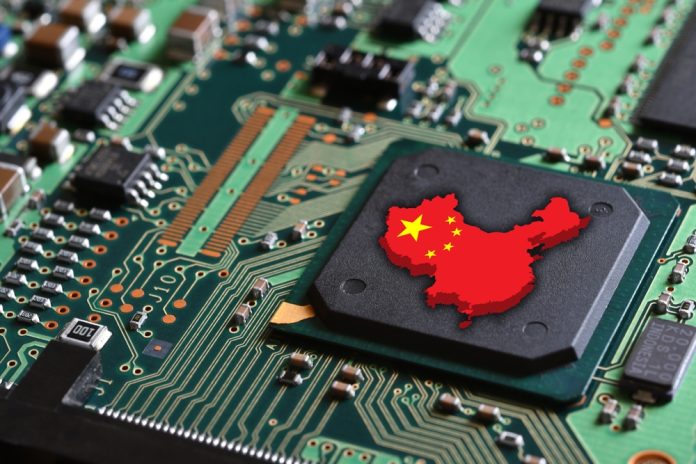

Imagine building a cutting-edge AI startup in China, securing investment from top U.S. venture capitalists, then watching your government scrutinize your $2 billion acquisition by Meta as if you were “selling young crops” – a Chinese euphemism for losing emerging technologies. This is exactly what’s happening with Manus, an AI assistant startup whose acquisition has become a flashpoint in the global AI race.
China’s commerce ministry confirmed this month it’s reviewing Meta’s purchase of Manus, with officials at the highest levels concerned about losing “young crops” – cutting-edge technology and talent. The deal represents a rare example of a U.S. company buying a Chinese-founded AI startup, and the review could last up to a year, creating uncertainty for investors and entrepreneurs alike.
The Contradiction in China’s AI Strategy
What makes this situation particularly revealing is the internal conflict within China’s own government. While the commerce ministry focuses on whether the deal breaches technology export controls, the National Development and Reform Commission – China’s economic planner spearheading the tech drive – declined to intervene when Manus first relocated to Singapore last summer. This suggests Beijing doesn’t view the technology as vital, creating a confusing message for the market.
“Beijing will certainly want to send the message that Chinese-born tech companies must honor certain responsibilities to the state and the Chinese people,” said Linghao Bao, a senior analyst at consultancy Trivium China. “That said, Beijing also faces a real risk of overplaying its hand. It would make investors even more reluctant to deploy capital, precisely the opposite of what Chinese policymakers have been trying to achieve for years.”
The Global Context: Collaboration Amid Competition
This tension comes at a fascinating moment in global AI development. While governments posture about technology protection, researchers continue collaborating across borders. A recent WIRED analysis reveals that despite being archrivals in artificial intelligence, the U.S. and China collaborate significantly on cutting-edge AI research in areas like algorithms, models, and specialized silicon.
This collaboration challenges the perception of purely competitive dynamics and suggests that while governments may be erecting barriers, the scientific community continues to work across them. The Manus situation highlights how political concerns can interfere with natural technological and business flows that might otherwise benefit global innovation.
The Innovation Paradox
Meanwhile, the AI industry continues evolving in ways that make nationalistic protectionism seem increasingly outdated. Logical Intelligence, a Silicon Valley startup, recently unveiled Kona, an “energy-based” reasoning model that company founder Eve Bodnia claims shows “the first credible signs of AGI.” The company has appointed Yann LeCun, former chief AI scientist at Meta, to its board and is targeting a $1-2 billion valuation.
What’s significant about this development is that energy-based models represent a fundamentally different approach from the large language models dominating current AI discourse. They use fixed parameters and grade answers based on energy usage, potentially offering more reliable reasoning with fewer hallucinations. This innovation demonstrates that breakthrough technologies can emerge from anywhere, making attempts to control specific companies or technologies increasingly futile.
The Business Impact
For venture capitalists and entrepreneurs, the Manus review creates immediate practical challenges. “Fundraising [from foreign investors] only started to warm up last year,” said a China-based investor who manages U.S. dollar-denominated funds. “Now investors are being told there could be a ban on this type of deal. Who would dare to go big on China AI investments under uncertainties?”
Another venture capital investor noted that Beijing’s review is already leading Chinese startups to think twice about trying to reincorporate in Singapore as a way to reinvent themselves as non-Chinese companies. “One lesson learned is to stay as low profile as possible,” the person said.
The Bigger Picture
This situation reflects a broader tension in technology regulation worldwide. Governments want to encourage innovation while maintaining control, protect national interests while participating in global markets, and foster domestic talent while engaging with international expertise. The Manus case shows how difficult it is to balance these competing priorities.
As AI continues to advance rapidly – with companies like IBM launching enterprise-scale AI platforms and researchers grappling with issues like hallucinated citations in academic papers – the question becomes: Can any country realistically control the flow of AI innovation? Or are we entering an era where technological progress will inevitably transcend national boundaries, regardless of government attempts to contain it?
The outcome of Meta’s Manus acquisition will provide important clues about how China plans to navigate this dilemma. Will it prioritize control over collaboration, or find a way to participate in global AI development while protecting what it considers strategic assets? The answer will shape not just China’s AI future, but the global innovation landscape for years to come.