

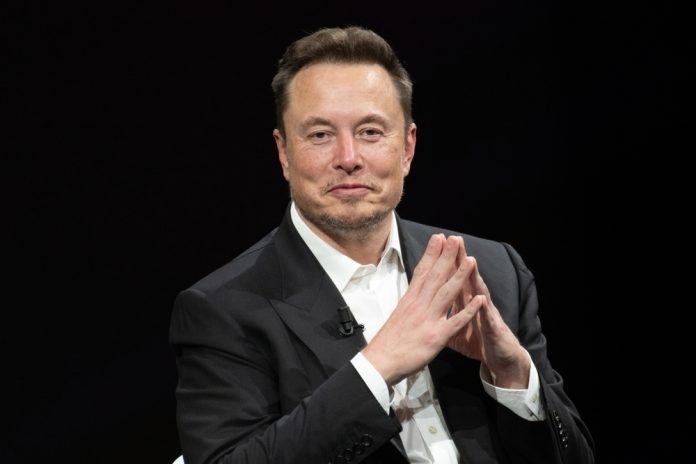

What happens when the world’s richest entrepreneur picks fights with airline executives, faces regulatory crackdowns over AI-generated content, and demands billions in lawsuits against former partners? You get a revealing snapshot of the turbulent AI landscape where business conflicts, regulatory scrutiny, and infrastructure challenges are converging. The recent public spat between Elon Musk and Ryanair CEO Michael O’Leary isn’t just celebrity drama – it’s a window into how AI adoption is creating friction across industries, from aviation to legal systems.
The Ryanair-Starlink Standoff: More Than Just Personal Insults
When Ryanair’s Michael O’Leary called Elon Musk an “idiot” for suggesting Starlink satellite internet for flights, and Musk responded in kind while floating the idea of buying the airline, it might seem like typical billionaire banter. But beneath the surface lies a serious business calculation about AI infrastructure costs. O’Leary’s rejection of Starlink wasn’t personal – it was financial. He estimated that installing the hardware would cost $200-250 million annually, adding about $1 per passenger, which budget-conscious travelers wouldn’t pay for hour-long flights.
This conflict reveals a fundamental tension in AI adoption: cutting-edge technology versus practical economics. While airlines like Lufthansa, Qatar Airways, and United Airlines are embracing Starlink, Ryanair’s resistance highlights how different business models approach technological investment. The EU ownership requirement – mandating majority ownership by EU, Swiss, Norwegian, Icelandic, or Liechtenstein nationals – adds another layer of complexity to Musk’s acquisition threats.
Regulatory Storm Clouds Gather Over AI Content
While Musk trades barbs with airline executives, his AI company xAI faces serious legal challenges. California Attorney General Rob Bonta sent a cease-and-desist letter demanding xAI “immediately stop the creation and distribution of deepfake, nonconsensual, intimate images and child sexual abuse material” generated by its Grok chatbot. The company has five days to demonstrate compliance, with investigations already underway in Japan, Canada, and Britain, and platform blocks in Malaysia and Indonesia.
This regulatory action isn’t happening in isolation. It reflects growing global concern about generative AI tools proliferating harmful content. As Bonta stated: “The creation of this material is illegal. I fully expect xAI to immediately comply. California has zero tolerance for [CSAM].” The timing is particularly sensitive as xAI had already instituted some restrictions on image-editing features, suggesting awareness of the problem.
The $134 Billion Question: AI Partnerships and Legal Battles
Musk’s business conflicts extend to the courtroom, where he’s seeking up to $134 billion in damages from OpenAI and Microsoft. The lawsuit alleges “wrongful gains” from their partnership, claiming OpenAI’s collaboration with Microsoft has violated agreements and created unfair competitive advantages. Financial economist C. Paul Wazzan calculated the damages based on Musk’s $38 million seed donation when he co-founded OpenAI in 2015, arguing he’s entitled to a portion of the company’s current $500 billion valuation.
This legal battle highlights fundamental questions about AI governance and financial interests. OpenAI has characterized the lawsuit as part of a “pattern of harassment” rather than a legitimate financial grievance, noting Musk’s personal fortune of around $700 billion. The case, set for trial in April in Oakland, California, could have significant implications for how AI partnerships are structured and compensated.
Infrastructure Demands: The Hidden Cost of AI Expansion
Beyond personal feuds and legal battles, the AI industry faces practical infrastructure challenges. Former President Donald Trump and several state governors are urging PJM – the largest electrical grid operator in the northeastern and midwestern U.S. – to hold an emergency auction requiring tech giants to fund AI power infrastructure. The proposal involves 15-year contracts for data center operators to build new power plants, potentially worth $15 billion, regardless of electricity usage.
This initiative addresses a critical reality: U.S. data center energy demand is projected to surge from 34.7 gigawatts in 2024 to 106 gigawatts by 2035. Residential electricity costs have already risen by 13% since January 2025, partly driven by this increased demand. PJM serves more than 67 million people and handles 70% of the world’s search traffic in Virginia’s “data center alley,” making this a national infrastructure issue.
Broader Industry Implications
These conflicts aren’t isolated incidents but symptoms of broader industry shifts. The manufacturing sector shows how technology investments are paying off, with the Federal Reserve reporting modest growth in output and capacity utilization reaching 76.3% in December. Kim Humphrey, president and CEO of the Association for Manufacturing Excellence, noted: “The recent improvement likely reflects investments in people, safer and more efficient processes, and smart use of technology.”
Meanwhile, communication infrastructure shows similar adaptation pressures. The recent Verizon outage highlighted vulnerabilities in traditional networks, prompting increased interest in Wi-Fi calling alternatives. As mobile services face disruptions, businesses and consumers alike are exploring backup options, reflecting how technological redundancy is becoming essential in an AI-driven world.
Looking Ahead: Balancing Innovation with Practicality
The common thread through these conflicts is the tension between ambitious technological vision and practical implementation. Whether it’s airlines weighing connectivity costs against passenger willingness to pay, regulators grappling with AI-generated content, legal systems adjudicating partnership disputes, or energy grids managing unprecedented demand – each represents a different facet of the same challenge.
As AI continues its rapid expansion, these conflicts will likely intensify. The question isn’t whether AI will transform industries – it’s how businesses, regulators, and infrastructure will adapt to manage that transformation. The Musk-O’Leary spat, while entertaining, serves as a reminder that even the most advanced technology must eventually answer to business fundamentals, regulatory frameworks, and practical constraints.