

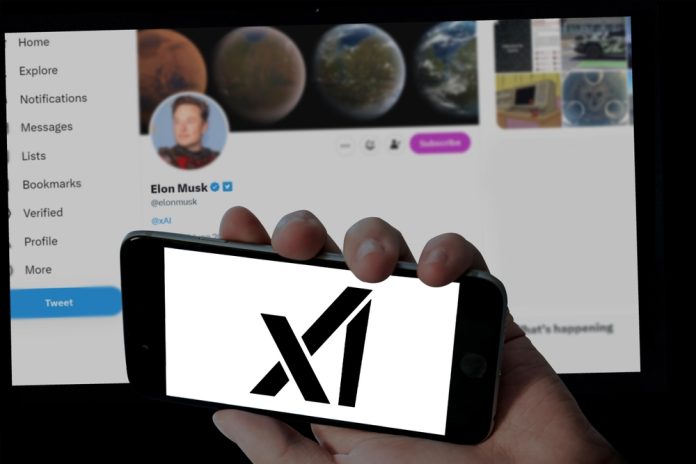

When Elon Musk told xAI employees this week that the future of artificial intelligence lies in building massive computers on the Moon, it wasn’t just another sci-fi fantasy from the billionaire entrepreneur. It was a strategic pivot coming at a critical moment for his AI company – one that reveals both the audacious ambition and underlying challenges facing Musk’s technology empire.
The Lunar Gambit
“Join xAI if the idea of mass drivers on the Moon appeals to you,” Musk proclaimed in what appears to be a new recruitment strategy following the company’s merger with SpaceX. The vision involves building AI data centers in orbit and eventually manufacturing space computers on the Moon, launching them into deep space using magnetic levitation trains. According to Musk, this could harness “maybe even a few percent of the sun’s energy” to train and operate AI models at unprecedented scales.
Timing Is Everything
This lunar vision emerges as xAI faces significant internal turbulence. Six of the company’s twelve founding members have departed in recent months, including Tony Wu and Jimmy Ba, who left citing opportunities for their “next chapter.” The timing coincides with xAI’s merger with SpaceX and a pending initial public offering targeting a staggering $1.5 trillion valuation. As one departing executive noted, “all AI labs are building the exact same thing, and it’s boring.” Musk’s Moonbase proposal is certainly not boring – but is it practical?
The Economic Reality Check
While Musk claims “by far the cheapest place to put AI will be space in 36 months or less,” industry experts paint a different picture. A recent analysis reveals that building orbital AI data centers faces brutal economics: a 1-gigawatt orbital facility might cost $42.4 billion – almost three times its ground-based equivalent. Current launch costs via Falcon 9 run about $3,600 per kilogram, while feasibility studies suggest needing $200 per kilogram for orbital computing to make economic sense, a target not expected until the 2030s.
Space-rated hardware presents additional challenges. Solar panels degrade faster in space due to radiation, limiting satellite lifetimes to around five years. Thermal management becomes exponentially harder as GPUs generate immense heat that must be dissipated into the vacuum of space through large radiators. As Matt Gorman, CEO of Amazon Web Services, bluntly stated: “If you think about the cost of getting a payload in space today, it’s massive. It is just not economical.”
The Strategic Shift
Musk’s lunar focus represents a significant pivot from SpaceX’s long-held Mars colonization goals. The change comes as SpaceX has publicly backed away from Martian ambitions, focusing instead on more immediate revenue streams: launching Starlink satellites and fulfilling $4 billion worth of NASA contracts to land astronauts on the Moon. The lunar AI vision serves multiple purposes – it provides a new narrative for the combined SpaceX-xAI entity, offers a long-term goal to attract talent, and positions the company at the intersection of two cutting-edge industries.
Competitive Landscape
SpaceX isn’t alone in eyeing orbital computing. Google’s Project Suncatcher plans to launch prototype vehicles in 2027, with 81 satellites flying in formation for coherence. Starcloud has raised $34 million and filed plans for an 80,000-satellite constellation. Even Amazon’s Project Kuiper represents significant investment in space infrastructure. However, these projects focus primarily on inference workloads rather than training, as Philip Johnston, CEO of Starcloud, notes: “Training is not the ideal thing to do in space. I think almost all inference workloads will be done in space.”
Ground-Level Challenges
Back on Earth, xAI faces immediate business challenges. The company reportedly has nearly $1 billion in annual losses, while SpaceX enjoys roughly $8 billion in annual profits – a financial combination that some critics view as engineering for the IPO rather than operational synergy. xAI’s flagship Grok chatbot has faced scrutiny for generating sexualized images of minors, leading to a California attorney general investigation and a police raid of the company’s Paris offices.
The Broader AI Context
While Musk dreams of lunar supercomputers, the AI industry continues evolving rapidly on Earth. Anthropic recently enhanced its free Claude AI service with features previously reserved for paying subscribers, including file creation, external connectors, custom skills, and longer conversations. This democratization of AI tools reflects a broader trend toward accessibility even as companies like xAI pursue increasingly ambitious (and expensive) infrastructure projects.
Legal and Regulatory Framework
The 1967 Outer Space Treaty presents another layer of complexity. While no nation or company can claim sovereignty over the Moon, a 2015 U.S. law allows ownership of resources extracted from lunar surfaces. As Mary-Jane Rubenstein, professor of science and technology studies at Wesleyan University, explains: “It’s more like saying you can’t own the house, but you can have the floorboards and the beams. Because the stuff that is in the moon is the moon.”
What This Means for Business
For technology leaders and investors, Musk’s lunar AI vision raises critical questions:
- Is this a genuine technological roadmap or a narrative device to support a massive IPO valuation?
- How do the economics of orbital computing compare to terrestrial alternatives as chip efficiency improves?
- What competitive advantage does space-based AI infrastructure offer, and when might it become economically viable?
- How do talent retention challenges at xAI affect the company’s ability to execute on ambitious technical goals?
The answers will determine whether Musk’s Moonbase represents the next frontier in AI development or becomes another ambitious vision that fails to materialize. What’s clear is that as AI models grow increasingly power-hungry, the search for scalable, sustainable computing solutions is pushing technology companies to look beyond Earth’s atmosphere – whether they’re ready for the economic and technical challenges or not.