

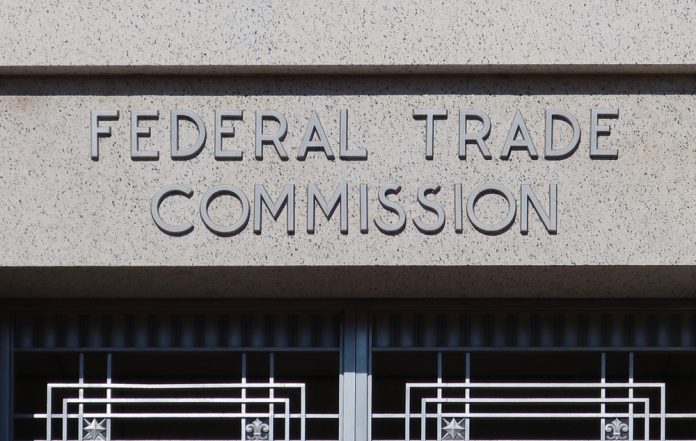

The Federal Trade Commission has quietly removed several blog posts from the Lina Khan era that addressed AI risks and open-source development, raising questions about regulatory transparency during a period of rapid technological advancement? This content removal comes at a critical juncture for artificial intelligence, where industry hype often collides with practical limitations and regulatory uncertainty?
The Vanishing Guidance
According to multiple reports, the FTC removed at least three significant blog posts that had been published between 2023 and early 2025? One post titled “Consumers Are Voicing Concerns About AI” from October 2023 highlighted growing public apprehension about the technology? Another from July 2024, “On Open-Weights Foundation Models,” discussed the implications of open-source AI development? The most recent removal was a January 2025 post titled “AI and the Risk of Consumer Harm” that specifically noted the FTC was “taking note of AI’s potential for real-world instances of harm � from incentivizing commercial surveillance to enabling fraud and impersonation to perpetuating illegal discrimination?”
Industry Reality Check
While regulatory discussions evolve, the AI industry faces its own credibility challenges? Recent events have exposed significant gaps between marketing claims and actual capabilities? OpenAI faced public embarrassment when researchers claimed GPT-5 had solved previously unsolved mathematical problems, only for mathematicians to clarify that the AI had merely found existing solutions in literature that the researchers were unaware of? Meta’s Chief AI Scientist Yann LeCun described the situation as being “hoisted by their own GPTards,” while Google DeepMind CEO Demis Hassabis called it “embarrassing?”
This incident highlights a broader pattern of overpromising in the AI sector? As Ed Zitron, host of the Better Offline podcast, noted in a recent Ars Technica discussion, “Because everybody’s acting like it’s something it isn’t? They’re acting like it’s this panacea that will be the future of software growth, the future of hardware growth, the future of compute?” Zitron estimates the AI industry represents “a 50 billion-dollar revenue industry masquerading as a one trillion-dollar one?”
The Human Element Endures
Amidst the AI frenzy, traditional craft industries are discovering unexpected resilience? Jonathan Reid’s story exemplifies this trend � he left a digital marketing career to become a scissor maker at Ernest Wright, one of Britain’s last traditional scissor manufacturers? “For the time being,” Reid says he feels “more secure in his job” despite working in what was previously considered an endangered craft?
Research supports this optimism? The global handicrafts market, valued at $907 billion last year, is forecast to more than double to $1?94 trillion by 2033? In a recent International Labour Organization assessment of professional vulnerability to AI, craft workers ranked among the least exposed? Etsy’s research found that 94% of buyers prioritize quality goods, with 84% viewing mass-produced items as lower quality?
Investment vs? Reality
The financial landscape reveals troubling patterns? According to Financial Times analysis, ten loss-making AI startups command collective valuations approaching $1 trillion, with venture capital pouring $161 billion into AI overall this year? Yet Bain estimates that $2 trillion of revenue will be needed to fund data centers by 2030, creating a significant gap between investment and potential returns?
Stephan Eberle, a software engineer, captured the sentiment of many observers: “Watching the industry’s behaviour around AI, I can’t shake this feeling that we’re all building bamboo aeroplanes and expecting them to fly?” This cargo cult mentality extends to practical applications, where 95% of companies report no revenue gains from AI implementations?
Regulatory Crossroads
The FTC’s content removal occurs against a backdrop of shifting regulatory priorities? While the Trump administration has emphasized fast growth and competition with China, the removal of consumer protection content raises questions about balance? Former FTC public affairs director Douglas Farrar expressed surprise that “the Andrew Ferguson led FTC be so out of line with the Trump White House on this signal to the market?”
Meanwhile, in Silicon Valley, advocating for AI safety has become increasingly “uncool,” with VCs criticizing companies like Anthropic for supporting safety regulations? This tension between innovation and responsibility plays out daily as companies remove guardrails and push boundaries?
Practical Implications for Business
For businesses navigating this landscape, several key considerations emerge:
- Regulatory uncertainty requires flexible AI implementation strategies
- Human-centric skills and craftsmanship may offer unexpected competitive advantages
- Investment decisions should separate genuine innovation from market hype
- Transparency about AI limitations builds long-term credibility
As the industry matures, the gap between promise and delivery will likely narrow? But for now, businesses must navigate a landscape where regulatory guidance disappears as quickly as it appears, and where the most secure career paths might be those that AI cannot easily replicate?