

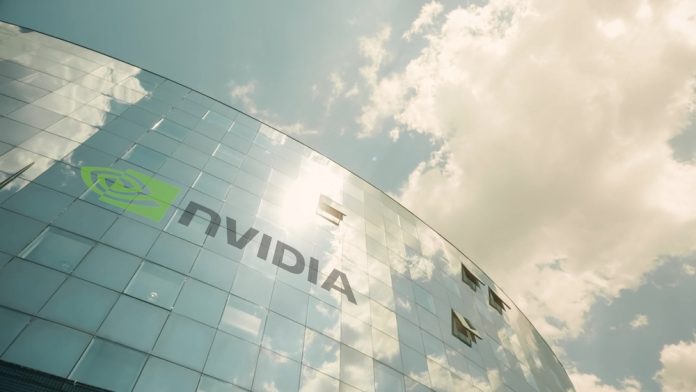

Imagine a future where Europe’s industrial might depends not on steel or machinery, but on artificial intelligence? That future is now taking shape in an underground Munich facility where Deutsche Telekom and Nvidia are building what they call an “Industrial AI Cloud” – a �1 billion gamble that could determine whether Germany remains a manufacturing powerhouse or gets left behind in the global AI race?
The Munich AI Factory
In a converted bank building beneath Munich’s streets, Deutsche Telekom is installing 10,000 of Nvidia’s latest Blackwell GPUs, creating what CEO Tim H�ttges calls a crucial test of Germany’s AI readiness? “Without AI, you can forget about German industry,” H�ttges declared at the project’s Berlin unveiling, standing alongside Nvidia founder Jensen Huang? The facility, scheduled to begin operations in January, represents Germany’s most significant push yet to build domestic AI infrastructure while maintaining European data sovereignty?
Global Power Plays
While Germany builds its AI future, other nations are taking radically different approaches? China is subsidizing electricity costs by up to 50% for data centers using domestic AI chips, responding to Beijing’s ban on Nvidia technology? This creates a fascinating contrast: Germany invests in cutting-edge foreign technology while China doubles down on homegrown alternatives, even though Chinese chips consume 30-50% more electricity than Nvidia’s equivalent models?
Meanwhile, Microsoft faces a different challenge entirely? CEO Satya Nadella recently revealed that the company has “excess AI chips but insufficient power infrastructure” to deploy them? “The biggest issue we’re having is not a compute glut, but it’s power and the ability to get data center builds done fast enough,” Nadella explained, highlighting how energy constraints are becoming the new bottleneck in AI development?
The Sovereignty Question
Germany’s approach emphasizes what Bundesdigitalminister Karsten Wildberger calls “digital sovereignty?” All services in the Munich facility will operate under German jurisdiction, addressing concerns about foreign data access that have troubled European businesses? “Europe must steer risks, but not brake progress,” Wildberger argued? “Privacy is a fundamental right, but so is progress?”
SAP’s involvement provides a crucial advantage for German businesses? As Nvidia’s Huang noted, “Everyone runs on SAP,” making integration seamless for companies already using the platform? This could give German manufacturers a faster path to AI adoption than competitors relying on foreign cloud services?
The Energy Equation
The power requirements for AI are becoming staggering? Microsoft’s recent multi-billion dollar deal with Lambda for tens of thousands of Nvidia GPUs, combined with OpenAI’s $38 billion AWS agreement, shows how compute demand is exploding? But as Sam Altman of OpenAI warns, “If a very cheap form of energy comes online soon at mass scale, then a lot of people are going to be extremely burned with existing contracts they’ve signed?”
China’s approach of subsidizing electricity to 0?4 yuan (5?6 cents) per kWh contrasts sharply with US industrial rates averaging 9?1 cents per kWh? This raises questions about whether Germany’s �1 billion investment in cutting-edge hardware might face future challenges from regions with cheaper energy?
What’s at Stake
The Munich project aims to increase Germany’s AI computing power by 50%, but is that enough? As Research Minister Dorothee B�r acknowledged, “Is it sufficient? Of course not?” But she sees it as a crucial first step? The facility will serve everyone from large corporations to small businesses, with Telekom hoping to prove there’s a market for sovereign AI services?
As Deutsche Bank CEO Christian Sewing noted, foreign investors want “return, security, and legal certainty” – all things Germany hopes to provide? But with China subsidizing its way to AI independence and US companies grappling with power constraints, Germany’s bet on sovereign AI infrastructure represents a distinct third path in the global AI competition?
The success or failure of this �1 billion experiment could determine whether Europe becomes an AI player or spectator in the coming industrial transformation?