

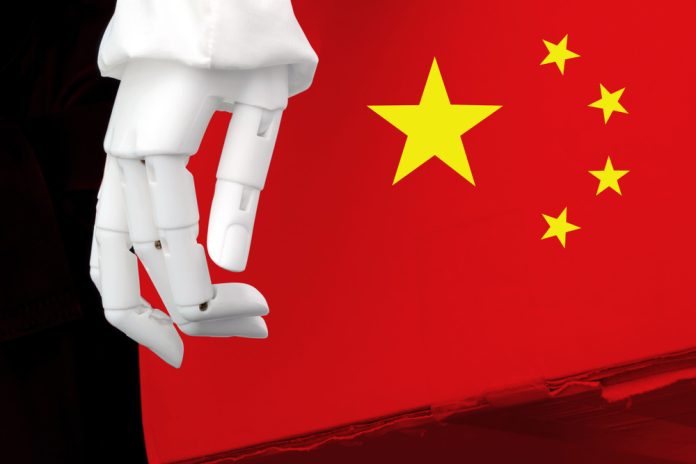

International venture capital is cautiously flowing back into China’s technology sector, with several major funds raising over $1 billion in dollar-denominated capital this year? This marks a significant shift from 2023, when geopolitical tensions and regulatory crackdowns pushed global investors to the sidelines? The return comes despite ongoing challenges, including US investment restrictions and significant valuation disparities between Chinese and American AI companies?
Modest Recovery with Global Implications
Source Code Capital, an early investor in TikTok owner ByteDance, has raised $150 million, while BA Capital, which backed Labubu maker Pop Mart, is closing in on a similar-sized fund? Lightspeed China Partners has pulled in more than $200 million for a yet-to-close fund, and Qiming Venture Partners is making progress on its goal of raising about $600 million? While these totals are modest compared to the $30 billion raised by China-focused VCs in 2021-2022, they signal a tentative thaw in investor sentiment?
The fundraising efforts reflect a broader global trend where AI dominates venture capital investment? According to PitchBook data, AI startups accounted for 62?7% of U?S? VC investment and 53?2% of global VC investment in the most recent quarter, with VCs pouring $192?7 billion into AI so far in 2025 out of a total $366?8 billion globally?
Valuation Disparities Create Investment Opportunities
“The top Chinese robotics companies would probably be valued five to 10 times higher if they were in the US,” said Xing Meng, a partner at Shanghai-based 5Y Capital? This valuation gap presents both challenges and opportunities for investors? Chinese robotics startups benefit from the country’s complete supply chain and deep pool of experienced product managers and engineers?
Meng noted vast opportunities to invest in Chinese robotics startups making everything from autonomous lawnmowers to AI-enabled smart devices? “The entire robotics supply chain is in China,” he emphasized, highlighting the manufacturing advantage that makes Chinese companies particularly competitive in hardware-focused AI applications?
Geopolitical Headwinds and Alternative Funding Sources
US-China tensions have fundamentally changed fundraising strategies? Many managers are now raising dollars globally rather than primarily in the US as was common in previous years? Commitments to new funds are coming from elsewhere in Asia, the Middle East, and Europe, as well as the US, according to people familiar with fundraising efforts?
The US rules restricting American investment in Chinese AI, semiconductor, and quantum startups, which went into effect in January, continue to pose significant barriers? Washington tested these rules this spring by launching a review of US venture firm Benchmark’s investment in Manus, an AI agent provider founded in China that later moved to Singapore amid rising scrutiny?
Broader AI Investment Context
The cautious return to Chinese startups contrasts sharply with the massive investments flowing to Western AI companies? OpenAI has signed approximately $1 trillion in computing power deals this year with chipmakers including AMD, Nvidia, Oracle, and CoreWeave, giving it access to over 20 gigawatts of computing capacity�equivalent to 20 nuclear reactors�over the next decade?
Despite these massive commitments, OpenAI is expected to lose about $10 billion this year, and CEO Sam Altman has acknowledged the sector has “bubbly” qualities while arguing that overinvestment is normal in technological revolutions? “People will overinvest in some places,” Altman said at OpenAI DevDay 2025? “There will be numerous bubbles and corrections over that period, but what I don’t think [is that] this is totally divorced from reality�there’s a real thing happening here?”
Changing Investment Landscape
The market is becoming increasingly bifurcated, according to Kyle Sanford, director of research at PitchBook? “You’re in AI, or you’re not’ and ‘you’re a big firm, or you’re not,'” he observed? This dynamic is playing out globally, with 823 funds raised globally in 2025 compared to 4,430 in 2022, indicating consolidation in the venture capital industry?
Some obstacles that prevented money from flowing to Chinese startups have begun to subside? After reining in China’s tech companies, President Xi Jinping in February held a high-profile meeting with entrepreneurs and pledged to improve the business environment? The booming Hong Kong stock market, with initial public offerings bringing in $135 billion in the first eight months of the year, has also begun offering VCs and their investors a path to liquidity?
Due Diligence Over Deployment
For now, many investors are focusing on gathering information rather than pouring in capital? Yair Reem, a partner at green tech investor Extantia Capital, traveled with a group of foreign VC executives to China this summer to assess “where we should not invest any more?” He left with a greater appreciation of China’s manufacturing prowess in technologies ranging from batteries to green hydrogen? “You realize it’s impossible to compete with them,” he said?
The rise of Chinese AI groups such as DeepSeek and robotics startups like Unitree has focused global interest on China’s fledgling tech companies? However, the combination of geopolitical risks, regulatory uncertainty, and valuation concerns means that while capital is returning, it’s doing so cautiously and selectively, with investors carefully weighing the substantial opportunities against the significant risks in one of the world’s most dynamic but challenging technology markets?