

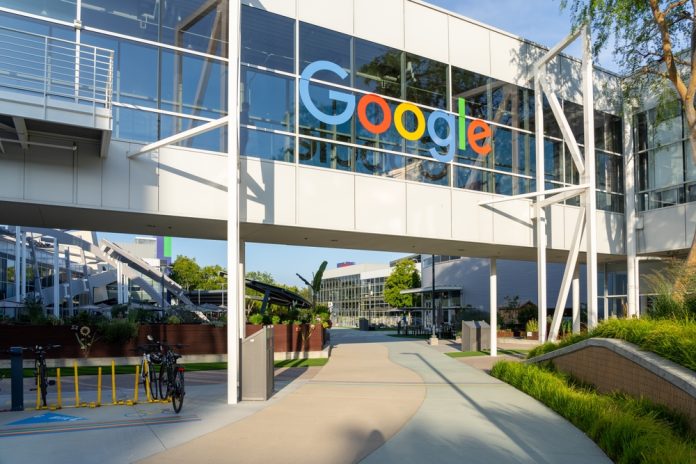

In a landmark move that reshapes the cloud security landscape, Google has completed its largest-ever acquisition, purchasing cloud security firm Wiz for $32 billion. This strategic investment, announced this week, positions Google Cloud to significantly enhance its security offerings while maintaining Wiz’s multi-cloud compatibility with platforms like Microsoft Azure and Amazon Web Services. But this massive deal is just one piece of a complex puzzle unfolding in the AI industry, where ethical tensions, monetization strategies, and competitive dynamics are creating a perfect storm of transformation.
The Wiz Acquisition: More Than Just a Price Tag
Google’s acquisition of Wiz represents more than just a record-breaking transaction. The deal, which had been in negotiation since March of last year, follows Google’s previous $5.4 billion purchase of cybersecurity firm Mandiant in 2022. What makes this acquisition particularly noteworthy is Google’s commitment to keeping Wiz’s products available across all major cloud platforms. This multi-cloud approach suggests Google is playing a longer game – investing in security infrastructure that could benefit the entire cloud ecosystem while strengthening its own competitive position.
But why would Google pay $32 billion for a security company? The answer lies in the growing importance of cloud security as businesses increasingly migrate sensitive data and operations to the cloud. With cyber threats becoming more sophisticated, robust security solutions are no longer optional – they’re essential for enterprise adoption. By integrating Wiz’s technology, Google Cloud can offer more comprehensive security features, potentially attracting larger enterprise customers who prioritize data protection.
AI Ethics: The Growing Industry-Government Divide
While Google makes strategic business moves, a different kind of tension is brewing in the AI industry. More than 30 employees from OpenAI and Google DeepMind, including Google DeepMind chief scientist Jeff Dean, recently filed an amicus brief supporting Anthropic in its legal fight against the U.S. government. The Department of Defense had labeled Anthropic a supply chain risk after the AI firm refused to allow its technology to be used for mass surveillance of Americans or autonomously firing weapons.
Jeff Dean stated in the brief that “the government’s designation of Anthropic as a supply chain risk was an improper and arbitrary use of power that has serious ramifications for our industry.” This action highlights a growing divide between AI companies and government entities over ethical boundaries, particularly regarding military applications. The situation became more complex when the DOD signed a deal with OpenAI shortly after designating Anthropic, a move that many OpenAI employees protested.
Monetization Strategies: The Advertising Question
As Google expands its AI capabilities, questions about monetization strategies are becoming increasingly relevant. Google executives have maintained for months that there are no immediate plans to place advertisements in Gemini, the company’s AI assistant. However, in a recent interview with WIRED, Google’s senior vice president of knowledge and information, Nick Fox, stated that the tech giant is “not ruling them out.”
This potential shift in Google’s approach to AI monetization could have significant implications for user experience and privacy. While subscription models offer one revenue stream, advertising introduces different considerations about data usage and user trust. As AI assistants become more integrated into daily workflows, how companies choose to monetize these services will shape both their business models and user relationships.
Competitive Landscape: Nvidia’s Open-Source Move
The competitive dynamics in the AI space continue to evolve rapidly. Nvidia is reportedly developing an open-source AI agent platform called NemoClaw to compete with OpenClaw. According to reports, the GPU maker is pitching the platform to corporate partners including Salesforce, Cisco, Google, Adobe, and CrowdStrike ahead of its annual developer conference.
Nvidia CEO Jensen Huang previously called OpenClaw “the most important software release probably ever.” NemoClaw will reportedly include security and privacy tools to address concerns about OpenClaw’s data access issues and will run on machines without Nvidia GPUs. This move comes as Nvidia faces competition in the AI hardware market and recently halted production of H200 AI chips for China.
Workspace Integration: Google’s Productivity Push
Beyond security acquisitions and ethical debates, Google is also expanding its practical AI applications. The company is integrating Gemini AI assistant into Workspace applications including Docs, Sheets, Slides, and Drive with numerous new features. The beta launches on March 10, 2026, initially in English for Gemini Alpha (Business), Google AI Pro, and Ultra users.
In Sheets, Gemini’s “Fill with Gemini” feature fills data nine times faster for 100 cells compared to manual entry, achieving a 70.48% success rate on the SpreadsheetBench benchmark. For Drive, “AI Overviews” provides semantic summaries with sources instead of file lists. Google emphasizes that Workspace privacy standards apply, with user data not training models and GDPR-compliant guarantees for EU users including data residency.
The Bigger Picture: Security, Ethics, and Competition
Google’s Wiz acquisition represents a significant investment in cloud security infrastructure, but it’s happening against a backdrop of broader industry transformations. The ethical tensions between AI companies and government entities, evolving monetization strategies, competitive moves by companies like Nvidia, and practical AI integrations into productivity tools all point to an industry at a crossroads.
For businesses and professionals, these developments have real implications. Enhanced cloud security could accelerate enterprise adoption of cloud services. Ethical debates about AI use could influence regulatory frameworks and corporate policies. New AI tools in productivity software could change how teams collaborate and work. And competitive dynamics could affect which technologies become industry standards.
As the AI industry continues to mature, the interplay between strategic acquisitions, ethical considerations, business models, and competitive innovation will shape not just individual companies, but the entire technological landscape. The question isn’t just about who has the best technology, but who can navigate the complex web of security needs, ethical boundaries, user expectations, and market dynamics most effectively.