

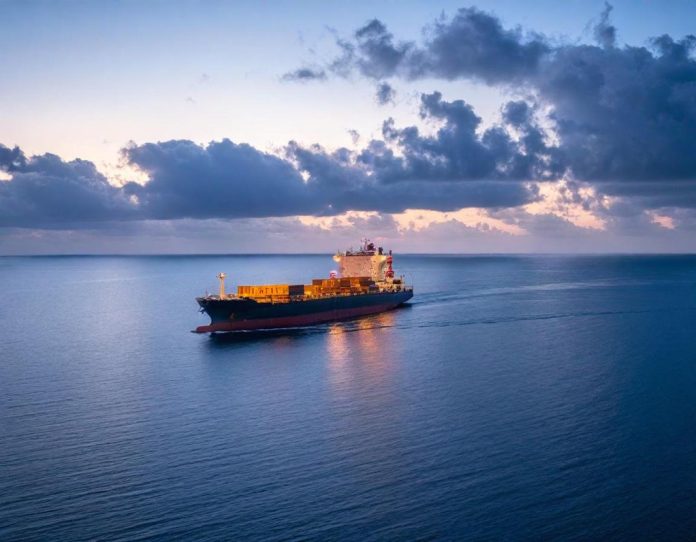

Imagine navigating a massive cargo ship through the narrow Strait of Hormuz – a waterway that carries 20% of the world’s oil – while your GPS system shows your vessel zigzagging erratically or circling in place. This isn’t a hypothetical scenario; it’s the daily reality for shipping companies operating in the Persian Gulf as GPS jamming reaches unprecedented levels. According to Israeli AI company Windward, over 1,650 ships registered falsified position data on March 7 alone, representing a 55% increase from the previous week. These disruptions aren’t just technical glitches – they’re creating real-world collisions risks and threatening global supply chains that depend on precise maritime navigation.
The Escalating GPS Warfare
The GPS disruptions in the Persian Gulf represent a new escalation in regional conflicts, with at least 30 jamming clusters detected across Saudi Arabia, Kuwait, the United Arab Emirates, Qatar, Oman, and Iran. While military analysts suspect Iran as the primary source – potentially using equipment from Russia or China – U.S. forces also reportedly employ jamming to protect their regional facilities from drone attacks. The situation has become so severe that shipping companies are turning to alternative systems like Raytheon’s Landshield anti-jam antennas and Advanced Navigation’s gyroscopic positioning technology.
Broader Economic and Security Implications
The GPS disruptions are part of a larger pattern affecting global infrastructure. In a related development, drone strikes have targeted Amazon Web Services data centers in the UAE and Bahrain – what experts believe to be the first military attacks against major U.S. cloud computing providers. “The Iranians view data centers as part of the conflict,” says Matt Pearl, Director at the Center for Strategic and International Studies. “This is one way of having an actual impact on the region.” These attacks could significantly impact Gulf states’ multibillion-dollar plans to develop AI infrastructure as part of economic diversification efforts.
The economic consequences are already materializing. Vincent Clerc, CEO of shipping giant Maersk, told the BBC that the conflict has led to additional shipping costs of around $200 per standard container, translating to 15-20% freight cost increases. “Ultimately we need to get back to something where freedom of navigation and peaceful navigation is restored,” Clerc emphasized. With 132 ships reportedly stuck in the Gulf as of this week and at least seven seafarer deaths since the conflict began, the human and economic toll continues to mount.
AI’s Role in Modern Conflict and Infrastructure
The GPS disruptions highlight a fundamental vulnerability in our global navigation infrastructure. GNSS (Global Navigation Satellite System) signals are notoriously weak and often unencrypted, making them easy targets for jamming or spoofing. As AI-powered systems become increasingly integrated into maritime operations – from autonomous navigation to predictive maintenance – their dependence on reliable positioning data creates new vulnerabilities. The situation in the Persian Gulf serves as a stark reminder that as we build more sophisticated AI systems, we must also develop more resilient infrastructure to support them.
Meanwhile, the U.S. government’s increasing use of AI in military operations adds another layer of complexity. According to Financial Times reporting, the Pentagon has been developing AI-powered cyber tools to identify infrastructure targets, with contracts worth about $200 million awarded to companies including OpenAI, Anthropic, Google, and xAI. This military application of AI technology represents what some analysts call the “spillover effect” – where civilian AI advancements increasingly find their way into military applications.
The Path Forward: Balancing Innovation and Security
As the situation in the Persian Gulf demonstrates, the intersection of AI, navigation technology, and geopolitical conflict creates complex challenges that require multifaceted solutions. Experts suggest that encrypted GNSS signals could provide at least partial protection against spoofing, while redundant navigation systems offer temporary workarounds. However, these technical solutions must be accompanied by diplomatic efforts to de-escalate regional tensions.
Sam Winter-Levy, a fellow at the Carnegie Endowment for International Peace, warns that “this is a harbinger of what’s to come and these types of attacks are not going to be limited to the Middle East.” As AI infrastructure becomes more critical to global commerce and security, protecting it from both physical and digital attacks will require unprecedented cooperation between governments, technology companies, and international organizations. The question isn’t whether we can build advanced AI systems, but whether we can build them securely enough to withstand the geopolitical pressures of our increasingly connected world.