

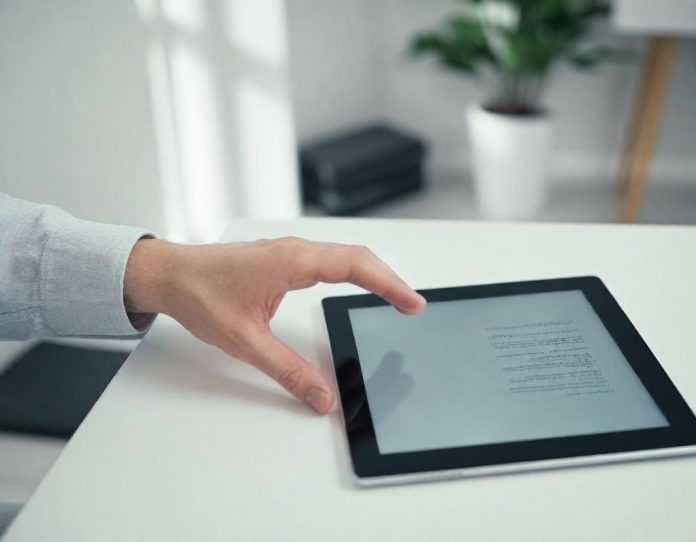

Imagine sitting in a meeting, scribbling notes on a tablet that instantly converts your handwriting into searchable text, summarizes key points, and even suggests action items? This isn’t science fiction�it’s the reality unfolding in boardrooms and creative studios worldwide as AI-powered tablets redefine how professionals work, create, and collaborate?
The Evolution of Digital Note-Taking
Digital tablets have come a long way from simple touchscreen devices? The latest generation integrates sophisticated artificial intelligence that transforms passive note-taking into active productivity tools? According to ZDNET’s comprehensive testing of leading tablets, devices like the Boox Note Air 4 C now feature built-in AI for text recognition, shape perfection, and intelligent erase functions that make digital writing feel more natural than ever before?
Maria Diaz, who tested the Boox tablet for ZDNET, described it as “great for professionals and creatives” specifically because of these AI enhancements? The technology isn’t just about convenience�it’s about fundamentally changing how we process information? Kyle Kucharski’s experience with the Kindle Scribe’s Active Canvas feature demonstrates this shift, noting how notes exist on separate layers from book text, allowing for seamless annotation without disrupting the original content?
The Hardware Revolution Behind the AI Magic
What makes these AI capabilities possible? The answer lies in the silicon powering these devices? Qualcomm’s recent Snapdragon 8 Elite Gen 5 chipset represents a quantum leap in mobile processing power? As detailed in ZDNET’s coverage, this chipset supports up to 220 tokens per second when running a 3B parameter small language model�a tenfold increase from previous capabilities?
Durga Malladi, SVP and GM at Qualcomm, put this in perspective: “If you just think about it, we went from close to 20 to this, it’s like a 10x increase in the tokens per second that you get now? I can’t read 200 words per second? None of us can?” This processing power enables real-time translation, instant PDF processing, and sophisticated AI features that were previously only possible with cloud connectivity?
Beyond Note-Taking: The Broader AI Productivity Landscape
The tablet revolution is part of a larger transformation in how AI is reshaping professional workflows? Google’s 2025 DORA software development report reveals that 90-95% of developers now use AI tools, spending a median of two hours daily with AI assistance? The report’s key finding�that “AI magnifies the strengths of high-performing organizations and the dysfunctions of struggling ones”�applies equally to how professionals use AI-powered tablets?
High-performing teams leverage these tools to enhance creativity and efficiency, while struggling organizations often use them as crutches rather than catalysts? The DORA team emphasizes that “successful AI adoption is a systems problem, not a tools problem,” suggesting that the real value comes from integrating these devices into well-designed workflows rather than simply purchasing the latest technology?
The Infrastructure Supporting the AI Tablet Ecosystem
Behind every sophisticated AI feature on these tablets lies massive computational infrastructure? The recent $1?1 billion funding round for Nscale, backed by Nvidia and valued at approximately $3 billion, demonstrates the scale of investment flowing into AI infrastructure? As Nscale CEO Josh Payne stated, “We are building the AI-native infrastructure platform of tomorrow?”
This infrastructure enables the cloud-connected features that make modern tablets so powerful, from real-time collaboration to AI-assisted content creation? Jensen Huang’s comment that “three months ago, we convinced ourselves that Nscale could be a national champion for the UK” underscores the strategic importance of this infrastructure for global competitiveness in the AI era?
Choosing the Right Tool for Your Professional Needs
With so many options available, professionals face important decisions about which tablet best suits their workflow? The choice often comes down to balancing AI capabilities with specific use cases:
- Creative professionals might prefer devices like the Samsung Galaxy Tab S10+ with its AI-powered Sketch-to-Image features and included S Pen
- Research-focused users may benefit from the Kindle Scribe’s ability to take notes directly on reading material with AI transcription
- Productivity-focused professionals could choose the reMarkable Paper Pro for its distraction-free environment and workflow integrations
- General business users might opt for the iPad Air’s balance of performance, app ecosystem, and Apple Pencil compatibility
The Future of AI-Enhanced Professional Tools
As these technologies continue to evolve, we’re seeing a convergence of hardware capabilities and AI sophistication that promises to further transform professional work? The recent study commissioned by Remarkable, while limited in sample size, suggests compelling benefits: participants using digital paper tablets showed 35% lower stress levels and 30% reduction in cognitive load compared to computer users?
What does this mean for the future of professional tools? We’re moving toward devices that don’t just capture our thoughts but actively help us process, organize, and act on them? The question isn’t whether AI will transform how we work�it’s how quickly professionals can adapt to tools that are becoming increasingly intelligent partners in our creative and analytical processes?