


In a move that defies conventional semiconductor wisdom, quantum computing company IonQ announced plans to acquire chipmaker SkyWater Technology for $1.8 billion. The deal, expected to close by September pending regulatory approvals, represents a strategic pivot in how quantum hardware gets built – and who controls its supply chain.
The Unconventional Hardware Play
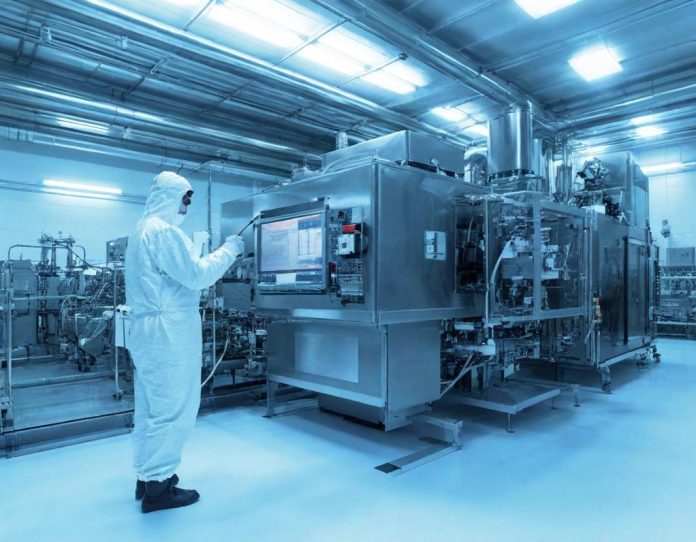
What makes this acquisition particularly noteworthy isn’t the price tag, but the technology involved. SkyWater’s manufacturing facilities in Minnesota, Florida, and Texas use 65-nanometer process technology – technology that was cutting-edge in 2005 but is considered ancient by today’s standards. For comparison, leading foundries like TSMC are now ramping up 2-nanometer production.
Yet for quantum computing, this “outdated” technology might be exactly what’s needed. IonQ’s quantum processors use trapped ions (atoms of ytterbium or barium) manipulated with lasers on silicon chips. Unlike traditional processors that benefit from ever-smaller transistors, quantum chips prioritize stability and precision over miniaturization. The coarser structures of older fabrication processes actually work better for quantum applications.
The National Security Angle
This isn’t just about technical specifications – it’s about geopolitics. SkyWater operates as a “Trusted US Fab,” meaning its facilities are certified to produce chips for sensitive military applications. Following the acquisition, IonQ will control what CEO Niccolo de Masi calls “a completely U.S.-owned and U.S.-operated provider” of quantum technologies.
The timing is significant. As Dario Amodei, CEO of AI safety company Anthropic, recently warned in a nearly 20,000-word essay, humanity is “about to be handed almost unimaginable power” through advanced AI systems. His concerns about catastrophic risks – from bioterrorism to authoritarian empowerment – highlight why governments are increasingly focused on securing critical technologies.
IonQ’s move directly addresses these concerns by creating what the company describes as “a vertically-integrated, full-stack quantum platform company in the U.S.” This means controlling everything from design and prototyping to manufacturing, packaging, and field deployment – all within American borders.
The Development Advantage
Beyond security considerations, the acquisition promises practical benefits for quantum development. IonQ expects development cycles to shorten dramatically – from nine months down to just two months. The company plans to test 200,000 quantum-bit chip samples by 2028, a scale that would be difficult without direct control over manufacturing.
SkyWater CEO Thomas Sonderman assures customers that “there will be no changes to customer access or intellectual property protections” following the acquisition. SkyWater will continue operating as a wholly-owned subsidiary, serving its existing customers while also providing IonQ with dedicated production capacity.
The Broader Hardware Context
This acquisition occurs against a backdrop of intense competition in specialized computing hardware. Nvidia recently announced that CoreWeave will be among the first to receive its new Vera Rubin chips, which the company describes as “the foundation of the AI industrial revolution.” Meanwhile, reports suggest Elon Musk’s SpaceX and xAI are in merger talks, potentially combining rockets and satellites with AI capabilities.
What these developments share is a recognition that hardware matters – not just as a commodity, but as a strategic asset. As quantum computing moves from research labs to practical applications, control over the manufacturing process becomes increasingly critical.
The Business Implications
For businesses watching quantum computing, this acquisition signals several important trends. First, vertical integration is becoming more attractive in specialized computing fields. Second, older manufacturing technologies can find new life in emerging applications. Third, national security considerations are reshaping technology supply chains in ways that affect commercial development.
IonQ projects full-year revenue near or above $106-110 million, suggesting the company sees significant commercial potential beyond government contracts. The ability to offer certain quantum building blocks to external customers could create new revenue streams while accelerating adoption across industries.
The Road Ahead
As the deal moves toward completion in the second or third quarter of 2026, several questions remain. How will this vertical integration model affect innovation? Will other quantum companies follow similar strategies? And what does this mean for global competition in quantum technologies?
What’s clear is that quantum computing is entering a new phase – one where manufacturing capabilities matter as much as theoretical breakthroughs. In an industry often focused on software and algorithms, IonQ’s $1.8 billion bet on hardware reminds us that sometimes, the most advanced technologies need the most fundamental foundations.