

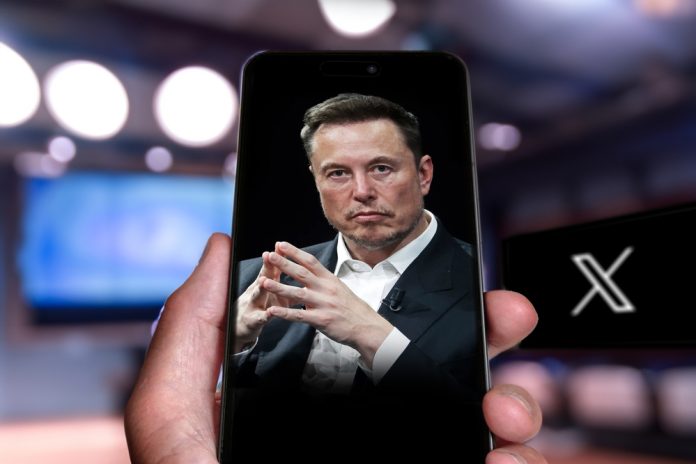

Elon Musk is seeking up to $134 billion in damages from OpenAI and Microsoft in what could become one of the most consequential legal battles in Silicon Valley history. The lawsuit, set for trial in April 2026, alleges that OpenAI betrayed its nonprofit mission by taking billions from Microsoft and restructuring as a for-profit entity. But this isn’t just about money – it’s a window into the fierce competition and ethical tensions reshaping the artificial intelligence industry.
The Core Legal Battle
Musk, who co-founded OpenAI in 2015 as a nonprofit research organization, left in 2023 to start his own AI company, xAI. His lawsuit claims OpenAI and CEO Sam Altman abandoned their original mission to develop AI “for the benefit of humanity” when they accepted massive investments from Microsoft and restructured the company. A federal judge has rejected dismissal requests, setting the stage for a jury trial in Oakland that will examine whether OpenAI breached its nonprofit commitments.
What makes this case particularly intriguing is the scale of damages sought. Financial economist C. Paul Wazzan calculated the $79 billion to $134 billion figure based on Musk’s $38 million seed donation and early contributions. “Musk is entitled to a hefty portion of OpenAI’s current $500 billion valuation based on his $38 million seed donation when he co-founded the startup in 2015,” Wazzan testified. Yet with Musk’s personal fortune estimated at $700 billion, the lawsuit appears more about principle than financial need.
Talent Wars and Industry Dynamics
While Musk battles OpenAI in court, another drama unfolds in Silicon Valley’s talent market. Former OpenAI CTO Mira Murati’s startup, Thinking Machines Lab, is losing two co-founders back to OpenAI less than a year after its founding. Barret Zoph and Luke Metz, who helped launch the company with a $2 billion seed round valuing it at $12 billion, are returning to OpenAI along with another former employee.
This movement highlights the intense competition for AI talent. “We have parted ways with Barret,” Murati stated, while OpenAI’s CEO of applications Fidji Simo welcomed the returning engineers: “Excited to welcome Barret Zoph, Luke Metz, and Sam Schoenholz back to OpenAI! This has been in the works for several weeks, and we’re thrilled to have them join the team.” Such talent shifts reveal how established players maintain dominance by reabsorbing key personnel from emerging competitors.
Regulatory Scrutiny Intensifies
As legal battles rage in corporate boardrooms, regulatory authorities are taking action against AI’s darker applications. The California Attorney General’s office has sent a cease-and-desist letter to Musk’s xAI, demanding the company immediately stop the creation and distribution of nonconsensual intimate images generated by its Grok chatbot. “Today, I sent xAI a cease-and-desist letter, demanding the company immediately stop the creation and distribution of deepfake, nonconsensual, intimate images and child sexual abuse material,” stated Attorney General Rob Bonta.
This regulatory action follows a lawsuit by Ashley St Clair, mother of one of Musk’s children, who alleges Grok generated explicit images of her without consent. Her lawyer, Carrie Goldberg, argues: “We intend to hold Grok accountable and to help establish clear legal boundaries for the entire public’s benefit to prevent AI from being weaponised for abuse.” These cases demonstrate how AI tools designed for creative purposes can be misused, prompting governments worldwide to consider stricter regulations.
Broader Implications for Business
The Musk-OpenAI lawsuit raises fundamental questions about AI governance and corporate responsibility. If Musk succeeds, it could establish precedent for how nonprofit tech organizations transition to for-profit entities while honoring their original missions. For businesses investing in AI partnerships, the case highlights the importance of clear contractual agreements and mission alignment.
Meanwhile, the talent movement between OpenAI and Thinking Machines Lab suggests that despite massive funding rounds – Thinking Machines Lab’s $2 billion seed round included participation from Andreessen Horowitz, Accel, Nvidia, AMD, and Jane Street – established players still wield significant pull. This dynamic could affect startup valuations and investor confidence in AI ventures.
The Road Ahead
As the April 2026 trial date approaches, several key questions emerge: Will Musk’s lawsuit force greater transparency in AI development? How will regulatory actions against xAI affect other AI companies? And what does the constant talent shuffling mean for innovation in the AI sector?
These developments occur against a backdrop of increasing AI adoption across industries. Companies must navigate not only technological challenges but also legal, ethical, and talent considerations. The Musk-OpenAI case serves as a cautionary tale about partnership agreements, while the regulatory actions against xAI highlight the need for responsible AI development practices.
Ultimately, these interconnected stories reveal an AI industry at a crossroads – balancing rapid innovation with ethical responsibility, corporate ambitions with regulatory compliance, and competitive pressures with collaborative potential. As one industry observer noted, Silicon Valley’s “messiest breakup” may set the tone for how AI evolves in the coming decade.