

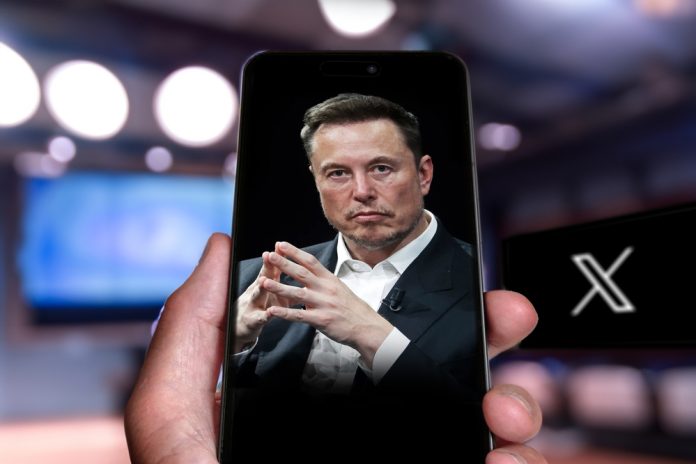

Elon Musk has unveiled plans for what could become the world’s largest integrated chip factory, dubbed “Terafab,” in a bold move that aims to reshape the semiconductor landscape and power his vision of space-based artificial intelligence computing. The announcement, made during a recent presentation in Austin, Texas, outlines a facility that would consolidate nearly all semiconductor manufacturing steps under one roof – from mask production to final packaging – primarily focused on creating AI accelerators for training and inference.
The Integrated Manufacturing Revolution
Musk claims this vertically integrated approach could accelerate chip development by “an order of magnitude” compared to traditional semiconductor manufacturing. The Terafab would produce chips with 2-nanometer technology, matching the cutting-edge processes currently being developed by industry leader TSMC. However, Musk provided few details about the necessary technologies, suppliers, timelines, or costs, leaving industry observers with more questions than answers.
Space-Based Computing: Vision or Fantasy?
The most ambitious aspect of Musk’s plan involves deploying AI computing power in space. He envisions satellites with massive solar arrays – larger than SpaceX’s 124-meter Starship V3 – providing up to 1 terawatt of computing capacity. Musk dismissed concerns about cooling such systems in space as a “bizarre debate,” citing SpaceX’s experience with thousands of Starlink satellites.
This vision faces significant skepticism. OpenAI CEO Sam Altman recently called the idea of orbital data centers “ridiculous,” citing prohibitive transportation costs and the impossibility of repairing systems in space. The debate highlights a fundamental divide in how tech leaders envision scaling AI infrastructure.
The Energy Challenge
Musk’s space-based computing vision underscores a critical reality: AI’s voracious energy appetite. According to TechCrunch analysis, AI is expected to drive data center power consumption up 175% by 2030, with up to 50% of announced data center projects potentially delayed due to power access issues. This energy constraint is creating investment opportunities in battery storage, power conversion technologies, and energy management software.
Major tech companies like Google and Meta are already investing in solar, wind, and nuclear projects to secure their power needs. The Trump administration has urged tech companies to build their own power sources or pay higher rates, reflecting the growing tension between AI expansion and energy infrastructure limitations.
Geopolitical Tensions and Supply Chain Risks
The push for domestic chip manufacturing comes amid escalating geopolitical tensions. Just days before Musk’s announcement, Supermicro co-founder Wally Liaw and two others were indicted for allegedly conspiring to smuggle $2.5 billion worth of Nvidia AI chip servers to Chinese customers, violating U.S. export controls. The scheme involved using a Southeast Asian company as a pass-through entity and repackaging servers to conceal their contents.
Supermicro shares fell 12% after the announcement, highlighting the market sensitivity to export control violations. Both Supermicro and Nvidia emphasized their commitment to compliance in statements following the indictments. This case represents the largest yet involving Nvidia chip smuggling to China, occurring amid ongoing U.S.-China trade tensions.
Broader Industry Implications
Musk’s terrestrial applications for Terafab chips include Tesla’s Optimus humanoid robots, which he predicts could reach production levels of “somewhere between one and ten billion units per year.” This ambitious forecast reflects growing interest in AI-driven automation across manufacturing sectors.
Jeff Bezos is reportedly seeking $100 billion for a new fund to acquire and modernize manufacturing companies using AI through his startup Project Prometheus. The fund targets sectors including aerospace, chipmaking, and defense, leveraging AI models to automate and improve operations. This parallel initiative suggests that industrial transformation through AI is becoming a priority for multiple tech billionaires.
Job Market Realities
Contrary to fears of widespread AI-induced unemployment, former Tesla president Jon McNeill argues that AI will accelerate tech job growth. He emphasizes that managing complexity remains beyond AI’s reach, creating intense demand for infrastructure and networking professionals. “The need for compute, for servers, is creating a ton of demand for networking expertise,” McNeill notes. “The expertise needed to keep these servers running, to keep them synched, is extraordinary.”
McNeill advocates for the “automate last” principle, cautioning against premature automation and urging technology professionals to push back on expensive AI solutions when simpler approaches suffice. This perspective offers a counterbalance to both utopian and dystopian narratives about AI’s impact on employment.
The Road Ahead
Musk’s Terafab proposal raises fundamental questions about the future of AI infrastructure. Can vertically integrated manufacturing deliver the promised acceleration in chip development? Is space-based computing a viable solution to Earth’s energy constraints, or an expensive distraction? And how will geopolitical tensions shape the global semiconductor landscape?
What’s clear is that the race for AI supremacy is increasingly becoming a battle for hardware dominance, energy security, and manufacturing innovation. As tech giants and governments grapple with these challenges, the decisions made today will shape not just the future of artificial intelligence, but potentially humanity’s presence in space itself.