

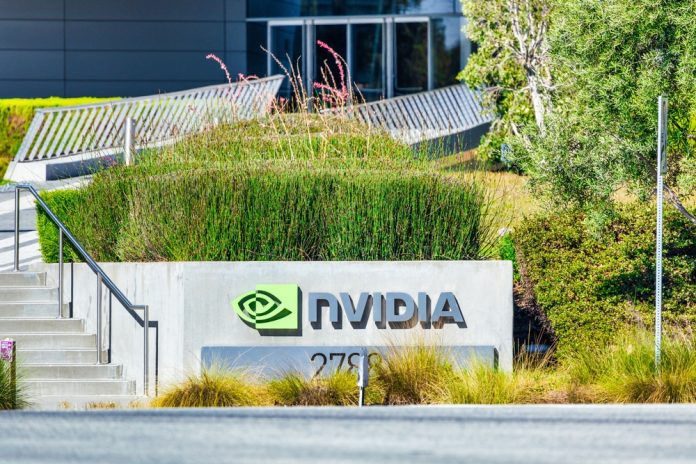

When Nvidia CEO Jensen Huang stood before journalists in Taipei last Saturday, he had one clear message: “We will invest a great deal of money.” This simple statement cut through weeks of speculation about whether the chip giant would back away from its planned $100 billion investment in OpenAI. But Huang’s confirmation that Nvidia remains committed – while simultaneously dismissing the $100 billion figure – reveals a deeper story about the precarious financial dance happening at the highest levels of artificial intelligence development.
The Investment That Wasn’t (Exactly)
Back in September 2025, Nvidia and OpenAI announced what they called “the largest AI infrastructure project in history.” The plan involved building data centers requiring 10 gigawatts of power – equivalent to 10 nuclear power plants – with Nvidia investing up to $100 billion. But by January 2026, reports emerged suggesting internal friction at Nvidia about the deal’s scale and timing.
“Nonsense,” Huang called the Wall Street Journal’s report that Nvidia was reconsidering. Yet when pressed about whether the investment would reach $100 billion, he responded: “No, no, nothing like that.” This contradiction highlights the delicate balance between corporate ambition and financial reality in today’s AI gold rush.
Why This Funding Round Matters
OpenAI’s current fundraising efforts aren’t just about securing operating capital – they’re about positioning for what could be the most significant tech IPO since Facebook. The company aims to raise up to $100 billion at a staggering $750 billion valuation, according to Financial Times analysis. For context, that valuation would make OpenAI more valuable than every company except Microsoft and Apple.
But here’s where it gets interesting: The same tech giants investing in OpenAI also supply its infrastructure. Nvidia provides the chips, Amazon offers cloud capacity through AWS, and Microsoft already owns a 27% stake. This creates what analysts call “circular financial arrangements” where companies are essentially investing in their own customers.
The Competitive Landscape Heats Up
While OpenAI dominates headlines, competitors aren’t standing still. Anthropic – backed by Amazon’s $8 billion investment – is reportedly finalizing a funding round where it’s set to raise double its target amount. Google continues to advance its Gemini models, and Microsoft’s market value dropped $360 billion in a single day after reporting massive AI infrastructure spending.
“OpenAI has become potentially ‘too big to fail’ for its tech backers,” notes the Financial Times analysis. This isn’t hyperbole – 45% of Microsoft’s $625 billion book of future cloud contracts comes from OpenAI alone. When one company becomes this central to multiple trillion-dollar corporations, its financial health becomes a strategic concern for entire industries.
The Real Numbers Behind the Headlines
Current negotiations suggest a more nuanced picture than the initial $100 billion headline. According to Financial Times reporting, Nvidia may invest up to $20 billion, Amazon around $10 billion, and Microsoft several billion more. SoftBank is close to securing an additional $30 billion investment, with sovereign wealth funds like Abu Dhabi Investment Authority also in discussions.
What does this mean for businesses watching from the sidelines? First, it signals that even the biggest players are being strategic about their AI bets. Second, it suggests that the era of unlimited AI spending may be giving way to more measured investments. As one industry insider put it: “Everyone wants a seat at the AI table, but nobody wants to overpay for dinner.”
The Infrastructure Challenge
Beyond the dollar figures lies a more fundamental constraint: infrastructure. Those 10 gigawatts of power needed for OpenAI’s planned data centers represent more than just electricity – they represent physical limits to growth. Data centers require land, water for cooling, and connections to power grids that are already straining under current demands.
This infrastructure bottleneck explains why companies like Amazon are investing $11 billion in new data center campuses specifically for AI models. It also explains why Nvidia’s investment – whether $20 billion or $100 billion – isn’t just about financial returns but about securing its position as the essential hardware provider in an AI-first world.
What Comes Next
As OpenAI moves toward its IPO – expected later this year or next – this funding round will serve as a “litmus test for the entire AI industry,” according to the original German report. Will investors continue pouring billions into companies burning cash at unprecedented rates? Or will we see a more cautious approach emerge?
The answer likely lies somewhere in between. Huang’s careful wording – “We will invest a great deal of money” without committing to specific figures – reflects this new reality. The AI revolution continues, but it’s entering a phase where financial discipline matters as much as technological breakthrough.
For businesses considering their own AI strategies, the lesson is clear: Watch the money as closely as you watch the technology. Because in today’s AI landscape, financial infrastructure may prove just as important as digital infrastructure.