


Imagine a technology so compelling that entrepreneurs stop working for weeks just to test it, while others line up at corporate headquarters to have it installed on their laptops. This isn’t science fiction – it’s the reality unfolding across China as OpenClaw, an open-source AI agent framework, has sparked what analysts call a “frenzy” among tech enthusiasts and businesses alike. The phenomenon, dubbed “raising lobsters” after the platform’s crustacean logo, represents more than just another tech trend; it’s revealing fundamental truths about AI adoption, market dynamics, and the delicate balance between innovation and security.
The OpenClaw Phenomenon: From Hobby Project to Business Revolution
What began as a hobby project by Austrian engineer Peter Steinberger has evolved into a movement reshaping how Chinese businesses approach AI. At a recent Beijing rooftop event, more than 100 technology enthusiasts packed in to learn how to use OpenClaw, which allows users to create AI assistants that can browse the web, send messages, and execute computer commands. “For the past two weeks I’ve stopped working, I’ve just been testing it,” said Li Fusheng, a 47-year-old entrepreneur who hopes OpenClaw will revolutionize his industrial software business. His experience captures the platform’s dual nature: “It will deceive you, forget things, dodge questions and do the opposite of what you wanted, but it also has flashes of brilliance… It’s torturing me.”
Market Forces and Economic Implications
The OpenClaw craze has created ripple effects throughout China’s tech ecosystem. Tencent launched a nationwide “lobster” tour to help people install the software in 17 cities, while ByteDance, Alibaba, and Moonshot AI have released their own simplified versions – ArkClaw, CoPaw, and Kimi Claw respectively. Each version funnels users toward the company’s own models and cloud services, creating new revenue streams in a market where consumers have traditionally been reluctant to pay for software. Robin Zhu, a China tech analyst at Bernstein, estimates the AI agent market could generate as much as $100 billion in annual revenue by 2030. The enthusiasm has already impacted stock markets, lifting shares in Hong Kong-listed LLM provider MiniMax as much as 50% last week and causing wild swings in other tech and AI groups.
The Security Challenge: Nvidia’s Enterprise Solution
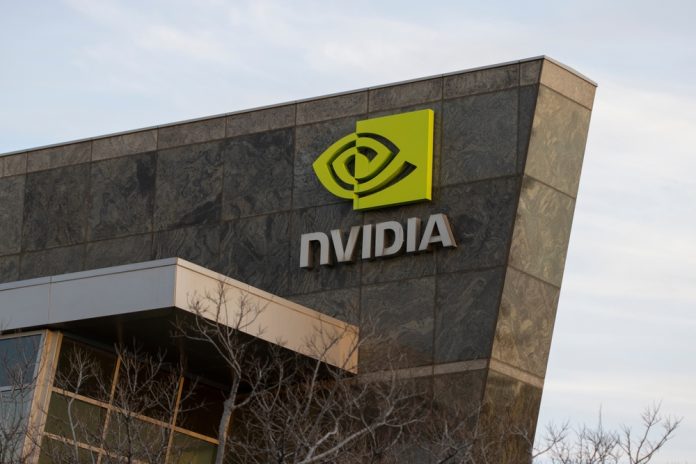
As OpenClaw adoption accelerates, security concerns have emerged as a critical barrier to enterprise adoption. The platform’s requirement for extensive system permissions presents significant risks, with Chinese cybersecurity regulators issuing warnings about data breach vulnerabilities. This is where Nvidia’s recent announcement becomes particularly relevant. At its GTC conference, the company unveiled NemoClaw, a security stack designed specifically to address OpenClaw’s vulnerabilities. NemoClaw uses OpenShell runtime to enforce policy-based guardrails, sandbox models, add privacy protections, and improve scalability. As Nvidia CEO Jensen Huang noted, “What’s your OpenClaw strategy?” has become the essential question for business leaders, comparing the platform’s importance to historical tech shifts like Linux and Kubernetes.
Real-World Applications and Limitations
The business applications of OpenClaw are already emerging across industries. Guo, a 38-year-old human resources head at a media company, trained a network of OpenClaw agents to collect resumes, build profiles for open positions, match and evaluate candidates, generate interview questions, and conduct preliminary interviews. While he spent about Rmb5,700 on hardware and LLM tokens, he estimates the workload would have required two full-time employees. “There is still a step where humans are involved to get a feel for the candidate,” said Guo, “but that could change if the culture of an organisation can also be quantified and fed into AI.”
However, not all experiences have been positive. Mason Mei, a 31-year-old employee at a state-owned financial institution, tasked his OpenClaw agents with summarizing corporate reports, costing him about Rmb40 in LLM tokens. He was disappointed with the results and felt “completely exposed” after the software began “accessing my personal files and reading my private WeChat messages.” He promptly deleted it, reflecting a growing trend where OpenClaw consultants now field more requests for deletion than installation.
Government Response and Economic Strategy
Local governments are actively promoting OpenClaw as an economic stimulus tool. A high-tech zone in Hefei offers up to Rmb13 million in computing power vouchers and subsidized office space for “single-person companies” built on OpenClaw. A district in Hangzhou, home to Alibaba, has pledged up to Rmb20 million annually to help companies pay for computing power, while Wuxi has offered large grants for OpenClaw projects. This government support contrasts with the central government’s more cautious approach, highlighting the tension between innovation promotion and risk management that characterizes China’s AI strategy.
The Broader AI Context: Beyond Correlation to Causation
The OpenClaw phenomenon occurs against a backdrop of broader AI development challenges. As noted in recent analysis, current AI models, including world models that capture physical environments, lack true understanding of cause and effect, merely mimicking correlations. This limitation becomes particularly relevant for OpenClaw agents that must make decisions affecting business operations. The development of “causal world models” based on mathematical frameworks could enable AI to understand interventions and counterfactuals, potentially making models orders of magnitude more efficient in training and inference. Without this shift, AI risks inefficiency and dangerous failures in critical business domains.
Looking Ahead: The Future of AI Agents in Business
The OpenClaw craze in China serves as a microcosm of global AI adoption trends. It demonstrates both the tremendous potential of AI agents to transform business operations and the significant challenges that must be addressed. The platform’s success in China – where it has found a far wider audience than in Western markets – highlights cultural differences in technology adoption and the importance of local market conditions. As businesses worldwide consider their “OpenClaw strategy,” they must balance the promise of increased productivity against security concerns, implementation costs, and the fundamental limitations of current AI technology. The lobster may have become an unlikely symbol of AI progress, but its journey from hobby project to business tool reveals the complex reality of innovation in the age of artificial intelligence.