

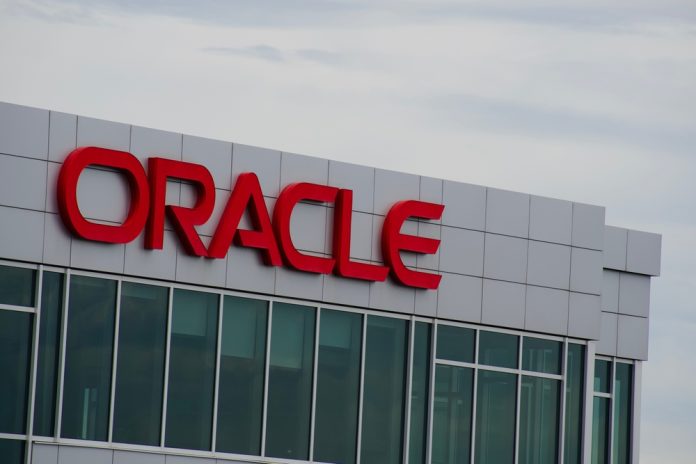

Oracle shares tumbled more than 6% this week, but the story behind the drop reveals a much larger narrative about the high-stakes infrastructure race powering artificial intelligence? The database giant reported capital expenditures soaring to $12 billion�far above the $8?4 billion analysts expected�as it pours resources into data centers to support its massive contract with OpenAI? While revenue grew 14% to $16?1 billion, falling short of estimates, Oracle’s aggressive spending signals a fundamental shift in how tech companies are positioning themselves for the AI era?
The Infrastructure Arms Race
Oracle’s massive data center push is part of a much broader trend reshaping the technology landscape? According to Financial Times analysis, tech giants Google, Amazon, Microsoft, and Meta are projected to spend over $400 billion on data centers in 2026 alone, on top of $350 billion this year? JPMorgan predicts more than $5 trillion will be spent on building AI infrastructure over the next five years, creating what one Kirkland & Ellis partner describes as “a very precise asset class” of digital infrastructure funds?
But this building frenzy faces significant challenges? S&P Global predicts data centers in the US will require 22% more grid power by the end of 2025, while McKinsey expects demand to increase by 22% per year? The infrastructure constraints are so severe that $98 billion in data center projects were blocked or delayed in just the second quarter of 2025 due to local opposition and power limitations?
The Global Competitive Landscape
While US companies like Oracle make massive infrastructure bets, China is pursuing a different strategy that could reshape the global AI race? Chinese companies including DeepSeek, Alibaba, and Baidu are releasing high-performing open-source models that rival US counterparts like OpenAI’s GPT-5 while using significantly less computing power? DeepSeek’s R1 model alone caused a 3% drop in the Nasdaq earlier this year, and developers have created over 500 derivative models from it on Hugging Face?
Former Google CEO Eric Schmidt warns that “US companies risk ceding open-source AI to China completely,” highlighting how China’s collaborative approach contrasts with the US’s more closed, venture capital-driven model? This efficiency advantage could give China broader reach similar to Android’s dominance in smartphones, which powers over 70% of devices globally?
The Enterprise AI Shift
Meanwhile, the enterprise AI market is undergoing its own transformation? A Menlo Ventures report reveals that Anthropic has overtaken OpenAI in enterprise generative AI spending, capturing 40% of the market compared to OpenAI’s 27%? The enterprise AI market grew to $37 billion in 2025, with coding tools representing a $4 billion annual business where Anthropic commands 54% market share?
This shift is changing how businesses operate at a fundamental level? Major corporations including Salesforce, Nasdaq, and CrowdStrike are developing AI agents to automate legal tasks like contract review and compliance checks? Salesforce’s legal team alone projects saving 9,500 hours annually through agentic AI, while CrowdStrike has over 100 AI agents in development for its legal operations?
The Bubble Question
With hundreds of billions flowing into AI infrastructure and development, veteran investors are asking whether we’re witnessing sustainable growth or speculative excess? Howard Marks, co-founder of Oaktree Capital Management, acknowledges AI’s transformative potential but warns that “memories are short, and prudence and natural risk aversion are no match for the dream of getting rich on the back of a revolutionary technology?”
The numbers are staggering: AI startups have raised $1 billion in seed rounds without clear products, while established players like Nvidia maintain forward P/E ratios around 30? Yet as Marks notes, quoting investor Sir John Templeton, “20 percent of the time things really are different?” The question facing Oracle and every major tech company is whether this represents one of those genuinely different moments or a repeat of historical market excesses?
The Path Forward
Oracle’s $12 billion bet represents more than just corporate spending�it’s a microcosm of the broader infrastructure challenges and opportunities facing the AI industry? As data centers require nearly three times as much power by 2030, companies are exploring solutions ranging from nuclear power (with the US government committing over $6 billion to small modular reactors since 2019) to even space-based data centers?
The infrastructure race has become so intense that Harvard economist Jason Furman estimated spending on data centers accounted for 92% of US GDP growth in the first half of 2025? For Oracle and its competitors, the massive capital expenditures represent both risk and opportunity�a gamble that AI infrastructure will become the foundation of the next technological era, or a cautionary tale about overinvestment in an unproven future?