

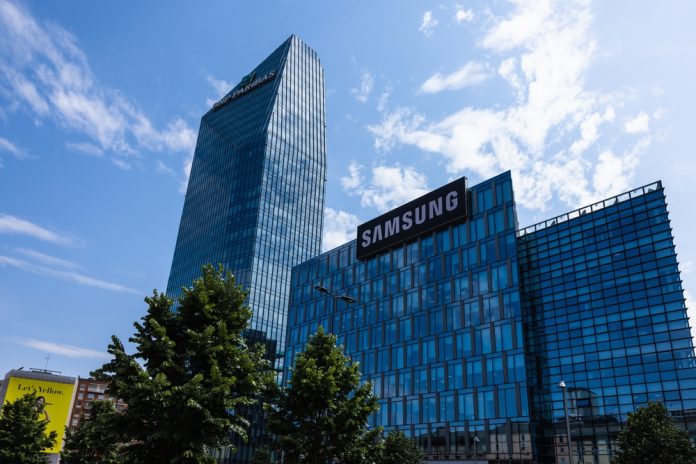

As CES 2026 approaches, Samsung’s announcement of new Wi-Fi speakers and soundbars might seem like just another consumer electronics release? But look closer, and you’ll find something more significant: these products represent a microcosm of how artificial intelligence is quietly transforming from flashy demos to practical, revenue-generating tools across industries?
Beyond Better Bass: AI’s Quiet Revolution in Consumer Electronics
Samsung’s new Music Studio 7 and 5 Wi-Fi speakers, along with the HW-Q990H and HW-QS90H soundbars, feature AI-powered Dynamic Bass Control and Sound Elevation technology? These aren’t just marketing buzzwords�they represent the kind of focused AI implementation that analysts say will finally deliver real returns on investment in 2026? The AI in these devices minimizes distortion and directs dialogue to the center of the screen, solving specific audio problems rather than making vague promises about “smarter” devices?
This approach aligns with what industry experts have been predicting? According to Deloitte’s 2025 survey, while 30% of organizations are exploring agentic AI options and 38% are piloting them, only 11% have moved these systems into production? Samsung’s audio products demonstrate how companies are finding practical applications for AI that solve specific customer pain points�in this case, audio quality and immersion?
The Bigger Picture: Why 2026 Could Be AI’s Breakthrough Year
While Samsung showcases AI in consumer hardware, the broader business landscape is preparing for what analysts call “the year of AI ROI?” Despite global corporate AI investment reaching $252?3 billion in 2024, a MIT study found that 95% of businesses weren’t seeing returns from their generative AI spending? That’s about to change, according to industry experts?
“In 2026, competitive advantage will come not from simply adopting AI, but from orchestrating it�translating innovation into sustained ROI and new forms of business value,” says China Widener, Deloitte vice chair and US TMT industry leader? This shift from experimentation to implementation is exactly what Samsung demonstrates with its targeted audio enhancements?
The Security Challenge: AI’s Growing Pains
As AI becomes more integrated into products and services, security concerns are escalating? OpenAI recently revealed that it developed an automated attacker using reinforcement learning to test vulnerabilities in its ChatGPT Atlas agentic web browser? The company acknowledges that due to the nature of agentic browsers, complete protection may never be achievable, likening the security challenge to a continuous cat-and-mouse game?
This security reality affects all AI implementations, including consumer products like Samsung’s smart speakers? As Arun Chandrasekaran, a Gartner analyst, notes: “While AI agents are becoming increasingly common as pilot projects, most enterprises are struggling with moving them into production? Ensuring a robust control plane for managing agent lifecycle, instituting governance to secure, red-team, validate and observe agents and building stateful multi-agent systems are all major goal posts for the industry to improve on in 2026?”
Legal and Ethical Frontiers: The Content Conundrum
The push toward practical AI implementation occurs against a backdrop of legal challenges? A group of authors led by John Carreyrou recently filed a lawsuit against six major AI companies�Anthropic, Google, OpenAI, Meta, xAI, and Perplexity�accusing them of training their AI models on pirated copies of their books? The authors rejected a proposed $1?5 billion settlement from Anthropic, arguing it fails to hold AI companies accountable for using stolen content to generate billions in revenue?
Carreyrou, author and Theranos whistleblower, stated: “LLM companies should not be able to so easily extinguish thousands upon thousands of high-value claims at bargain-basement rates, eliding what should be the true cost of their massive willful infringement?” This legal landscape affects how companies like Samsung develop and train their AI systems, potentially increasing costs and complexity?
What This Means for Businesses and Professionals
The convergence of these trends�practical implementation, security challenges, and legal scrutiny�creates both opportunities and risks for businesses? Forrester predicts that 30% of large enterprises will make AI fluency training mandatory by 2026, recognizing that, as senior analyst Kim Herrington explains, “AI runs on data, and employees shape that data every day (often without realizing it)? Poor literacy and fluency lead to poor inputs or behaviors, which cascade into flawed decisions or poorly trained AI models?”
Meanwhile, Gartner predicts that over 40% of agentic AI projects will be canceled by the end of 2027, suggesting that many companies will struggle with the transition from pilot to production? The companies that succeed will be those like Samsung, which focus on solving specific problems rather than chasing AI hype?
As CES 2026 kicks off, Samsung’s audio products offer more than just better sound�they provide a case study in how AI is maturing from experimental technology to practical business tool? The question for businesses isn’t whether to implement AI, but how to do so in ways that deliver real value while navigating the complex landscape of security, legal, and ethical challenges that come with this transformative technology?