

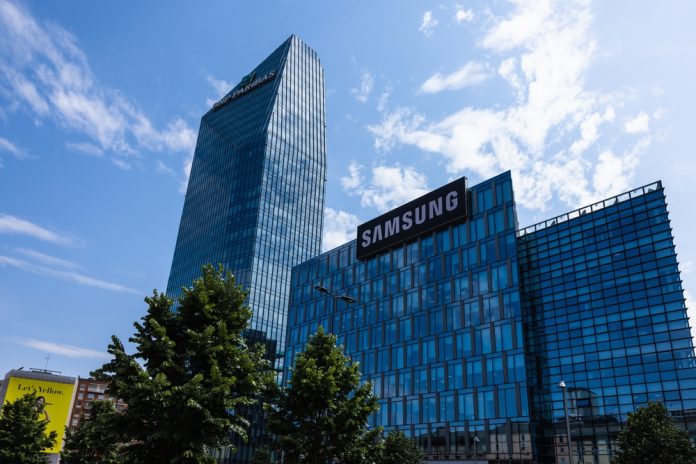

As Samsung prepares to unveil its Galaxy S26 series on February 25 with promises of deeper AI integration, the smartphone launch represents more than just another hardware refresh. It’s a microcosm of the massive transformation sweeping through the technology industry, where consumer-facing AI features are becoming table stakes while companies invest unprecedented sums in the infrastructure to power them.
The Consumer AI Battle Heats Up
Samsung’s upcoming Unpacked event in San Francisco will showcase what the company describes as “more seamless integration of Galaxy AI into everyday functions.” While specific features remain under wraps, the announcement comes amid growing consumer expectations for AI capabilities in personal devices. The Galaxy S26 Ultra is rumored to include a Privacy Display feature that uses pixel-level light control to prevent screen snooping – a practical application of AI that addresses real-world privacy concerns without sacrificing usability.
But Samsung faces significant challenges. According to ZDNET analysis, the S26 Ultra may struggle with ergonomic issues due to sharp, flat sides and could see price increases from the S25 Ultra’s $1,300 starting point. More importantly, the company must demonstrate meaningful AI improvements rather than incremental upgrades, particularly in camera technology where competitors like Apple and Google continue to advance.
The $660 Billion Infrastructure Race
Behind these consumer-facing features lies a staggering financial reality: Big Tech companies are planning to spend over $660 billion on AI infrastructure in 2024 alone. As reported by the Financial Times, this unprecedented capital expenditure is forcing companies like Alphabet, Amazon, Meta, and Oracle to reconsider their financial strategies. Amazon’s planned $200 billion in capital spending may exceed its $180 billion cash from operations, while Oracle recently raised $25 billion in a bond offering to fund AI investments, including a $300 billion deal with OpenAI.
“Growth in capex is massively outstripping growth in sales at AI-focused tech companies,” notes Russ Mould, Investment Director at AJ Bell. “The first signs of this are increased use of debt and a reduction in share buyback programmes. A drop in this largesse lessens near-term returns from shareholdings in these firms.” JP Morgan forecasts that tech and media companies will issue at least $337 billion in high-grade bonds this year to fund these investments.
AI’s Mainstream Marketing Moment
The consumer push extends beyond hardware to marketing and branding. During the recent Super Bowl, brands made bold plays with AI in their advertisements, signaling how deeply the technology has penetrated mainstream consciousness. Svedka created an AI-generated ad featuring dancing robots that took roughly four months to train for facial expressions and body movements, while Anthropic mocked OpenAI’s plan to introduce ads to ChatGPT. Even domain names have become battlegrounds – Crypto.com founder Kris Marszalek purchased AI.com for $70 million in cryptocurrency, the most expensive domain purchase in history.
“If you take a long-term view – 10 to 20 years – [AI] is going to be one of the greatest technological waves of our lifetime,” Marszalek told TechCrunch. His planned launch of a personal AI agent on the domain during the Super Bowl underscores how companies are racing to establish themselves in what they see as a transformative technological era.
The Business Implications
For businesses and professionals, this dual-track development – consumer features backed by massive infrastructure investment – creates both opportunities and challenges. On one hand, improved AI capabilities in devices like the Galaxy S26 could enhance productivity through better voice assistants, smarter camera systems, and more intuitive interfaces. On the other, the capital intensity of AI development may reshape corporate balance sheets and investment priorities across the industry.
The shift from asset-light to capital-intensive business models represents a fundamental change for technology companies accustomed to high margins and scalable software businesses. As TD Securities predicts up to $80 billion in investment-grade corporate bond issuance in the coming week specifically for AI funding, companies must balance innovation with financial sustainability.
Looking Ahead
Samsung’s Galaxy S26 launch serves as a timely reminder that AI’s impact extends far beyond chatbots and image generators. It’s reshaping everything from smartphone design to corporate finance, from marketing strategies to infrastructure planning. As consumers await details about Samsung’s specific AI implementations, the broader industry continues its massive bet on artificial intelligence – a bet now measured in hundreds of billions of dollars.
The question for businesses isn’t whether to engage with AI, but how to navigate an ecosystem where consumer expectations are rising alongside capital requirements. Those who can deliver meaningful AI features while managing the financial realities of this new technological era will likely emerge as leaders in the coming years.