


Imagine a world where your default ride choice isn’t Uber or Lyft, but a driverless taxi that arrives precisely on time, with a spotless interior and no awkward small talk. For tech journalist Yifan Yu in San Francisco, this isn’t science fiction – it’s her reality with Waymo in 2026. But while autonomous vehicles are becoming mainstream in some tech hubs, a much larger transformation is underway: the shift from digital AI to what industry insiders are calling “physical AI.” This movement of artificial intelligence from chatbots and software into the tangible world of robots, manufacturing, and transportation is creating seismic shifts in global business strategies and supply chains.
Tesla’s Pivot: From EV Leader to Robotics Contender
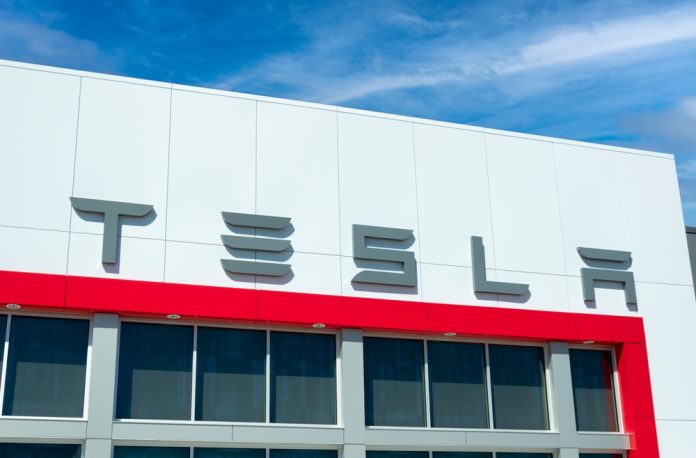
Elon Musk made headlines this week with a bold announcement that signals a fundamental rethinking of Tesla’s future. The company will stop production of its high-end Model S and X vehicles at its Fremont, California factory, converting that space to manufacture Optimus humanoid robots. Instead of rolling out new car models, Tesla is betting its future on providing robotaxis as a service. This strategic pivot comes at a critical moment: Tesla lost its crown as the world’s top-selling EV brand to China’s BYD in 2025, with deliveries falling 9% to 1.6 million vehicles while BYD saw a 28% increase to 2.3 million.
“I always think people outside of China always kind of underestimate China,” Musk warned during the announcement. “China is [an] ass-kicker next level.” His caution reflects a sobering reality: Chinese companies aren’t just dominating the EV market – they’re also crowding the robotics space that Tesla is now entering. This isn’t Musk’s first underestimation of Chinese competition; he famously laughed at BYD’s first entry into EVs back in 2011, a mistake he seems determined not to repeat.
The AI Hardware Boom: More Than Just Chips
While Tesla shifts toward physical AI applications, the infrastructure supporting all AI development is experiencing unprecedented demand. ASML, the Netherlands-based semiconductor equipment manufacturer that’s essentially the gatekeeper for advanced chip production, just reported staggering numbers that reveal the scale of the AI boom. The company recorded �13.2 billion in new bookings last quarter – more than double the previous quarter – driven by what CEO Christophe Fouquet called “a strong belief that the AI demand is real.”
ASML’s Extreme Ultraviolet (EUV) machines, which cost up to �350 million each, are essential for manufacturing the cutting-edge chips powering AI systems. These machines are in such high demand that ASML forecasts 2026 net sales between �34 billion and �39 billion, up from �32.7 billion in 2025. But here’s the paradox: even as the company announces record-breaking financial results and a �12 billion share buyback program, it’s also planning to cut 1,700 positions to streamline operations. This dual reality – explosive growth alongside workforce adjustments – captures the complex impact of AI on global business.
The Geopolitical Chess Game
The race for AI supremacy isn’t just about technological innovation; it’s increasingly a geopolitical battleground. Consider these simultaneous developments: China’s commerce ministry is reviewing Meta’s $2 billion purchase of Chinese-founded AI startup Manus, with officials concerned about “selling young crops” – a euphemism for the loss of emerging technologies and talent. Meanwhile, despite U.S. export restrictions on advanced semiconductors, China has approved the first batch of Nvidia H200 chip imports, according to Reuters sources.
This creates a fascinating tension: while governments attempt to control the flow of AI technology across borders, market forces and corporate strategies continue to drive integration. Chinese companies, backed by strong supply chains and abundant open-source AI models, are racing to launch their own AI glasses while Meta struggles to keep up with demand. HSBC now estimates the total addressable market for smart glasses could reach about $200 billion by 2040.
What This Means for Businesses and Professionals
The convergence of these trends reveals several critical insights for business leaders:
- Physical AI represents the next frontier: Companies that successfully move AI from digital interfaces to physical applications – whether in manufacturing, transportation, or healthcare – will capture significant value. Tesla’s pivot to robotics and robotaxis is just one high-profile example.
- The hardware bottleneck is real: As Nvidia CEO Jensen Huang noted, the AI boom has “started the largest infrastructure build-out in human history.” This creates opportunities not just for chip designers, but for the entire supply chain, from equipment manufacturers like ASML to memory producers like Micron and SK Hynix.
- Global competition is intensifying: The days when Silicon Valley could dominate AI innovation are over. Chinese companies are competing aggressively across multiple fronts, from EVs to robotics to consumer AI devices.
- Workforce transformation is inevitable: ASML’s simultaneous growth and job cuts highlight how AI adoption creates both opportunities and disruptions. Companies need strategies for reskilling and restructuring as automation advances.
As we move deeper into 2026, the question isn’t whether AI will transform industries – that’s already happening. The real question is which companies will successfully navigate the complex intersection of technological innovation, geopolitical tensions, and market dynamics. Tesla’s gamble on robotaxis, ASML’s record bookings, and China’s strategic moves in the AI space are all pieces of a larger puzzle: how physical AI will reshape our world in ways we’re only beginning to understand.