


Walk into Physical Intelligence’s San Francisco headquarters, and you’ll find robotic arms folding pants, turning shirts inside out, and peeling zucchinis with a determination that suggests they’ll eventually succeed – just not today. “Think of it like ChatGPT, but for robots,” explains Sergey Levine, an associate professor at UC Berkeley and one of the company’s cofounders. This isn’t just another robotics startup; it’s part of a seismic shift where Silicon Valley is pouring billions into what industry leaders are calling the “ChatGPT moment for physical AI.”
The Unseen Battle for Robotic Intelligence
Physical Intelligence, founded by Stripe veteran Lachy Groom, has raised over $1 billion at a $5.6 billion valuation with an unusual approach: no timeline for commercialization. “I don’t give investors answers on commercialization,” Groom admits, describing backers like Khosla Ventures and Sequoia Capital who tolerate this ambiguity because they believe in the long-term vision. The company uses off-the-shelf hardware – robotic arms costing about $3,500 – to train general-purpose foundation models that can transfer knowledge across different robots and tasks. “The marginal cost of onboarding autonomy to a new robot platform, whatever that platform might be, it’s just a lot lower,” explains cofounder Quan Vuong from Google DeepMind.
Competing Philosophies in a Booming Market
While Physical Intelligence focuses on pure research, Pittsburgh-based Skild AI has taken a different path, raising $1.4 billion at a $14 billion valuation while already generating $30 million in revenue from its “omni-bodied” Skild Brain deployed in security, warehouses, and manufacturing. Skild has publicly criticized competitors, arguing that most “robotics foundation models” lack “true physical common sense” because they rely too heavily on internet-scale pretraining rather than physics-based simulation. This philosophical divide – research-first versus commercial-deployment-first – represents two competing bets on how to win the race for general-purpose robotic intelligence.
Industry-Wide Transformation Accelerates
The robotics revolution extends far beyond these startups. According to Manufacturing Dive’s 2026 trend report, 58% of global business leaders currently use physical AI in operations, with 80% planning to adopt it within two years. Manufacturing has become the most targeted industry for cyberattacks for four consecutive years, with 87% of executives identifying AI-related vulnerabilities as the fastest-growing cyber risk. “Everyone’s getting really excited about it,” says Andy Lonsberry, CEO of Path Robotics. “Everybody wants to start prepping their facilities for this wave.”
Tesla’s Pivot and the Humanoid Robot Frontier
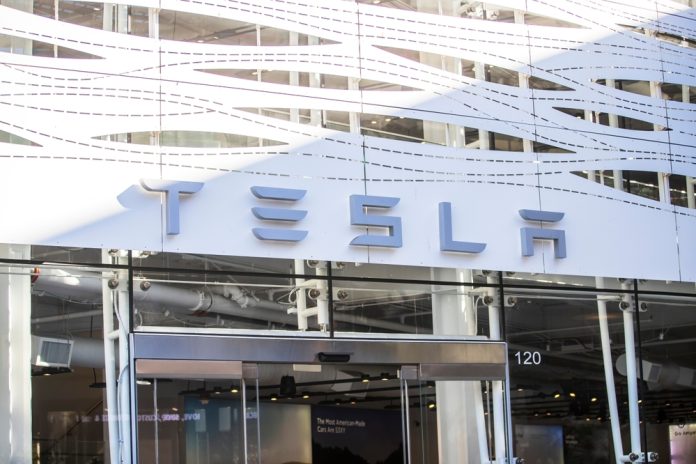
Meanwhile, established giants are making dramatic shifts. Tesla reported its first annual revenue decline in 2025 – a 3% drop to $94.8 billion – as it pivots from electric vehicles to robotics. The company is ending production of Model S and X vehicles to convert factory space for Optimus humanoid robot production. “It’s an awesome robot. It looks like a human. People could be easily confused that it’s a human,” a Tesla executive told TechRadar about the Optimus 3. This shift comes as Chinese EV maker BYD overtook Tesla as the world’s biggest EV maker in January 2025, delivering 2.3 million battery-powered cars compared to Tesla’s 1.6 million.
The Hardware Challenge and Cybersecurity Imperative
Despite the excitement, significant hurdles remain. “Hardware is just really hard,” Groom acknowledges. “Everything we do is so much harder than a software company.” Hardware breaks, arrives slowly, and safety considerations complicate everything. As systems become more digital, cybersecurity threats escalate. Jaguar Land Rover’s recent cyberattack cost $260 million and caused a 24% revenue decline, highlighting the stakes. Ed Nabrotzky, CEO of Dot Ai, emphasizes: “We increasingly need to have full transparency of the process to know what’s happening.”
Investment Floodgates Open
The financial scale of this transformation is staggering. Amazon is reportedly in talks to invest $50 billion in OpenAI as part of a $100 billion funding round that could value the company at $830 billion. Tesla plans $20 billion in capital expenditure for its robotics transition. Across the industry, the message is clear: this isn’t just about building better robots; it’s about creating the intelligence that will power them across every sector. As manufacturing executives report that 46% already use IoT solutions for enhanced visibility, the integration of physical AI represents the next logical step in industrial automation.
The Road Ahead: Promise and Peril
Back at Physical Intelligence’s test kitchen, the robots continue their practice. The pants remain imperfectly folded, the shirt stubbornly right-side-out, but the zucchini shavings pile up nicely. These mundane tasks represent the foundational work that could eventually transform logistics, manufacturing, and even home automation. With 15% of businesses already using physical AI extensively and 3% fully integrating it, according to Deloitte surveys, the transition from research to real-world application is accelerating. The question isn’t whether physical AI will reshape industries – it’s which approach will dominate, and whether companies can navigate the twin challenges of hardware limitations and cybersecurity threats while delivering on their ambitious visions.