

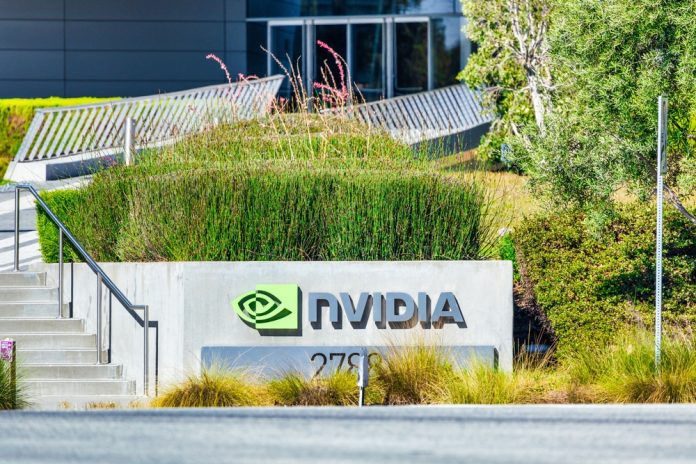

In a move that signals growing discontent with the AI hardware status quo, semiconductor startup Positron has secured $230 million in Series B funding to challenge Nvidia’s dominance in AI chips. The Reno-based company’s massive funding round, led by Qatar Investment Authority, comes as major AI players like OpenAI actively seek alternatives to Nvidia’s hardware, revealing cracks in what was once considered an unassailable market position.
The Hardware Rebellion Gains Momentum
Positron’s timing couldn’t be more strategic. The startup claims its first-generation Atlas chip can match the performance of Nvidia’s flagship H100 GPUs while consuming less than a third of the power. More importantly, Positron is focusing specifically on inference – the computing needed to run AI models in real-world applications – rather than training large language models. This positions the company perfectly as businesses shift from building massive models to deploying them at scale.
“We’re seeing a fundamental shift in the AI hardware landscape,” says an industry analyst who requested anonymity. “For years, Nvidia enjoyed near-monopoly status, but dissatisfaction with pricing, performance, and availability is pushing companies to explore alternatives.”
The OpenAI Factor: A Customer Relationship Under Strain
The tension between Nvidia and its largest customers became public when Reuters reported that OpenAI has been seeking alternatives to Nvidia chips since last year due to dissatisfaction with inference speed. This revelation came despite OpenAI being one of Nvidia’s most important customers. The situation escalated when Nvidia CEO Jensen Huang had to clarify that the company’s planned $100 billion investment in OpenAI was “never a commitment,” contradicting earlier reports of a massive infrastructure partnership.
OpenAI’s search for alternatives has already borne fruit. The company signed a $10 billion deal with Cerebras for 750 megawatts of computing capacity and struck an agreement with AMD for six gigawatts of GPUs. Meanwhile, Nvidia responded by securing a $20 billion licensing deal with Groq, effectively ending OpenAI’s talks with that competitor.
Global Power Plays in AI Infrastructure
What makes Positron’s funding particularly noteworthy is its geopolitical dimension. Qatar, through its sovereign wealth fund QIA, has been accelerating what it calls “sovereign” AI infrastructure development. The country views compute capacity as critical to staying competitive on the global economic stage and is positioning itself as a leading AI services hub in the Middle East.
This isn’t just regional ambition – it’s part of a $20 billion AI infrastructure joint venture with Brookfield Asset Management announced in September. Qatar’s strategy reflects a broader trend: nations recognizing that AI infrastructure is becoming as strategically important as traditional energy resources.
India has taken this concept even further, announcing zero taxes through 2047 for foreign cloud providers offering services from Indian data centers to customers outside the country. Major tech companies have responded with massive commitments: Google plans to invest $15 billion in AI hub and data-center infrastructure in India, Microsoft plans to invest $17.5 billion by 2029, and Amazon plans to invest an additional $35 billion by 2030.
The Investment Frenzy and Market Realities
OpenAI’s fundraising efforts have become a barometer for the entire AI industry. The company is seeking up to $100 billion at a $750 billion valuation, with major tech companies like Microsoft, Nvidia, Amazon, and SoftBank all considering significant investments. Microsoft’s market value dropped $360 billion in a single day after reporting AI infrastructure spending concerns, highlighting how sensitive investors have become to AI-related expenditures.
“The announcements on data centers signal that they are being treated as a strategic business sector rather than just back-end infrastructure,” says Rohit Kumar, founding partner of The Quantum Hub, commenting on India’s tax incentives.
What This Means for Businesses
For enterprises deploying AI, the hardware diversification offers both opportunities and challenges. On one hand, increased competition should drive down costs and spur innovation. On the other, managing multiple hardware platforms adds complexity to AI deployment strategies.
The power consumption angle cannot be overstated. With data centers projected to consume massive amounts of energy – OpenAI’s planned infrastructure would require 10 gigawatts, equivalent to 10 nuclear power plants – energy efficiency becomes not just an environmental concern but a fundamental business requirement.
As Sarah Kunst, Managing Director at Cleo Capital, observed about Nvidia’s investment plans: “One of the things I did notice about Jensen Huang is that there wasn’t a strong ‘It will be $100 billion.’ It was, ‘It will be big. It will be our biggest investment ever.’ And so I do think there are some question marks there.”
The Road Ahead
Positron’s $230 million funding round brings the three-year-old startup’s total capital raised to just over $300 million. While still dwarfed by Nvidia’s market capitalization, the investment represents a significant bet that the AI hardware market is ripe for disruption.
The coming months will reveal whether Positron and other challengers can deliver on their promises. What’s already clear is that the era of single-vendor dominance in AI hardware is ending. As nations and corporations alike recognize the strategic importance of compute sovereignty, the race to build alternative AI infrastructure has become one of the most consequential battles in technology today.
For businesses, the message is clear: diversify your AI hardware strategy, pay attention to energy efficiency, and recognize that geopolitical considerations are now as important as technical specifications when planning AI infrastructure investments.