

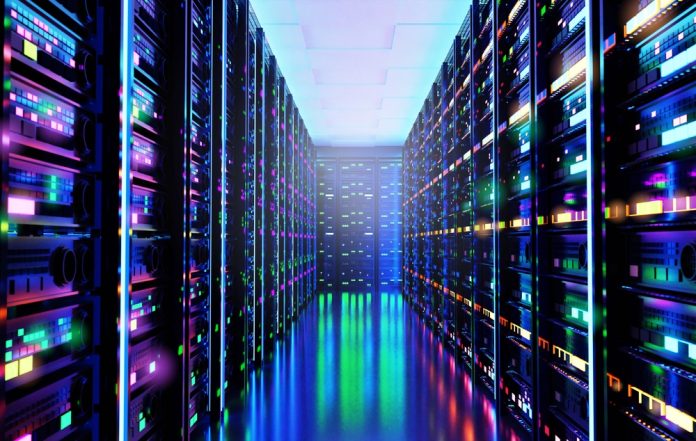

Imagine a future where artificial intelligence transforms every industry, but the electricity grid can’t keep up. That future is arriving faster than expected, and the race to power AI is creating a complex energy puzzle that could reshape business strategies and regulatory landscapes across the globe.
The Power Grid’s AI Stress Test
David Crane, chief executive of Generate Capital and former under-secretary for infrastructure in the Biden administration, has sounded a warning bell that’s reverberating through boardrooms and power plants alike. “As much as the data center people tell you their demand for electricity is infinite, it feels to me like there will be a time when they’ll be overbuilt,” Crane told the Financial Times. “They’re going to have spare electrons.”
This isn’t just theoretical concern – it’s backed by staggering numbers. BloombergNEF estimates US data center power demand is set to surge from 34.7 gigawatts in 2024 to 106GW by 2035. To put that in perspective, NextEra Energy alone is planning to build at least 15GW of new plants for data centers over the next nine years, equivalent to the power demands of 15 million homes.
The Take-or-Pay Solution
Crane’s solution is both practical and potentially controversial: “You need to have take-or-pay contracts, so if they suddenly don’t need the power, it’s on the back of the data center company, not the power company.” This approach would shift infrastructure risk from utilities to tech companies, fundamentally changing how AI infrastructure gets financed and built.
But why the concern about overbuilding? The answer lies in the unique nature of data center power needs. Because on-site power plants are less reliable than grid connections, they have to be built oversized to ensure continuous operation. If a data center eventually connects to the grid or if AI chips become dramatically more efficient, companies could end up with expensive, underutilized power infrastructure.
Washington Takes Notice
The energy implications are now catching political attention in a rare show of bipartisan concern. Democratic Senator Elizabeth Warren and Republican Senator Josh Hawley have jointly sent a letter to the U.S. Energy Information Administration urging mandatory annual electricity usage disclosures from data centers. “As electricity demand growth continues to accelerate after years of relative stagnation, the lack of reliable, standardized data on large load energy consumption poses significant risks to effective grid planning and oversight,” the senators wrote.
This regulatory push comes amid startling statistics: Google’s data centers doubled energy consumption between 2020-2024, and the sector’s energy demand is projected to nearly triple by 2035. The EIA currently has no federal data collection on data center energy use specifically, operating instead with a voluntary pilot program in just three states.
The European Counterbalance
While US companies and regulators grapple with these challenges, European AI companies are taking a different approach. French AI lab Mistral AI has raised $830 million in debt financing to build a new data center near Paris powered by Nvidia chips, with plans to deploy 200 megawatts of compute capacity across Europe by 2027. “Scaling our infrastructure in Europe is critical to empower our customers and to ensure AI innovation and autonomy remain at the heart of Europe,” said CEO Arthur Mensch.
This European strategy highlights an alternative path: building dedicated, sovereign AI infrastructure rather than relying on third-party cloud providers. It also suggests that the energy challenge might drive regionalization in AI development, with different continents pursuing distinct infrastructure strategies.
The Efficiency Wild Card
Ben Hertz-Shargel, global head of grid edge at Wood Mackenzie, captures the uncertainty perfectly: “The AI ship has sailed, but the energy cost of serving it is very much in question.” This uncertainty stems from several factors:
- AI chip efficiency improvements could dramatically reduce power needs
- Quantum computing breakthroughs might change computing paradigms entirely
- Regulatory requirements could force different infrastructure approaches
- Geopolitical factors might drive localization of AI infrastructure
Turning Challenge into Opportunity
Crane sees potential in what others view as a problem: “Overbuilding could present an ‘opportunity’ if planned for correctly, with underused power plants integrated back into the grid to boost supply for regular customers and bring down electricity costs.” This perspective suggests that smart planning could turn potential waste into community benefit.
The stakes are enormous. As Ari Peskoe, director at Harvard Law School’s Environmental and Energy Law Program notes, “If we’re worried about ratepayers paying data-center energy costs, then knowing how much energy data centers are using is a necessary part of that calculation. It’s not the only piece of information you need, but it certainly is a piece of the puzzle.”
What emerges from this complex picture is a fundamental business question: How do companies balance the urgent need for AI infrastructure with the long-term risks of overbuilding? The answer may determine not just which companies lead in AI, but how entire regions manage their energy futures. As data centers become the new factories of the digital age, their power consumption isn’t just a technical issue – it’s becoming a strategic business consideration that could separate winners from losers in the AI race.