

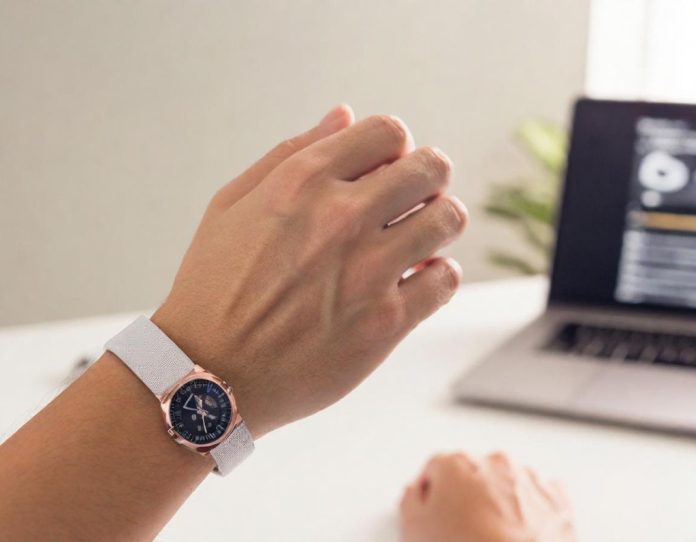

Imagine a world where your wristband doesn’t just count steps but could potentially save your life by detecting atrial fibrillation before you even notice symptoms. That’s the reality unfolding as health wearables evolve from simple fitness trackers into sophisticated AI-powered medical devices. The latest generation of smart wearables is blurring the lines between consumer electronics and clinical-grade healthcare tools, creating both unprecedented opportunities and complex questions about the future of personal health monitoring.
From Fitness Tracking to Medical Monitoring
The transformation is happening faster than most realize. Take the Whoop 5.0, which now includes features that were once exclusive to medical facilities. Its patent-pending blood pressure monitoring works directly from your wrist after just three calibrations with a traditional arm cuff. More significantly, the Whoop MG variant includes an ECG monitor that can detect atrial fibrillation – a condition affecting millions that often goes undiagnosed until it causes serious complications.
This isn’t just incremental improvement; it’s a fundamental shift in what wearables can do. “The newly added health features reflect a growing shift in fitness trackers as they become health companions,” notes the primary source review. Other companies are following suit: Oura recently launched continuous glucose monitor integration, while Withings offers Cardio Check-Up services connecting users directly with clinicians.
The AI Infrastructure Behind the Revolution
What makes these advances possible? Massive investments in AI infrastructure are creating the computational backbone for next-generation health monitoring. Thinking Machines Lab, founded by OpenAI co-founder Mira Murati, just inked a multi-year strategic partnership with Nvidia that includes deploying at least one gigawatt of Nvidia’s Vera Rubin systems starting in 2027. Nvidia CEO Jensen Huang predicts companies could spend $3-4 trillion on AI infrastructure by 2030.
“Nvidia’s technology is the foundation on which the entire field is built,” says Mira Murati. “This partnership accelerates our capacity to build AI that people can shape and make their own, as it shapes human potential in turn.” This infrastructure isn’t just for large language models – it’s powering the complex algorithms that analyze biometric data from millions of wearables simultaneously.
Beyond Language Models: Understanding Physical Reality
Perhaps the most exciting development comes from research into “world models” rather than language models. Yann LeCun’s startup AMI Labs recently raised 890 million euros (approximately $1 billion) in a record-breaking European seed funding round to develop AI systems that understand physical reality rather than just language. “We share a conviction: True intelligence doesn’t begin with language. It begins in the real world,” LeCun explains.
This approach could revolutionize health monitoring by creating AI that understands physiological patterns in context. Instead of just detecting anomalies, future systems might predict health issues before they manifest, understanding how sleep patterns, activity levels, and biometric readings interact in complex ways that current systems miss.
The Business Implications: Subscription Models and Market Shifts
The business model is evolving alongside the technology. Whoop now offers three subscription tiers ranging from $199 to $359 per year, with higher tiers unlocking medical-grade features like ECG monitoring and blood pressure tracking. This creates an interesting tension: Are consumers paying for convenience or for healthcare? The distinction matters for regulation, insurance coverage, and consumer expectations.
Meanwhile, Amazon is expanding access to its healthcare AI assistant called Health AI from being exclusive to One Medical app users to now being available on Amazon’s website and app. The assistant can answer health questions, explain medical records, manage prescriptions, book appointments, and provide personalized guidance. This creates a new ecosystem where wearables collect data that AI systems then interpret and act upon.
The Security and Privacy Challenge
As these systems become more sophisticated, they also become more vulnerable. Recent research shows AI is getting “scary good” at finding hidden software bugs – even in decades-old code. Microsoft Azure CTO Mark Russinovich demonstrated this with an experiment where Anthropic’s Claude Opus 4.6 analyzed 1986 Apple II assembly code and found subtle logic errors that had been dormant for decades.
“Oh, my, am I seeing this right? The attack surface just expanded to include every compiled binary ever shipped,” says Matthew Trifiro, a veteran go-to-market engineer. “When AI can reverse-engineer 40-year-old, obscure architectures this well, current obfuscation and security-through-obscurity approaches are essentially worthless.” For health wearables collecting sensitive biometric data, this represents a significant security challenge.
The Human Factor: Balancing Technology and Trust
Despite the technological advances, human factors remain crucial. As one companion source notes, various gadgets – from sleep-tracking rings to smart alarm clocks – can help improve sleep quality, but they work best when integrated into thoughtful routines. The technology is only as good as the human systems around it.
This raises important questions: How much medical decision-making should we delegate to algorithms? What happens when wearables detect conditions that require immediate medical attention but users ignore the warnings? And how do we ensure these technologies don’t exacerbate existing healthcare disparities?
The Road Ahead: Integration and Regulation
The future likely involves deeper integration between wearables, AI systems, and traditional healthcare providers. Companies like Nabla, which develops AI software for doctors, are already partnering with research labs to create more sophisticated diagnostic tools. The challenge will be creating systems that enhance rather than replace human medical expertise.
Regulation will play a crucial role. As wearables take on more medical functions, they’ll face increased scrutiny from agencies like the FDA. The line between “wellness” devices and medical devices is becoming increasingly blurred, and regulatory frameworks will need to evolve accordingly.
What’s clear is that we’re at the beginning of a major transformation in personal healthcare. The wristband that once told you how many steps you took might soon help manage chronic conditions, detect serious illnesses early, and connect you directly with healthcare providers. The question isn’t whether this will happen, but how quickly – and how wisely – we’ll navigate the complex ethical, regulatory, and practical challenges along the way.