

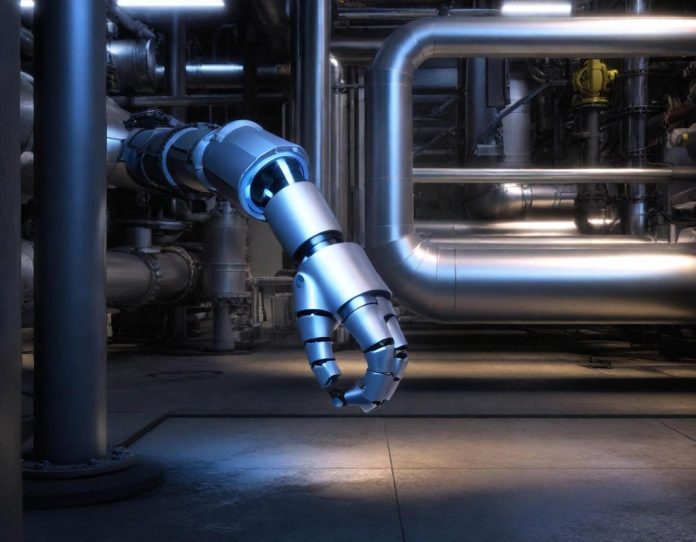

Imagine a robotic hand that can detach from its arm, crawl through tight spaces, and grasp multiple objects simultaneously – all while outperforming human dexterity. This isn’t science fiction; it’s the latest breakthrough from researchers at the Swiss Federal Institute of Technology (EPFL) and Wuhan University, published in Nature Communications. The six-fingered robotic hand can undock from its host arm, operate independently, and carry objects between varying combinations of fingers. According to Xiao Gao, the first author of the paper, the system is designed for practical manipulation tasks like inspection and object retrieval in pipes or machinery, not for surveillance. “The goal is to design a dual-mode robot that can go beyond human hand dexterity and improve capabilities,” Gao emphasized. This innovation could transform industrial monitoring and repair, potentially enabling automated vehicles equipped with such hands to cover large areas for maintenance.
Beyond the Lab: The Broader Context of Physical AI
This crawling robot hand isn’t an isolated development; it’s part of a larger trend known as Physical AI, where artificial intelligence converges with robotics to perform complex, varied tasks. According to a Financial Times analysis, over 4.7 million industrial robots were in operation in 2024, with annual installations growing by over 500,000 – twice the rate of a decade ago. China alone accounted for 54% of all new robots installed in 2024, highlighting the global scale of this shift. Stephan Schlauss, global head of manufacturing at Siemens, noted that AI-enabled robots in assembly lines have reduced automation costs by 90%, empowering manual workers with AI-guided systems. However, challenges remain: Edward Johns, an associate professor at Imperial College London, pointed out that robots need to learn new tasks much faster, as their current slow learning rates are expensive.
The Capital-Intensive Reality of Embodied AI
While innovations like the crawling hand capture attention, the path to commercialization is fraught with hurdles. A companion analysis from the Financial Times reveals that embodied AI – robotics that interact with the physical world – is a capital-intensive, long-horizon business. Dozens of Chinese robotics and AI companies have filed for IPOs in Hong Kong over the past year, driven by China’s manufacturing advantages like dense supply chains and engineering talent. Yet, U.S. restrictions on hardware create weaknesses in frontier research, complicating global innovation. This context underscores that breakthroughs like the crawling hand require sustained investment and strategic coordination to move from labs to factories.
Balancing Innovation with Practical Constraints
Digby Chappell, an associate professor at the Oxford Robotics Institute, described the crawling hand research as “fun and provocative,” suggesting potential applications in prosthetics. However, he tempered expectations: “While it isn’t breaking any crawling speed records any time soon and this isn’t the first robot that can both crawl and grasp, it’s definitely pushing the boundary of what we think that robot hands should be able to do.” This balanced perspective reminds us that while the technology is promising, real-world deployment faces practical limits like speed, cost, and integration challenges. The hand’s ability to grasp on both front and back sides, unlike human fingers, offers efficiency in cluttered environments, but scaling this for widespread industrial use will depend on addressing these constraints.
Implications for Businesses and Industries
For businesses, the crawling robot hand represents more than a novelty; it signals a shift toward versatile automation that can adapt to dynamic environments. In sectors like logistics, healthcare, and manufacturing, such robots could reduce downtime by performing solo tasks that typically require multiple human hands – think unscrewing bottle caps or handling tools in confined spaces. Amazon, for instance, already uses over 1 million robots in its fulfillment centers, and innovations like this could further enhance efficiency. Yet, as with any AI advancement, companies must weigh the benefits against data limitations, safety concerns, and the need for workforce adaptation. The robotics sector saw 381 deals in Q1 2025, a 20% increase from 2024, indicating strong investor interest but also highlighting the competitive landscape.
Looking Ahead: The Future of Robotic Dexterity
As Physical AI evolves, the crawling robot hand exemplifies how robotics are moving beyond rigid automation to embrace flexibility and autonomy. Researchers are focusing on improving learning algorithms, such as imitation and reinforcement learning, to make robots quicker and more adaptable. Stephan Hotz, chief product officer of Wandelbots, cautioned about data risks: “If you have only one person cutting an onion and you take that as a basis to create a ton of synthetic data, the risk is higher [that you] go off in weird directions.” This underscores the importance of robust data practices in developing reliable robotic systems. Ultimately, the crawling hand isn’t just a technical marvel; it’s a step toward robots that can navigate and manipulate the world with human-like – or even superior – dexterity, reshaping industries and redefining what’s possible in automation.