

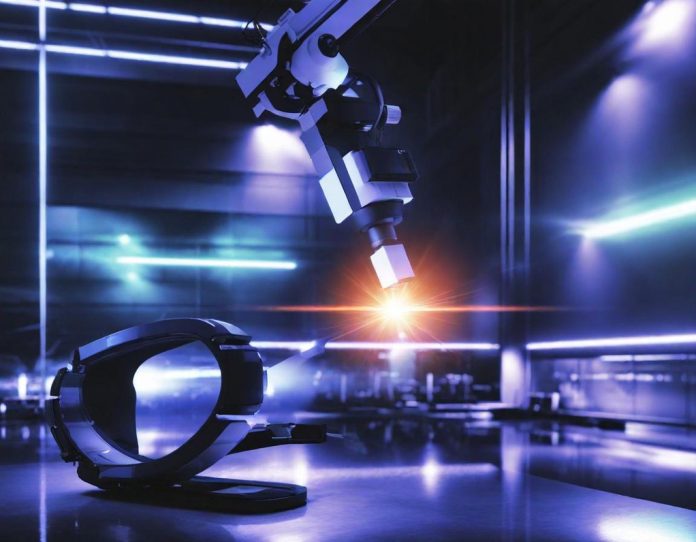

Remember when AI was just a chatbot on your screen? That era is ending. At CES 2026, a seismic shift occurred as artificial intelligence stepped out of digital confines and into the physical world around us. This isn’t just another tech buzzword – it’s what Nvidia CEO Jensen Huang called “the ChatGPT moment for physical AI,” marking a fundamental transformation in how machines understand and interact with our reality.
What Exactly Is Physical AI?
Physical AI represents artificial intelligence implemented in hardware that can perceive, reason, and act in real-world environments. Think beyond traditional robots – this technology enables devices to understand context and make decisions like humans would. According to Qualcomm executives Anshuman Saxena and Ziad Asghar, the distinction lies in the ability to reason and interact intuitively with surroundings.
You might already own physical AI without realizing it. “Smartglasses are the best representation already of physical AI,” says Asghar. “They’re able to see what you’re seeing and hear what you’re hearing – they’re in your physical world.” From XGIMI’s Memomind glasses featuring multi-LLM hybrid operating systems to humanoid robots like Boston Dynamics’ redesigned Atlas, the technology is already here.
The Manufacturing Paradox: Investment vs. Job Losses
While physical AI promises transformation, the manufacturing sector faces contradictory signals. According to Bureau of Labor Statistics data, manufacturing lost 8,000 jobs in December 2025, continuing an eight-month trend of employment contraction. The plastics and rubber product sector suffered the most with 4,900 job losses, while transportation equipment added 1,200 positions.
Yet simultaneously, major acquisitions signal confidence in hardware’s future. Howmet Aerospace’s $1.8 billion purchase of Consolidated Aerospace Manufacturing and Deere’s acquisition of construction tech company Tenna demonstrate substantial investment in physical infrastructure and IoT capabilities. This paradox – job losses alongside billion-dollar deals – creates a complex landscape where physical AI must prove its value proposition.
The Data Dilemma: Real-World Training Challenges
One of physical AI’s biggest hurdles is data scarcity. “Why are LLMs so great? Because there’s a ton of data on the internet,” explains Saxena. “But physical data does not exist.” Training robots in real environments carries risks, forcing companies to rely on synthetic simulations.
Nvidia’s new Rubin platform, unveiled at CES, addresses this by reducing inference token costs by up to 10x and requiring four times fewer graphics cards than previous systems. Meanwhile, Qualcomm’s comprehensive physical AI stack combines new processors with tools for AI data collection and training. The solution may come from wearables themselves – smart glasses and other devices could provide anonymized, real-world data to train robots, creating what Saxena calls “a healthy ecosystem.”
Real-World Applications: Beyond Hype
Physical AI isn’t theoretical. Motional, the Hyundai-Aptiv joint venture, has rebooted its robotaxi plans with an AI-first approach, targeting commercial driverless service in Las Vegas by late 2026. CEO Laura Major notes the shift from classic robotics to AI foundation models: “We saw that there was tremendous potential with all the advancements that were happening within AI.”
In construction, Deere’s acquisition of Tenna brings sensor and camera technology to equipment tracking, providing contractors with real-time operational insights. Even home energy systems like Anker Solix’s E10 backup system demonstrate how physical AI can integrate multiple power sources intelligently.
The Human Factor: Augmentation vs. Replacement
Qualcomm executives emphasize that physical AI should augment rather than replace human capabilities. “Humanoid robots will be useful where humans don’t want to perform tasks,” says Saxena, “but they will not replace humans.” Wearables like smart glasses can enhance human perception and decision-making while feeding valuable data back to robotic systems.
This balanced approach becomes crucial as manufacturing faces workforce challenges. Scott Paul of the Alliance for American Manufacturing notes “an urgent need to upgrade training opportunities, with older workers in manufacturing retiring at a rapid clip.” Physical AI could help bridge this skills gap rather than eliminate positions.
The Road Ahead: Integration and Implementation
The true test for physical AI will be seamless integration into existing workflows. As TechCrunch reported, CES 2026 was “all about physical AI and robots,” but the transition from demonstration to deployment requires solving practical challenges. Privacy concerns around data collection, cost-effectiveness of implementation, and regulatory frameworks all need addressing.
What’s clear is that physical AI represents more than incremental improvement – it’s a fundamental reimagining of how technology interacts with our world. As manufacturing navigates economic uncertainty and technological transformation simultaneously, this emerging field offers both challenges and unprecedented opportunities for innovation.