

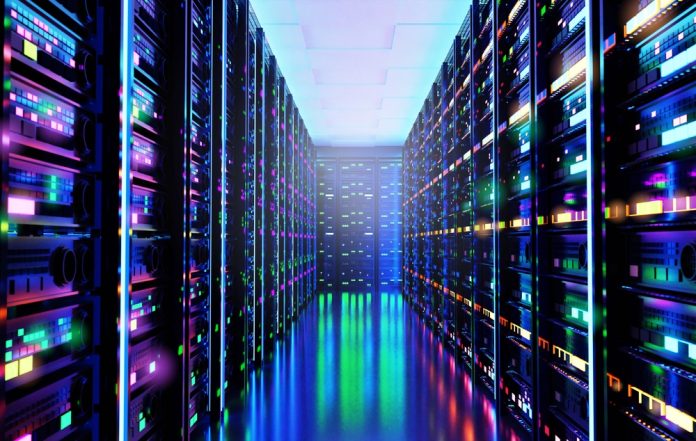

Imagine building the most advanced artificial intelligence systems in the world, only to discover you can’t plug them in? That’s the stark reality facing America’s AI industry as a severe power shortage threatens to derail the nation’s technological ambitions? While headlines often focus on breakthrough algorithms and billion-dollar valuations, the fundamental infrastructure needed to sustain this revolution is facing a crisis that could reshape the entire landscape?
The Infrastructure Bottleneck No One Saw Coming
According to a Financial Times analysis, data centers in the US currently represent about 51GW of electricity capacity�equivalent to 5% of the country’s peak demand? But here’s where the math gets alarming: from 2026, five data centers will each draw at least 1GW of electricity, matching the output of an entire nuclear reactor? Microsoft CEO Satya Nadella recently acknowledged, “The biggest issue we are now having is not a compute glut, but it’s power?”
The numbers tell a sobering story? An estimated 44GW of additional capacity will be required by new data centers over the next three years, but only 25GW will be available, leaving a 19GW gap�that’s 40% of needed power by 2028? OpenAI alone has signed infrastructure deals totaling more than $1?4 trillion, amounting to an estimated 28GW in capacity over the next eight years? Big tech ‘hyperscalers’ including Amazon, Google, Meta, and Microsoft plan to spend over $400 billion in capital expenditure, mainly on data centers?
The Geopolitical Stakes in the AI Power Race
While American companies scramble for power solutions, China is building infrastructure at a staggering pace? In 2024, China added 429GW of new power capacity�more than one-third of the entire US grid�while the US contributed just 51GW? This disparity isn’t just about numbers; it represents a fundamental competitive advantage in the global AI race? As Jesse Lee, Senior Adviser at Climate Power, notes, “If you’re forfeiting the energy race to China, then you’re forfeiting the AI race to China?”
The regulatory landscape adds another layer of complexity? The average time from filing an interconnection request to achieving commercial operation in PJM, the largest US grid operator, now exceeds eight years? Jim Robb, Chief Executive of Nerc (North American Electric Reliability Corporation), warns, “We may not get all this done in the timeframe that hyperscalers would like??? and they won’t be able to interconnect until we’ve got the resources to meet them? It’s going to be a white knuckle ride?”
Commercial Realities Meet Infrastructure Constraints
This power crunch comes at a critical moment for AI commercialization? Meta has recently signed commercial AI data agreements with major news publishers including CNN, Fox News, Le Monde Group, and USA Today to provide real-time news content through its Meta AI chatbot? The company stated, “We’re committed to making Meta AI more responsive, accurate, and balanced? Real-time events can be challenging for current AI systems to keep up with?”
Meanwhile, Anthropic, the AI startup co-founded by Dario Amodei, is preparing for a potential IPO with a valuation over $300 billion? The company will end the year with around $10 billion in annualized revenue, backed by major tech firms including Google, Amazon, Microsoft, and Nvidia? But even these financial successes face the same infrastructure constraints?
The Ripple Effects on Businesses and Consumers
The power shortage isn’t just a tech industry problem�it’s becoming a national economic concern? Residential power prices in the US could rise 15 to 40% over the next five years, partly due to data center demand? This creates a delicate balancing act: how do we fuel AI innovation without overburdening consumers and businesses?
Some companies are taking matters into their own hands? xAI operated its Colossus data center cluster in Memphis with dozens of gas turbines without environmental permits for much of the past year, highlighting the desperate measures some are willing to take? Alternative solutions include onsite gas generation and nuclear plant restarts, but these come with their own challenges and timelines?
The Path Forward: Innovation Beyond Algorithms
Research from Duke University suggests that if data center operators could restrict consumption just 0?25% of the time, the grid could accommodate about 76GW of additional demand? This points toward smarter energy management as part of the solution? But as Bobby Hollis, Vice-President of Energy at Microsoft, observes, “There are a lot of participants who don’t know what goes into building a data center??? [And] few opportunities to filter out the noise?”
The AI industry now faces a fundamental question: Can innovation in software and algorithms outpace the physical limitations of our energy infrastructure? The answer will determine not just which companies succeed, but which nations lead in the coming decade of AI development? As Sam Altman, Chief Executive of OpenAI, puts it bluntly: “A certain risk is if we don’t have the compute, we will not be able to generate the revenue or make the models at this kind of scale?”