

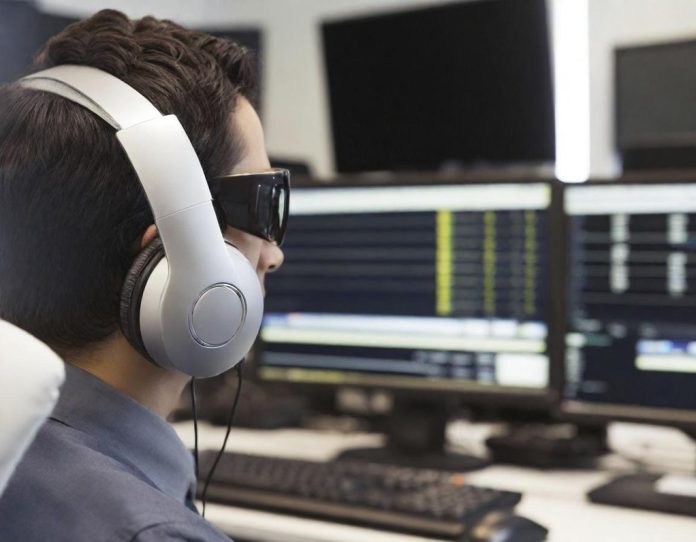

Imagine you�re a Formula One driver hurtling down a race track at 200 miles per hour when your engineer comes on the radio and says something? You can�t make it out, but you�re also not going to spend a lap playing out that old Verizon commercial (�Can you hear me now?�) with the race � and your life � on the line? This is just one problem Norwegian startup Hance is solving with an impressively small and fast bit of audio processing software that�s already attracted customers like Intel and Riedel Communications, the official radio supplier to F1? Hance is one of the 200 startups selected to show off its technology at TechCrunch Disrupt 2025, which runs October 27 through 29 at Moscone Center in San Francisco?
The outfit of around 10 employees boasts a wealth of audio industry experience? That includes co-founder Stian Aagedal, who�s also the CEO of audio editing software company Acon Digital, and Peder J�rgensen, who runs sound effects library Soundly? With artificial intelligence booming, Aagedal, J�rgensen, and the rest of the Hance team realized there was an opportunity to leverage these new technologies throughout the audio processing pipeline � but especially in noise reduction and isolation? So a few years ago they started training their own models on Soundly�s high-quality recordings, including everything from the roar of F1 cars to the crack-and-rumble of Icelandic volcanoes?
The Rise of Compact AI
Since then, they�ve been able to shrink the Hance processing models to just 242 kB, meaning they can run on device instead of in the cloud, saving time and energy? Hance says these models can separate sounds, remove noise, echo, and reverb, and enhance speech clarity with just 10 milliseconds of latency? While other companies offer similar audio processing software, Hance�s tiny, energy-efficient models can process audio on devices of all sizes in real-time? That makes it great for the radios Riedel sells to F1 or FIFA, and also attractive to law enforcement and defense applications, CEO Joote Hika told TechCrunch in an interview?
Hika sees opportunity for Hance�s audio processing to go in many more directions, too, now that it has lined up Intel as a partner? Hance has been working with the technology giant to adopt its models to work on different versions of its chips, including its latest �neural processing units?� The startup is talking with other chipmakers, too, Hika said, and an undisclosed smartphone maker?
Broader Implications for AI Development
This push toward compact, efficient AI isn�t happening in isolation? Just this week, Periodic Labs emerged from stealth with a $300 million seed round from prominent investors including Andreessen Horowitz, DST, Nvidia, Accel, Elad Gil, Jeff Dean, Eric Schmidt, and Jeff Bezos? Founded by former Google Brain/DeepMind researcher Ekin Dogus Cubuk and former OpenAI VP of Research Liam Fedus, the company aims to automate scientific discovery by creating AI scientists and autonomous laboratories where robots conduct physical experiments, collect data, and iterate? Their initial focus is on discovering new superconductors and other materials, while generating valuable physical world data for AI model evolution? The company argues that current AI models have ‘exhausted’ internet data, necessitating this new approach to scientific automation?
Meanwhile, OpenAI announced the release of Sora 2, an upgraded audio and video generator that improves realism by better following the laws of physics, and launched the Sora social app, a TikTok-style platform where users can generate and share videos featuring themselves and friends through an ‘upload yourself’ feature called ‘cameos’? The app is currently invite-only, available on iOS in the U?S? and Canada, with plans for expansion, and includes parental controls via ChatGPT? OpenAI aims to monetize by charging for extra videos during high demand, but faces user safety concerns, including potential abuse of likeness permissions and non-consensual videos?
Regulatory and Competitive Landscape
As these technologies advance, regulatory frameworks are evolving? California Governor Gavin Newsom signed the Transparency in Frontier Artificial Intelligence Act (SB 53) into law on September 30, 2025, requiring AI companies with annual revenues of at least $500 million to disclose safety protocols and report potential critical safety incidents to the state’s Office of Emergency Services? The law replaces the previously vetoed SB 1047, which would have mandated safety testing and ‘kill switches,’ and instead focuses on voluntary disclosure following intense lobbying from tech companies? It establishes whistleblower protections, defines catastrophic risk as incidents potentially causing 50+ deaths or $1 billion in damage, and allows for civil penalties up to $1 million per violation? The legislation impacts California’s 32 top AI companies and sets a precedent for AI regulation amid global competition?
South Korea has also launched a ?530 billion (approximately $390 million) sovereign AI initiative to fund five local companies�LG AI Research, SK Telecom, Naver Cloud, NC AI, and Upstage�in developing large language models tailored to the Korean language and culture? The goal is to reduce reliance on foreign AI technologies like those from OpenAI and Google, enhance national security, and maintain data control? The government will review progress every six months, eventually narrowing the field to two leading companies? Each company brings unique advantages: LG AI Research focuses on efficiency and industry-specific models with Exaone 4?0; SK Telecom leverages its telecom infrastructure for real-world applications with A?X; Naver Cloud emphasizes a full-stack AI ecosystem with HyperCLOVA X; and Upstage aims for cost-effective, specialized models with Solar Pro 2?
Future Directions and Challenges
Hika said these professional partnerships will likely last at least a few years and that they�re non-exclusive? That�s good for the startup�s ability to scale, but he said Hance will have to keep developing at a rapid pace to stay ahead of the competition? The company has just brought on its first chief commercial officer, but Hika said he expects Hance to stay heavily focused on R&D, and that the company will preference �AI-capable� workers to stay lean? �We know that we now have an advantage over our competitors, but we definitely have to keep that up, so we�re pushing fast,� he said?
As AI continues to permeate various sectors, from audio processing to scientific discovery and social media, the race is on to develop more efficient, compact models that can operate in real-time without sacrificing performance? The success of startups like Hance, alongside major players like OpenAI and government initiatives in South Korea, highlights a broader trend toward specialized, on-device AI solutions that prioritize speed, energy efficiency, and practical applications over sheer scale?