

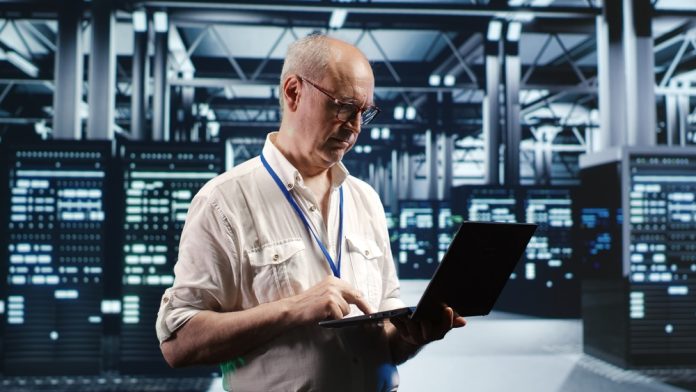

In a stark reversal of political fortunes, former President Donald Trump’s push to accelerate AI data center construction in the United States is hitting multiple roadblocks simultaneously. What was once framed as a strategic imperative to outpace China in the artificial intelligence race has become mired in the unintended consequences of his own trade policies and growing public resistance to massive infrastructure projects.
The Tariff Paradox
Bloomberg reports that nearly half of planned US data center projects face delays or cancellations due to critical power infrastructure shortages. The very tariffs Trump imposed on Chinese imports to boost domestic manufacturing are now choking the supply chain for transformers, switchgear, and batteries – components China has manufactured for US companies for decades. Wait times for these essential parts have ballooned from 24-30 months to up to five years, creating a bottleneck that could undermine America’s AI competitiveness.
“When it comes to direct shipments, it has been very dramatic and it has been very decisive,” says Davin Chor, professor and globalization chair at Dartmouth University’s Tuck School of Business, commenting on the broader trade impacts. The BBC analysis reveals US imports from China plunged roughly 30% in 2025, while US exports to China dropped more than 25% – a decoupling that’s having ripple effects across multiple sectors.
Industry Realities vs. Political Rhetoric
While Trump ordered tech companies to “build, bring, or buy” power for their data centers in March, industry insiders know the problem runs deeper. “It doesn’t matter where the power comes from if there’s nothing to plug in,” as one analyst bluntly put it. The situation has become so dire that some firms are willing to pay tariffs and accept alleged national security risks to secure Chinese components on faster timelines.
The broader industry context reveals this isn’t just a political problem. AI startup Poolside’s experience illustrates the challenges even well-funded ventures face. After its $2 billion funding round anchored by Nvidia fell apart and its deal with CoreWeave collapsed due to missed deadlines, the company is now scrambling to find new data center partners. “A little over a year ago Poolside started seeing that infra was the major bottleneck,” according to a person familiar with the company’s strategy. “Their insight was that the only way to scale is if energy is present, so they went out to secure strategic assets.”
Public Backlash Gains Momentum
Perhaps more concerning for data center proponents is the growing public opposition that transcends partisan lines. A Harvard/MIT poll reveals Americans are more worried about how “giant projects might alter their communities” and “quality of life” than they are about rising utility bills. Another Quinnipiac University survey found 65% of Americans oppose building an AI data center in their community, with only 24% in support.
This sentiment is translating into concrete political action. Maine is poised to become the first state to pause all data center construction, with a bill likely to ban substantial new AI data center construction until 2027. “That’s the political reality,” says Tony Buxton, a climate and energy attorney in Maine. “There is a very strong voter fear of data centers and AI.” At least 10 other states are watching closely as the legislation advances.
The Economic Ripple Effects
The data center crunch is creating unexpected consequences throughout the economy. ZDNET reports that AI-driven demand is causing RAM prices to skyrocket, with the cost of LPDDR4 DRAM – used in Raspberry Pi single-board computers – rising sevenfold over the past year. A 16GB Raspberry Pi 5 now costs $305, up from $120 at launch, as memory manufacturers prioritize supplying data centers over consumer markets.
Meanwhile, the broader economic impacts of Trump’s tariffs are becoming clearer. The BBC analysis shows tariffs pushed the US inflation rate up by about half a percentage point to roughly 3%, while Canadian travel to the US plunged 20% in 2025, costing the US economy over $4 billion. “That’s the significant risk – that over time we do start to see that retaliation in other ways,” warns Michael Pearce, economist at Oxford Economics. “That’s how damage from the trade war can spread.”
A More Nuanced Future
As the political and public relations battles intensify, some experts suggest a more measured approach might be necessary. A new MIT study indicates AI’s impact on jobs will unfold gradually like a “rising tide” rather than a sudden “crashing wave,” giving workers more time to adapt. The research found that large language models can complete 60% of text-based work tasks at a “minimally sufficient” level, with automation at this level potentially achievable by 2029.
This suggests that while the AI race is real, the timeline might be more forgiving than political rhetoric suggests. The current infrastructure challenges, combined with public resistance and economic trade-offs, point toward a more complex reality than simple “build it and they will come” optimism. As communities from Maine to Texas weigh the costs and benefits of becoming AI infrastructure hubs, the conversation is shifting from whether we should build data centers to how, where, and at what pace.
The coming months will test whether political will can overcome practical constraints and public sentiment. With midterms approaching and communities increasingly organized against rapid development, the AI infrastructure push faces its most significant test yet – one where tariffs, timing, and public trust may prove more decisive than technological ambition alone.