

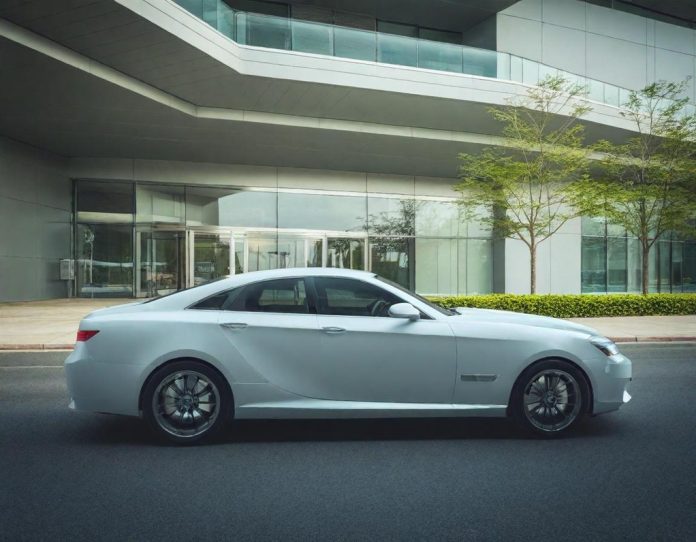

Uber is making a bold move to position itself at the center of the autonomous vehicle revolution, but the road to commercial viability is proving more complex than anyone anticipated. The ride-hailing giant recently launched Uber Autonomous Solutions, a new initiative offering insurance, roadside assistance, and “AV mission control” software to robotaxi providers. This strategic pivot comes as Uber plans to deploy autonomous vehicles in 15 global cities by 2026, including major hubs like London, Los Angeles, and Hong Kong.
The Commercialization Challenge
Andrew Macdonald, Uber’s president and chief operating officer, makes a compelling case: “What’s going to determine the success or failure of autonomy in the world is whether it can be commercialized. Uber is going to be the thing that makes autonomy commercially viable.” This statement reveals a fundamental truth about the current state of autonomous technology – the technical hurdles that plagued AVs for years have largely been solved, but the business model remains unproven.
Uber’s approach is multifaceted. The company has signed more than a dozen partnerships with players like Alphabet’s Waymo and China’s Baidu, invested in self-driving startups including UK-based Wayve, and placed massive vehicle orders – at least 25,000 from developer Waabi alone. Yet investor skepticism persists, with Uber shares trading down 9% year-to-date amid concerns about the company’s role in an autonomous future.
The Broader AI Landscape: Lessons from Manufacturing
Uber’s robotaxi push reflects a broader trend across industries where AI is moving from experimentation to core operations. In industrial manufacturing, 2026 is predicted to be a pivotal year for scaling agentic AI deployment. Manufacturers are embedding intelligence into their operations to handle volatility, supply chain disruptions, and regulatory demands.
Shen Lu, CIO of Gellert Global Group, explains the value proposition: “Infor’s Industry AI Agents have the potential to significantly enhance ERP functionality – delivering faster access to information, quicker issue resolution and improved customer satisfaction. By automating repetitive tasks, these agents enable employees to focus on higher-value work.” This parallel development suggests that successful AI integration requires more than just technology – it demands rethinking workflows and human-machine collaboration.
The Infrastructure Bottleneck
As AI systems proliferate across transportation, manufacturing, and other sectors, they’re creating unprecedented demands on infrastructure. Data center developers are now seeking credit ratings for unfinished facilities to unlock billions in funding for AI infrastructure investments. Fitch has rated over 35 data center projects in just nine months, with average deal sizes around $3 billion.
Roelof Steenekamp, leader of Fitch’s complex credit group specializing in data center ratings, describes the growth as “astronomical.” Most projects seek investment-grade ratings, often backed by long-term leases with Big Tech companies. This financial engineering reveals how AI’s expansion is reshaping capital markets and infrastructure development.
The Reality Check: When AI Projects Fail
Not every AI initiative succeeds, and recent failures provide crucial context for understanding Uber’s ambitious plans. Amazon’s Blue Jay warehouse packing robot operated for only four months before being decommissioned. Despite being powered by physical AI technology that learns from contact and coordinates at scale, the multi-armed robotic system faced complex manufacturing challenges, operational problems, and high costs.
An Amazon spokesperson noted that while Blue Jay itself is being removed, “the underlying technology will be further developed and applied to other projects.” This pattern – rapid prototyping, testing, and strategic pivoting – may become increasingly common as companies navigate the complex landscape of AI implementation.
The Implementation Gap
The consulting industry is experiencing its fastest growth in years precisely because companies are struggling to implement AI effectively. According to recent data, 90% of companies plan to use consultants to implement AI, with the energy sector showing particularly strong demand – up 11% in 2026.
Fiona Czerniawska, chief executive of Source Global, observes: “Clients are quite modest in their views about how much they’ve achieved so far. They’ve been experimenting, but now they are quite clear they want to get some work achieved here.” This suggests that after years of AI hype, businesses are now focused on practical implementation and measurable returns.
The Path Forward
Uber’s robotaxi strategy represents a high-stakes bet on autonomous mobility’s commercial future. The company is building an ecosystem of services – from insurance to fleet financing to data collection – that could lower barriers to entry for AV providers. Its AV Lab will gather data from specially equipped vehicles to train AI models, while mapping services will help improve navigation accuracy.
But success is far from guaranteed. Uber faces intensifying competition, including from partners like Waymo in key markets such as San Francisco. The company must navigate regulatory hurdles, public acceptance issues, and the fundamental challenge of making autonomous rides economically viable.
As industries across the spectrum grapple with AI implementation, Uber’s journey offers valuable lessons about the gap between technological capability and commercial success. The next few years will reveal whether autonomous vehicles can move from promising prototypes to profitable businesses – and whether Uber can indeed become “the thing that makes autonomy commercially viable.”