

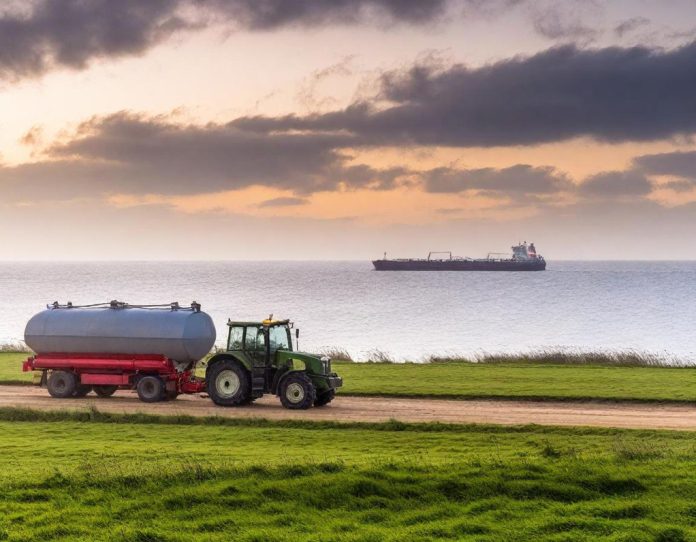

When Wiltshire farmer Tom Collins watched the price to fill his tractor�s 400-liter tank double in a week, it wasn�t a local quirk – it was the tip of a global chain reaction. A near-shutdown of the Strait of Hormuz, the world�s most critical oil chokepoint, has sent fuel and fertilizer costs spiking across the UK and Europe. And in a sign of how modern conflict works, artificial intelligence is now part of the battlespace driving those shocks faster and further.
From a blocked strait to a pricier loaf
About a fifth of the world�s oil typically moves through the Strait of Hormuz. With war disrupting shipments, UK farm inputs have whiplashed: red diesel – the lower-tax fuel that powers agricultural machinery – has jumped from roughly �0.65 per liter to �1.20��1.30 plus VAT, farmers say. Fertilizer quotes have surged from �350 a tonne in September to around �600 now, with liquidity and availability tightening.
�If we can�t fill the tractors, we can�t feed the cows,� said dairy farmer Mike Catley, who has also seen deliveries rationed and delayed. The pinch won�t stay on farm. The National Farmers’ Union (NFU) warns that cucumbers and tomatoes – energy-intensive greenhouse crops – could show price rises within six weeks if energy stays high, with broader impacts on milk and field crops following within three to six months.
Energy shock: oil bites harder than gas – for now
The oil shock is outpacing the hit to gas. Chris O�Shea, CEO of Centrica (owner of British Gas), notes that only 3�4% of global gas has been lost due to the strait�s disruption, versus far greater oil displacement. Consultancy Cornwall Insight estimates the average household energy bill in Great Britain could still rise by about �332 in July if current wholesale conditions persist, even after a cap-driven drop in April. O�Shea expects a bigger impact at the petrol pump than on electricity bills – and argues any government aid should be targeted, not blanket.
Markets are already jittery: Asia�s indices slid as Brent crude traded above $110, underscoring the risk that a prolonged chokepoint crisis morphs into the �worst energy crisis in decades,� as the International Energy Agency�s chief warned. Ireland has moved preemptively, cutting excise duty by 20 cents on diesel and 15 cents on petrol through May, with agricultural diesel relief included – an early sign of the policy tools likely to reappear across Europe if disruption lingers.
AI in the battlespace, speed in the markets
What�s new in this old story of oil and war? The tempo. The Pentagon�s Project Maven – now deeply embedded across U.S. Central Command and allied forces – uses computer vision and data fusion to automatically detect, classify, and prioritize targets. Senior commanders say the system can help process thousands of targets per day and has racked up more than a billion AI detections in its data stores. As one CENTCOM general put it, �Shortening kill chains is universally good.�
Kill chains are the sequence from finding a target to striking it. Shortening them compresses decision cycles. That can be decisive in conflict – but it also means geopolitical escalations can ripple through commodity markets in hours, not weeks. The Iran theater is a case in point: AI-enabled reconnaissance and targeting raise the pace and precision of engagements, which can make shipping insurers, traders, and logistics operators reprice risk almost in real time. For businesses from greenhouses to grocers, that translates into faster-moving cost curves and thinner planning windows.
Policy patches vs. supply math
Will policy levers offset the shock? The U.S. Treasury�s short-term authorization to let some Iranian oil already at sea enter the market – potentially around 140 million barrels through April 19 – may ease prices at the margin. But energy analysts caution it�s no panacea for a structural chokepoint. Meanwhile, the UK government is weighing targeted support, and retail groups warn that sustained energy costs will directly filter into shelf prices.
On farms, one constraint looms larger than others: timing. �Most people are covered now, but we all go back to the fertilizer market in May,� one estate manager told the BBC. If shipping through Hormuz doesn�t normalize by then, expect a second-wave price rise to collide with planting schedules.
What operators should do next
- Stress-test procurement timelines through summer: NFU timelines suggest greenhouse produce could see pass-through in 4�6 weeks; broader categories in 3�6 months. Build scenarios around those clocks.
- Revisit indexation in supplier contracts: Where feasible, align input and output pricing to reduce the lag that forces producers to �eat� cost spikes while being price takers.
- Watch policy windows: Temporary excise cuts (as in Ireland) and targeted support can create short-lived hedges. Use them to bridge, not to bet on trend reversals.
And keep an eye on technology – not as a panacea, but as part of the new operating environment. AI systems are now entwined with the tempo of modern conflict. That makes volatility itself a strategic variable businesses must model – not just the price of oil, but the speed at which that price can change.