

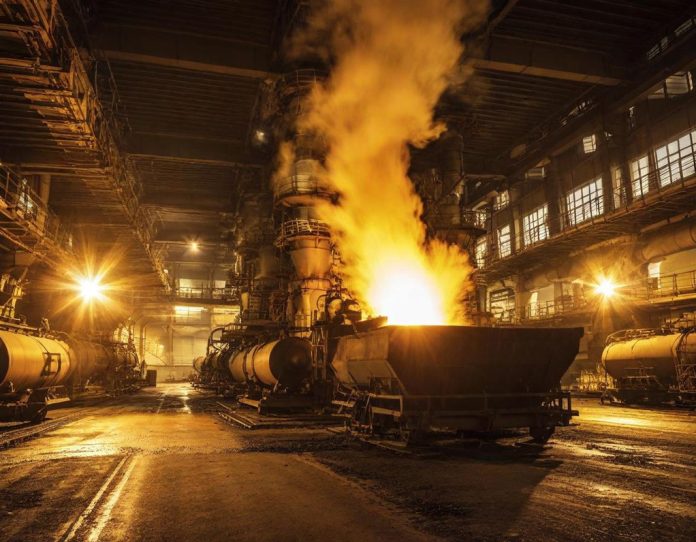

The UK government’s announcement of ambitious steel production targets and new import tariffs arrives at a moment of profound global economic uncertainty, creating a complex landscape for manufacturers and businesses. As Business Secretary Peter Kyle declared plans to boost domestic steel production from 30% to 50% while imposing a 50% tariff on imported steel above reduced quotas, the move has sparked immediate debate about its timing and potential consequences.
The Protectionist Push
From July, imported steel quotas will be “significantly reduced” by 60% from current arrangements, creating what critics call “tariff red tape” that could hurt economic growth. Shadow business secretary Andrew Griffith warned: “Raising the cost of imported steel means more cost for the construction industry, less infrastructure investment, and is a further blow to the diminishing number of firms making things in the UK.” Yet Kyle insists this isn’t protectionism but rather defense against “anti-competitive behavior from elsewhere in the world.”
Global Economic Context
This domestic policy shift comes against a backdrop of global economic turbulence that makes its implementation particularly challenging. The US-Israeli conflict with Iran has created what Hunter Kornfeind, senior macro energy analyst at Rapid Energy Group, calls “essentially the biggest supply shock at least in modern global oil market history.” With roughly 20% of the world’s crude supply traveling through the Strait of Hormuz, oil prices have surged toward $85 per barrel, creating ripple effects across multiple industries.
Energy Price Pressures
UK steel makers already face higher energy bills than their European and US rivals, and the current conflict threatens to exacerbate this disadvantage. Goldman Sachs estimates that a temporary rise to $100 per barrel could knock 0.4 percentage points off global economic growth. For steel production – an energy-intensive industry – this represents a significant additional cost burden that could undermine the government’s protectionist goals.
Broader Industry Impacts
The automotive sector provides a cautionary tale. Bentley recently announced up to 275 job losses after seeing operating profits fall 42% in 2025. Professor David Bailey, a motor industry expert at Birmingham Business School, notes that “the UK car industry is in a low-volume crisis” with output at “something like a 70-year low.” While Bentley’s luxury positioning offers some protection, the broader trend suggests manufacturing faces systemic challenges beyond tariff protection.
Housing Market Constraints
Meanwhile, the construction industry – a major steel consumer – faces its own headwinds. The average age of first-time buyers in England has climbed to 34, with more than half needing two incomes to make a purchase. As mortgage rates rise due to economic uncertainty, construction demand could soften, potentially reducing steel consumption just as domestic production targets aim to increase.
Strategic Implications
The government finds itself in a delicate balancing act. With the UK steel industry facing “major financial difficulties in recent years due to high energy prices, increased tariffs and a glut of steel globally,” according to the primary source, protectionist measures might seem necessary. Yet Gareth Stace, director general of UK Steel, emphasizes this is “a crucial moment: with global markets distorted by overcapacity and subsidy, a clear and ambitious domestic strategy is exactly what is required.”
Looking Ahead
As Paul Stankey of Stankey Research warns about the Iran conflict: “Much as the US and Israel may declare operations over and complete, the Iranians may not see it that way. That may mean this situation continues long beyond the declaration of hostilities.” This uncertainty creates a challenging environment for implementing long-term industrial strategy. The UK’s steel ambitions must now navigate not just global competition but also geopolitical instability and economic volatility that could reshape the very foundations of manufacturing economics.