

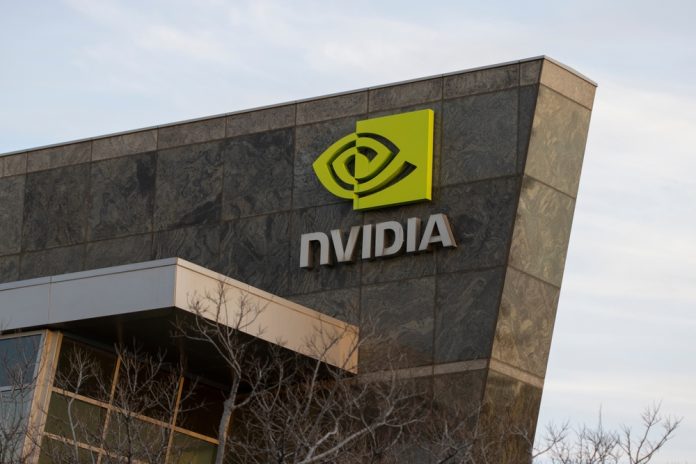

In a dramatic escalation of the technological cold war, US authorities have unsealed indictments against four individuals accused of orchestrating an elaborate scheme to smuggle supercomputers and hundreds of Nvidia’s advanced AI chips to China? The charges, filed in federal court this week, reveal a sophisticated operation spanning Florida, Alabama, and California that allegedly continued operating as recently as July�underscoring the intense global competition for artificial intelligence hardware?
The Hardware That Powers AI
At the heart of this case lies Nvidia’s graphics processing units (GPUs), which have become the gold standard for training and running complex AI models? These aren’t your typical gaming graphics cards�they’re specialized processors capable of performing thousands of calculations simultaneously, making them essential for everything from ChatGPT to autonomous vehicles? With Nvidia commanding an estimated 90% market share in AI chips and reporting $57 billion in quarterly revenue, the stakes couldn’t be higher for both national security and economic competition?
Broader Context: Global Chip Competition Intensifies
This smuggling case emerges against a backdrop of furious innovation and competition in the semiconductor industry? While Nvidia dominates the AI accelerator market, major cloud providers are racing to develop their own custom silicon? Microsoft’s Azure cloud division recently announced its second-generation Cobalt 200 ARM server processor, promising 50% performance gains over its predecessor despite only a 3% increase in core count? The chip, scheduled for 2026 deployment, features 132 cores and advanced security features including ARM’s Confidential Compute Architecture?
Meanwhile, Nvidia continues to expand its reach beyond traditional markets? The company’s recent partnership with Google offers Chromebook buyers a free year of GeForce Now cloud gaming service, leveraging Nvidia’s Blackwell RTX architecture to deliver high-performance gaming through cloud streaming? This diversification strategy highlights how Nvidia’s technology is becoming ubiquitous across computing domains?
Economic Implications and Market Dynamics
The alleged smuggling operation exposes the immense economic pressures driving AI hardware acquisition? Nvidia’s financial performance has been nothing short of spectacular�reporting 62% year-over-year revenue growth to $57 billion last quarter, with data center revenue alone reaching $51?2 billion? CEO Jensen Huang has predicted $500 billion in sales from newer chip ranges over 2025 and 2026, while the company briefly surpassed a $5 trillion market capitalization in October?
However, beneath these staggering numbers lie significant vulnerabilities? Nvidia shares had fallen 11% from their November peak prior to the latest earnings report, reflecting investor concerns about AI capital expenditure sustainability and valuation bubbles? The company’s recent change in geographic revenue reporting�removing Singapore from its tables after the location accounted for 22% of Q2 revenue despite minimal actual shipments�has raised questions about potential circumvention of US export restrictions?
Government Responses and Strategic Investments
The US crackdown coincides with increased government involvement in AI infrastructure worldwide? The UK government recently announced a �100 million initiative to purchase emerging chip technology from British companies, modeling the approach on its successful COVID-19 vaccine procurement strategy? Science Secretary Liz Kendall acknowledged the amount “sounds small compared to the billions being spent” in the US and China but argued it represents “government showing leadership in areas where we think we will be absolutely world-leading?”
This global competition extends beyond national borders? As Sue Daley of TechUK warned regarding the UK initiative, “Advanced market commitments of this kind must be designed carefully to avoid unintentionally distorting competition?” The delicate balance between supporting domestic innovation and maintaining market efficiency reflects the complex interplay of technology, economics, and geopolitics in the AI era?
What This Means for Businesses and Professionals
For technology leaders and investors, these developments signal several critical trends? First, AI hardware remains both a strategic asset and a potential vulnerability in global supply chains? Second, the diversification of chip architectures�from Nvidia’s GPUs to custom ARM processors from cloud providers�suggests increasing specialization in computing workloads? Third, regulatory scrutiny of technology transfers will likely intensify, requiring more sophisticated compliance strategies?
The alleged smuggling operation, while dramatic, represents just one facet of the broader AI hardware ecosystem? As Mitul Kotecha of Barclays observed following Nvidia’s recent earnings, the company’s performance “helped settle nerves in risk assets” amid concerns about an AI bubble? Yet the very existence of such sophisticated smuggling networks underscores the extraordinary value and strategic importance of advanced computing technology in today’s economy?
As businesses navigate this complex landscape, understanding both the technological capabilities and the geopolitical implications of AI hardware becomes increasingly essential? The race for AI supremacy isn’t just happening in research labs and corporate boardrooms�it’s playing out in courtrooms, customs offices, and global markets, with implications that will shape technological competition for years to come?