

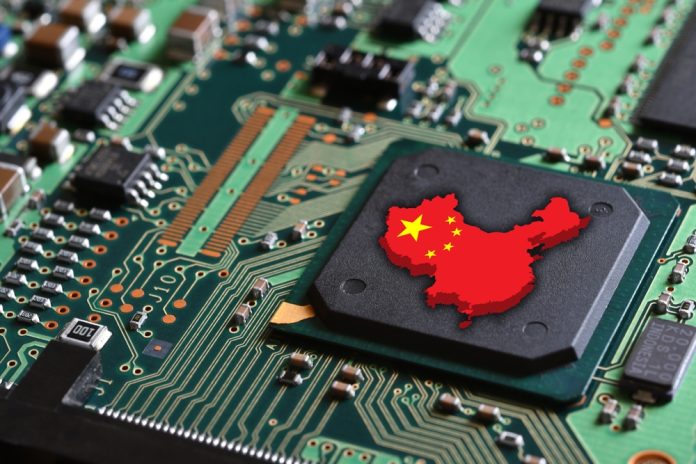

Imagine running an AI agent that processes millions of text units daily – each one costing fractions of a cent. Now imagine Chinese companies offering those units at one-sixth the price of their American counterparts. This isn’t hypothetical; it’s the new reality reshaping the global AI landscape, where China’s growing dominance in token consumption signals a fundamental shift in competitive dynamics.
The Token Economy Takes Center Stage
Since February, Chinese AI models from companies like DeepSeek and MiniMax have overtaken U.S. rivals in token consumption, according to OpenRouter data. Tokens – the basic units of text, code, or data processed by large language models – have become what Nvidia CEO Jensen Huang calls the “currency” of the AI economy. Developers pay per token, making this metric both a proxy for model adoption and a critical pricing battleground.
The numbers tell a compelling story. Chinese companies like MiniMax and Moonshot charge $2 to $3 per million output tokens, compared to about $15 for Anthropic’s Claude Sonnet 4.5. That near sixfold difference becomes monumental when AI agents – which can consume up to 20 million tokens for minor coding tasks – enter the equation. For context, summarizing Shakespeare’s Hamlet might take about 30,000 tokens for a chatbot.
Why China Holds the Cost Advantage
China’s pricing edge stems from two strategic advantages: cheaper energy and more efficient models. The Chinese government recently designated “computing-electricity synergy” a national priority, explicitly linking energy policy with AI competitiveness. On the software side, Chinese groups have embraced efficient AI architectures like “mixture-of-experts” designs that reduce computational demand, sometimes at the expense of accuracy.
This efficiency push has been accelerated by U.S. export controls limiting China’s access to advanced chips. “If your agent is burning through millions of tokens a day, even a small per-token price difference becomes a significant line item,” said Will Liang, CEO of Amplify AI Group. “That’s a structural tailwind for Chinese labs, and it only grows as agentic adoption scales.”
The Geopolitical Counterbalance
Just as China gains ground in token economics, U.S. lawmakers are pushing back. Republican Senator Jim Banks and Democratic Senator Elizabeth Warren have urged the Commerce Department to suspend Nvidia’s licenses to export AI chips to China and Southeast Asia following a large-scale smuggling scheme discovery. Their letter states: “We urge all necessary and appropriate actions, including the immediate pausing, suspension, or other reconsideration of all active export licenses covering advanced Nvidia AI chips.”
This tension creates a paradox: while Chinese companies benefit from cost advantages, their access to cutting-edge hardware faces increasing restrictions. Meanwhile, U.S. AI companies face their own challenges. A U.S. judge overseeing Anthropic’s legal challenge against the Pentagon stated that the defense department appears to be “punishing Anthropic for trying to bring public scrutiny to this contracting dispute,” potentially violating First Amendment protections.
Global Implications and Market Reactions
The token shift is already changing developer behavior. Terry Zhang, a Hong Kong-based developer, now spends about $50 daily using Moonshot’s Kimi model for 80% of his work, reserving Anthropic’s Claude for complex tasks. “Using just Claude would cost me about $900 a day,” he explained. “It’s too much, and the mixed use of Kimi and Claude works well for me.”
Chinese tech giants are capitalizing on this momentum. Alibaba recently announced Alibaba Token Hub, a new business group signaling the company’s view that token economics will define AI’s next phase. “We are standing at the threshold of an AGI inflection point,” wrote CEO Eddie Wu in an internal memo. “Billions of AI agents are poised to take on an ever-greater share of digital work.”
Stability Challenges and Future Uncertainties
China’s advantage isn’t without vulnerabilities. Zhipu AI’s GLM-5 model briefly topped OpenRouter charts in February before usage surged beyond its compute capacity, causing delays and service degradation. The company had to apologize and raise prices, seeing its shares drop 22% in a single day – erasing over $10 billion in market value.
“The model’s capability matters, but stable compute and service are equally indispensable,” noted a veteran Google developer. This reliability concern intersects with geopolitical risks. “The geopolitical headwinds are significant, particularly for governments and regulated industries,” warned Amplify’s Liang. “Regulators are asking harder questions about where data is processed and under whose jurisdiction it falls.”
A New Phase of Global Competition
As token consumption becomes the new battleground, the AI race enters a more complex phase. Chinese companies have demonstrated they can compete on cost and efficiency, while U.S. firms maintain advantages in model sophistication and global trust. European companies, meanwhile, face their own challenges. Siemens CEO Roland Busch warns that Europe’s focus on building sovereign AI infrastructure could be a “disaster” by slowing innovation and economic growth.
The question isn’t whether China will continue gaining ground in token economics – the data suggests it already is. The real question is whether this advantage can translate into sustainable competitive leadership, especially as geopolitical tensions reshape supply chains and regulatory landscapes. For businesses and developers worldwide, the token economy has become the new frontier where cost, capability, and geopolitics converge in unexpected ways.